AOC’s call for U.S. troops to refuse what she calls “illegal orders” on Iran is igniting a new clash over who controls war powers—and how far political leaders should go in pressuring the military.
Quick Take
- Rep. Alexandria Ocasio-Cortez publicly warned that certain U.S. actions against Iran could amount to “war,” arguing Congress must authorize major combat operations.
- Reports say AOC urged service members to refuse “illegal orders,” a message that raises sensitive questions about civilian control, lawful orders, and partisan escalation.
- The dispute lands in a familiar Washington pattern: high-stakes foreign policy mixed with domestic messaging aimed at energizing political bases.
- AThe core facts center on what AOC said and the administration context described in the cited coverage.
AOC’s Warning Puts War-Powers Back in the Spotlight
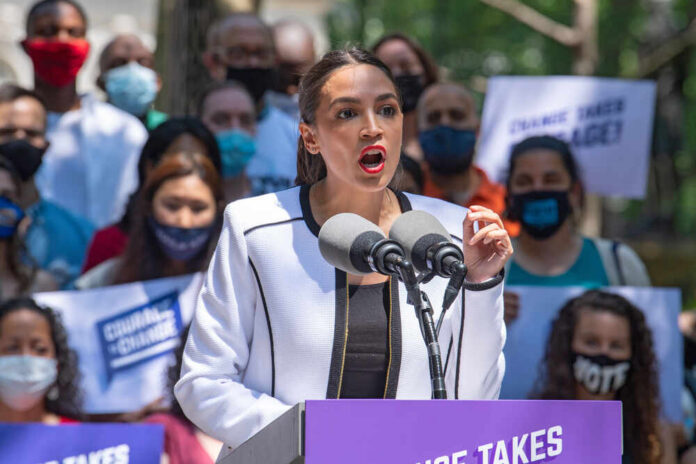
Rep. Alexandria Ocasio-Cortez entered the Iran debate with a message framed around constitutional process and the definition of war. She characterized the “theater of conflict” involving Iran as too large to be treated as anything less than a war, and argued that wars require congressional authorization. That position elevates a long-running argument in both parties: presidents often push the limits of executive authority when conflict accelerates quickly.
AOC urged U.S. troops to refuse what she described as “illegal orders,” tied to fears about potential strikes and civilian harm. Because the supporting materials included here are fragmentary, it is not possible to reconstruct every line of her remarks or the full surrounding context. What is clear is the political and civic nerve it touches: Americans want a strong defense, but they also expect lawful, accountable decision-making.
“Refuse Illegal Orders” Is a Loaded Message for a Military Culture Built on Discipline
Any public statement encouraging troops to disobey orders—qualified by the word “illegal”—lands in a sensitive area. The U.S. military relies on discipline and a clear chain of command, while also training service members that unlawful orders must not be followed. The tension is that public figures can turn a narrow legal principle into a broad political slogan. That risks blurring the difference between refusing an unlawful act and resisting policy disputes that belong in elections and Congress.
The reporting and statements also highlight a broader trust problem: many voters already believe Washington’s “elites” operate with different rules, and that ordinary citizens bear the costs. When leaders trade accusations over war powers, critics on the right tend to see an effort to undercut the commander in chief during a crisis, while critics on the left tend to see a necessary check against executive overreach. Both sides often agree on the underlying reality—government feels unaccountable.
Why This Fight Resonates in 2026’s Domestic Political Climate
In 2026, with President Trump in a second term and Republicans controlling Congress, Democrats have fewer institutional levers and more incentive to use public pressure campaigns. Foreign policy disputes can become a tool for shaping headlines, fundraising, and coalition-building, especially when the issues involve war and civil liberties. For conservatives frustrated by years of perceived bureaucratic resistance to elected leadership, a high-profile Democrat urging troops to refuse orders can read like escalation.
At the same time, the war-powers argument itself is not inherently partisan. Many constitutional conservatives have long argued that Congress should vote on major wars, rather than leaving it to executive branch lawyers and emergency rationales. The challenge is separating process from provocation: if lawmakers believe combat operations exceed legal authority, the clearest remedy is legislation, hearings, and court-tested oversight—not rhetoric that could be interpreted as encouraging rank-and-file political action inside the armed forces.
What We Can—and Cannot—Verify From the Provided Research
This includes only limited, partial context about the precise timeline, operational details, and the full wording of AOC’s remarks. The strongest, most concrete claims available here are that she issued a statement framing Iran-related combat operations as “war” requiring congressional approval, and that she urged troops to refuse “illegal orders” related to potential actions against Iranian civilians. Beyond those points, broader assertions about motives or specific operational plans would require more documentation.
AOC: “The theater of conflict in Iran is far too large to call it anything but a war. And wars require congressional authority to continue.” pic.twitter.com/FiPxPMPdIo
— Fox News (@FoxNews) April 16, 2026
For readers across the spectrum, the practical takeaway is straightforward: the U.S. needs clear constitutional lines during crises, not messaging that deepens mistrust. If a conflict is truly on the scale of war, Congress should debate and vote, and the administration should justify its legal basis in public terms. If orders are unlawful, military justice systems and lawful reporting channels exist. The public deserves transparency—and leaders who lower the temperature, not raise it.
Sources:
AOC tells troops refuse ‘illegal orders’ ahead of Trump’s looming Iran deadline
Ocasio-Cortez Statement on Trump’s Combat Operations in Iran