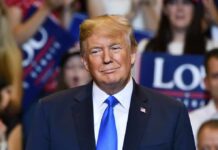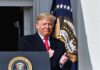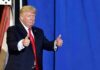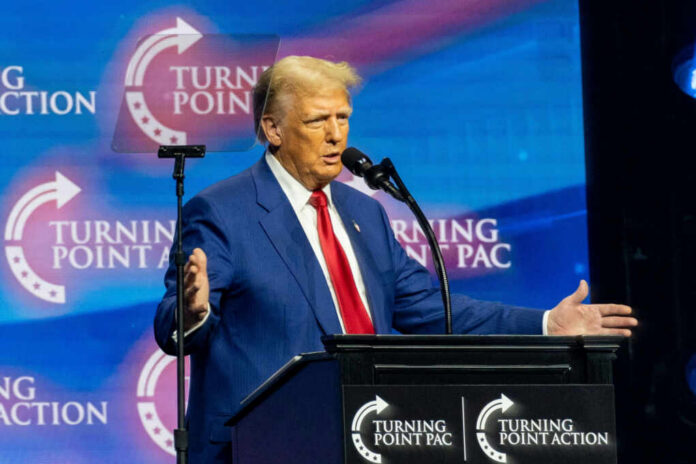
A conservative crowd that usually cheers President Trump shocked observers by loudly booing the moment NATO came up at a TPUSA event.
Quick Take
- President Trump criticized NATO at a Turning Point USA event and drew loud boos from the crowd, an unusual break from the typically friendly setting.
- Separately, Trump declined a NATO offer of assistance tied to tensions in the Persian Gulf, adding strain to U.S.-Europe relations.
- Prediction markets nudged the odds of a U.S. NATO withdrawal by April 30 up to about 1.2%–1.3%, still low but moving in response to rhetoric.
- Reporting emphasized there have been no concrete U.S. steps toward withdrawal, such as an executive order or formal process.
TPUSA Boos Put “America First” Skepticism on Public Display
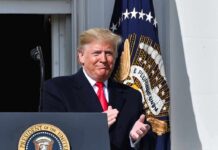
President Trump’s long-running critique of NATO—focused on burden-sharing and whether allies carry their weight—landed differently at a recent Turning Point USA event. According to reporting, the crowd responded with loud boos as he criticized the alliance. That reaction matters because TPUSA venues are typically packed with sympathetic conservatives, so audible pushback suggests NATO skepticism may be shifting from elite debate into grassroots mood.
Trump’s NATO talk has historically rallied many Republicans who see the alliance as too costly and too often taken for granted. The surprise, based on the available reporting, is not that Trump criticized NATO, but that the pushback came from a pro-Trump audience. Without full context of every line he delivered, the boos still serve as a measurable signal: some attendees were willing to reject the premise that NATO deserves continued U.S. patience without clearer, enforceable reciprocity.
NATO Aid Offer in the Persian Gulf Was Declined, Raising Diplomatic Friction
Separate from the TPUSA moment, reporting said Trump declined NATO’s offer of aid connected to tensions in the Persian Gulf. That decision reportedly strained U.S.-Europe ties, even if it stopped short of any formal break. The practical significance is straightforward: rejecting alliance assistance in a live geopolitical hotspot can be read abroad as a preference for unilateral control, while supporters at home may see it as keeping U.S. strategy free of committee-style decision-making.
No details on operational plans that would have accompanied NATO assistance, nor does it document any follow-on policy shift after the refusal. What it does show is a familiar pattern in Trump-era foreign policy: push allies to contribute more, and keep U.S. options flexible. For voters frustrated by decades of global commitments and rising costs at home, that posture aligns with a narrower definition of national interest—while critics argue it risks alienating partners.
Prediction Markets Moved, but Concrete Withdrawal Signals Are Still Missing
Market-based forecasting tracked the political noise. Reporting said prediction markets lifted the odds of a U.S. NATO withdrawal by April 30 from roughly 1% to about 1.2%–1.3% after the TPUSA episode and the Persian Gulf decision. Those numbers remain low, which is the key point: traders appear to be pricing headlines and tone, not a genuine expectation of imminent withdrawal backed by formal steps.
What the Boos Could Mean for Republican Foreign Policy Debates
Within the GOP coalition, NATO is becoming a sharper dividing line between voters who view alliances as deterrence and voters who view them as blank checks. The reporting cited no executive actions and no official withdrawal process underway, so it would be inaccurate to treat the crowd reaction as proof of a policy turn. Still, a booing response at a friendly venue hints that Republican leaders may face louder demands for clearer terms, costs, and limits.
The TPUSA crowd loudly booed NATO as President Trump said they have now offered to help.
"I told them I would have liked your help two months ago, but now I don't want your help anymore. pic.twitter.com/yC18imEY3I
— Fox News (@FoxNews) April 17, 2026
For Americans on both left and right who feel the federal government serves insiders first, the NATO argument often becomes a proxy fight about accountability: who pays, who decides, and who benefits. The current story is less about an imminent NATO exit and more about public impatience—especially among voters who believe Washington commits money and credibility abroad while failing to secure borders, restrain spending, or lower everyday costs at home.
Sources:
Trump Criticizes NATO at TPUSA Event, Met with Boos from Crowd
Trump Declines NATO Aid in Persian Gulf, Strains US-Europe Ties