A viral police body-camera clip shows a baby pulled from a flooded car in Texas—prompting praise for first responders and fresh questions about preventable risks that keep putting families in danger.
Story Snapshot
- Body-camera video shows Beeville, Texas, officers rescuing an infant from a car trapped in rushing floodwater [1].
- Local outlets report the baby was recovered in a carrier and no injuries were reported at the scene [1].
- Clips were shared by news and police channels, but full incident reports and medical records are not public [3].
- The episode highlights recurring hazards at low-water crossings during intense rain events across Texas [5].
What The Video Shows And What We Can Verify
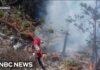
Beeville Police Department body-camera footage documents first responders approaching a partially submerged vehicle and removing an infant in a carrier from inside, while floodwater pushes around the car [1]. CBS News reported the video was shared by the department and that the rescue occurred during heavy rain in southern Texas [1]. Additional coverage by Fox News cited the same body-camera scene, showing officers pulling the baby from the flooded vehicle as water rushed past [3].
Local television segments and national outlets amplified the clip, reinforcing a clear core fact pattern: a car became trapped during severe weather, officers reached the vehicle, and an infant was carried out to safety [1]. Reports stated no one was hurt, attributing that information to police accounts captured in coverage accompanying the video [1]. The footage itself does not include post-rescue medical evaluation, which leaves the infant’s clinical status documented only through media summaries of police statements [1][3].
Limits Of Public Documentation So Far
Publicly available materials do not include the underlying incident report, dispatch timeline, or complete body-camera metadata, which would provide exact timing, roadway identification, and a continuous sequence of actions [3]. News packages present edited segments that emphasize the extraction moment without publishing full records, a common constraint in fast-moving broadcast coverage [3]. The absence of emergency medical service or hospital documentation in the public record means the injury-free outcome relies on secondhand reporting of police statements rather than independent medical confirmation [1][3].
These documentation gaps do not contradict the core video evidence but they narrow the range of verifiable details, including how fast the water was moving, whether signage or barriers were present, and whether prior warnings were issued at the crossing. Fox Weather and other outlets situate the rescue within a broader period of intense rainfall that produced swift, localized flooding in South Texas, conditions that routinely overwhelm low-water crossings and trap vehicles that enter deceptively shallow flows [5]. This pattern fits the risk profile emergency responders face statewide during seasonal storms [5].
Why Flood Rescues Keep Happening
Texas experiences recurring flash-flood episodes that turn dips, creeks, and low-water crossings into dangerous channels during heavy rain, often within minutes [5]. Drivers may misjudge water depth, underestimate current strength, or follow familiar routes despite changing conditions. Media and police videos frequently highlight the dramatic save rather than the upstream contributors: roadway design, visibility of warnings, drainage maintenance, and public awareness of “turn around, don’t drown” guidance. The Beeville rescue sits squarely within that recurring storyline documented by weather coverage [5].
INFANT RESCUE 🌧️: A police officer rescued an infant from a stranded car after a white sedan tried to drive through a low-water crossing along a creek, where dangerous floodwaters quickly overwhelmed the roadway and turned it into a rushing river in Beeville, Texas. pic.twitter.com/ArmKOVt4aY
— FOX Weather (@foxweather) May 25, 2026
For communities, the policy implications are practical and nonpartisan. Local authorities can audit crossings with repeated incidents, improve signage and barriers that automatically drop during flood stages, and coordinate push alerts tied to rainfall thresholds. Residents can treat standing or moving water as a hard stop, even during short trips. The Beeville clip underscores that first responders will risk their lives when prevention fails, but the safer win is stopping cars from entering floodwater in the first place—a goal supported by reporting across outlets [1][5].
ALERT: Police rescue a baby from a car stuck on a road that turned into a river due to flooding in Beeville, #Texas.
The sedan then became flooded and could not be driven, trapping the man and his infant in the car.
Bodycam released by the #Beeville Police Department. pic.twitter.com/es81Ykwwes
— HDNewslive (@HDNewslive) May 27, 2026
Sources:
[1] YouTube – Bodycam shows police rescue baby from flooded car in Texas
[3] YouTube – Dramatic video shows Beeville PD rescues baby from vehicle swept …
[5] YouTube – Cops Rescue Baby From Car Swept Up In Floodwater During Storm