American families investing in home gyms face a critical equipment decision that could waste hundreds of dollars and derail their fitness goals if they choose the wrong tool for their training needs.
Story Snapshot
- Dumbbells excel for traditional strength and muscle-building with precise weight progression, making them ideal for conservative, results-focused training
- Kettlebells dominate conditioning and athletic movements but cost less overall since they’re used individually rather than in pairs
- The choice depends on clear training goals, not marketing hype—dumbbells for muscle gains, kettlebells for explosive conditioning
- Most home gym owners benefit from both tools to maximize training efficiency without government-funded gym memberships or wasteful spending
Understanding the Fundamental Design Differences
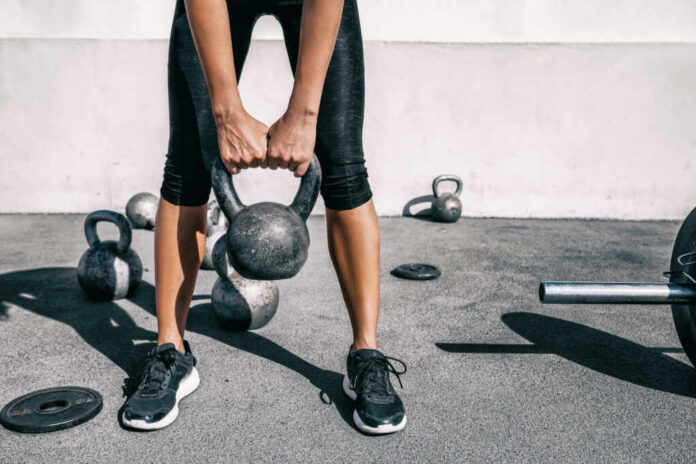
Dumbbells feature a straight handle with weights balanced symmetrically on each end, creating a stable training tool optimized for controlled movements. This design has made dumbbells the foundational implement for traditional strength training since their widespread adoption in modern fitness. Kettlebells are round iron balls with U-shaped handles positioned on top, placing the majority of weight below the grip. This offset load distribution creates an inherently unstable training environment that demands greater stabilizer muscle engagement and fundamentally alters exercise mechanics compared to dumbbells.
Dumbbells Deliver Superior Muscle and Strength Gains
The balanced weight distribution of dumbbells creates a symmetrical, stable tool that excels at controlled single-plane motion lifts. Dumbbells typically offer smaller, more predictable weight increments—often 2.5 or 5-pound jumps—enabling consistent progressive overload essential for building strength. EMG data demonstrates that dumbbells drive higher anterior-deltoid activation at the same load compared to kettlebells. Research validates that dumbbell chest presses recruit more muscle fibers than barbell or Smith machine alternatives, with significantly greater biceps activation. A pair of heavy adjustable models enables foundational presses, rows, squats, and hinges that drive measurable muscle and strength gains.
Kettlebells Excel for Conditioning and Athletic Development
Kettlebells make dynamic lifts like cleans, jerks, and snatches feel smoother and more natural than dumbbells due to their offset center of gravity. The bell’s design enables “flows,” where you link movements without putting the weight down, transitioning smoothly from squat to row to press in one sequence. Kettlebell swings create high-impact body-weight challenges resulting in high-intensity, calorie-burning sessions that build posterior-chain power efficiently. The thicker handles improve grip strength compared to dumbbells. These advantages make kettlebells the superior choice for conditioning-heavy workouts focused on explosive movements and athletic performance rather than pure muscle size.
Cost and Space Considerations Favor Kettlebells
Dumbbells require purchasing in pairs for most traditional strength work, necessitating a wider spread of weights for progressive overload. This results in higher total investment due to paired purchases and multiple weight increments. Kettlebells are frequently used one at a time, reducing total equipment volume and cost substantially. Fixed kettlebells provide optimal performance compared to adjustable versions that feel bulkier during dynamic movements. Traditional kilogram-based increments reduce the need for as many individual bells. If purchasing six kettlebells, you’re acquiring roughly half the total weight and equipment volume needed for equivalent dumbbell training—a practical advantage for families managing household budgets responsibly.
Safety and Progression Protocols
Dumbbells are more stable and intuitive, resulting in lower injury risk compared to unstable tools. Because weight is more evenly dispersed, beginners find dumbbells easier to work with than kettlebells, which have an offset center of gravity. Complete beginners should start kettlebell training with 12 kilograms, while previously trained individuals should begin with 16-20 kilograms—heavy enough to challenge squats and swings while remaining manageable for presses and snatches without sacrificing form. Adjustable dumbbells with micro-loading are ideal for small spaces and progressive hypertrophy, starting with weights allowing 8-12 controlled repetitions for compound movements.
How to Determine if Your Home Gym Needs a Kettlebell or Dumbbell (or Both) https://t.co/ZFW6BWSVpF
— Men's Health Mag (@MensHealthMag) February 10, 2026
The research reveals that dumbbells and kettlebells serve complementary rather than competing roles. You can mimic most kettlebell patterns with a dumbbell, but kettlebell ballistics like swings and snatches feel and load differently due to the handle and offset mass. The optimal strategy combines dumbbells for foundational strength and hypertrophy work with kettlebells for conditioning and athletic development. This hybrid approach maximizes training efficiency across multiple fitness domains while respecting space and budget constraints—embodying the self-reliance and practical wisdom that built American strength without dependence on expensive commercial gym memberships or wasteful fitness trends.
Sources:
Men’s Health – Kettlebell vs Dumbbell
REP Fitness – Kettlebell vs Dumbbell Guide
ProsourceFit – Kettlebells vs Dumbbells: Which One Is Right for You
Garage Gym Reviews – Dumbbells vs Kettlebells
Titan Fitness – Kettlebells vs Dumbbells: Which Is Best for Your Fitness Goals
Bodi – Kettlebell vs Dumbbell