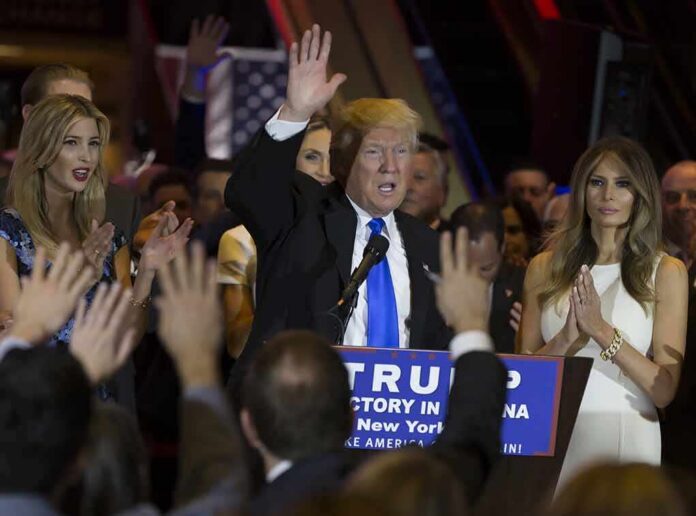
President Trump refused to endorse Israeli Prime Minister Benjamin Netanyahu weeks before Israel’s Oct. 27 vote, signaling deliberate distance at a sensitive moment.
Story Snapshot
- Trump declined several times to back Netanyahu in a published interview.
- The interview landed as Israelis prepared to vote on Oct. 27.
- Trump framed his stance as staying out of Israeli politics while stressing Israel’s defense.
- The move departs from past signals of strong personal support for Netanyahu.
What Trump Said And When He Said It
TIME published the interview on Oct. 1, 2026. Reporters pressed President Trump on whether Israelis should give Benjamin Netanyahu another term. Trump declined to endorse several times. He said he was not getting involved in politics and shifted to saying his focus was helping defend Israel. The timing mattered. Israelis were set to vote on Oct. 27, so even a brief answer could echo through the race.
The reporting described repeated refusals, not a one-off dodge. The pattern showed intent to avoid a clear signal. Trump’s words aimed to keep distance without attacking Netanyahu. He highlighted support for Israel’s security while stepping back from the campaign. That balance let him claim neutrality in another country’s vote while maintaining his pro-Israel brand at home and abroad.
How This Fits Their Long, Public Relationship
Trump and Netanyahu have long showcased a close partnership. They have used public unity to advance their own goals. Trump has hosted Netanyahu and praised him often. Those images built Netanyahu’s case that he had unique sway in Washington. They also helped Trump present himself as Israel’s strongest ally. Against that backdrop, a withheld endorsement stands out, even if it is tactically cautious rather than a break.
Analysts have noted that American presidential cues can carry symbolic weight in Israeli politics. Trump is popular with parts of the Israeli public. A simple nod could help. A silence can also speak. Foreign Policy reported in August that Trump’s backing could boost Netanyahu, even if it would not decide the race. That makes a neutral line, delivered weeks before voting day, notable for both camps.
Why It Resonates With U.S. Voters Watching Abroad
American readers see this through today’s lens. Many feel leaders play politics while real problems go unsolved. Some on the right worry about global entanglements and elite dealmaking. Some on the left worry about human rights and unequal power. Trump’s message tried to split the difference. He kept out of another nation’s election but still vowed to help Israel defend itself. That approach may appeal to voters tired of performative politics.
🇺🇸 🇮🇱 | U.S. President Declines to Endorse #Israeli PM for Another Term
U.S. President Donald #Trump has declined to endorse Israeli Prime Minister Benjamin #Netanyahu for another term ahead of #Israel’s upcoming elections.
“Well, I can only say that I'm not involved in… pic.twitter.com/l26XENVDYt
— Mahalaxmi Ramanathan (@MahalaxmiRaman) October 1, 2026
The move also reflects the pressures on a sitting president in an allied nation’s campaign. A loud endorsement can backfire. It can anger other factions, limit options, and tie Washington to outcomes it does not control. A quiet stance can keep leverage. It can also avoid the image of picking winners abroad. In this case, Trump chose restraint while keeping a strong security line, which fits a careful, interest-first posture.
Limits And What To Watch Next
The articles draw from the interview’s published excerpts rather than a full transcript. The reporting is consistent across several outlets about the refusals and the timing. Still, the record does not include a direct Netanyahu campaign response in these sources. Watch for whether Trump shifts tone closer to election day, and whether Israeli polling shows any change tied to his stance.
Sources:
military.com, aljazeera.com, en.yenisafak.com, clickorlando.com