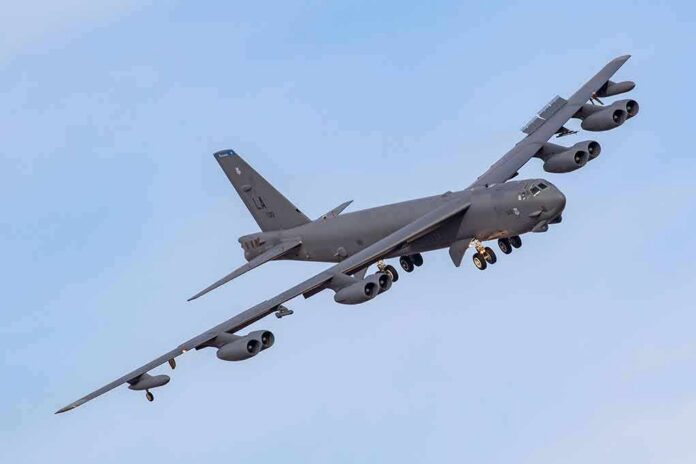
After a suspected terror plot at RAF Fairford, the Pentagon confirmed every U.S. bomber there returned to bases in the United States.
Story Snapshot
- Pentagon says all U.S. bombers left RAF Fairford after a security incident tied to arrests in the United Kingdom.
- U.S. officials say bomber crews can still launch global strike missions from the continental United States.
- Reports describe the move as security-driven while withholding operational details for safety.
- RAF Fairford has long served as a forward operating hub for American bombers during major conflicts.
Pentagon Confirms Redeployment After Security Incident
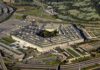
Pentagon officials said on October 4 that the U.S. Air Force removed all bombers from Royal Air Force Fairford in England. The move followed a security incident that led to the arrest of five British men last month, according to reporting that quoted a Pentagon spokesperson. The statement acknowledged the redeployment to home stations in the United States. Officials did not share the timing of the flights or the exact number of aircraft involved, citing operational security in public comments.
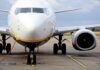
The Pentagon’s public line stressed that the bomber force remains ready. Officials said Airmen who fly B-1, B-2, and B-52 aircraft can deliver precision global strike from the continental United States if needed. That point matters because it signals a posture change, not a capability loss. It also aligns with recent practice, where long-range missions launch from home bases and recover back in the United States, reducing exposure to overseas threats.
What “All Bombers” Means And What We Still Do Not Know
Coverage across major outlets used the word “all” to describe the withdrawal, with several noting that exact counts were not released. Some reports earlier in the year cited larger bomber numbers at Fairford, but the Pentagon’s quoted language did not list tail numbers, units, or dates for this movement. That leaves open questions about how many aircraft departed and when, even as the core fact of a full redeployment stands on the record through the spokesperson’s confirmation.
Officials also held back on routing details and receiving bases. Those gaps are common in sensitive operations and aim to protect crews and aircraft. The absence of those details does not change the central point: the bombers left the British base and returned to U.S. soil. The government often limits movement data during or after threat-related changes. Here, the public emphasis stayed on security and continued readiness rather than logistics specifics.
Why RAF Fairford Matters In U.S. Strategy
Royal Air Force Fairford has served for decades as a forward operating location for American strategic bombers. The base hosted U.S. aircraft during the Gulf War, operations over Kosovo, and the Iraq war. That history shows Fairford’s role as a surge point when planners need shorter flight times and a European foothold to support missions. Pulling aircraft from such a hub is a notable step, yet it often reflects a temporary shift tied to threat assessments rather than a lasting change in strategy.
In practice, the United States blends forward basing with long-range reach from home. Advances in aerial refueling, command-and-control, and precision weapons allow bombers to strike worldwide without permanent overseas parking. That mix lets commanders dial risk up or down as conditions change. In this case, the suspected plot increased risk at the base, so leaders chose to pull back while keeping options open from the United States.
Security, Transparency, And Public Frustration
Americans on the right and left share a worry that powerful insiders hide facts until it suits them. Moves like this can feed that anger because the government confirms the headline but keeps many details sealed. Here, officials tied the redeployment to a suspected threat and arrests, but they did not publish the operational timeline or aircraft data. That blend of clear outcome and withheld process is common in national security reporting, especially around counterterror cases.
The balance between safety and openness is tight. Releasing too much can risk lives; sharing too little can erode trust. For readers, two firm takeaways stand out. First, the bombers are back on U.S. bases, per the Pentagon’s on-the-record statement. Second, the Air Force says the bomber mission can continue from home if called upon. Those points shape the real-world effect: lower exposure overseas, sustained reach from the United States, and a clear signal that threats can prompt fast posture shifts.
Sources:
itv.com, cbsnews.com, thesun.co.uk