America’s energy independence faces its most critical test as Iran’s Supreme Leader lies dead and the world’s most vital oil chokepoint grinds to a near-standstill, threatening to expose whether U.S. production dominance can shield patriots from the pain of Middle Eastern chaos.
Story Snapshot
- Strait of Hormuz tanker traffic at virtual standstill following U.S.-Israel strikes killing Iranian Supreme Leader, causing largest oil price spike in four years to near $83 per barrel
- President Trump warns military operations may last weeks as shipping giants suspend operations and critical Saudi refinery shuts down, raising recession fears
- U.S. energy reserves and production dominance provide short-term buffer, but prolonged disruption of strait handling 20% of global oil could trigger triple-digit prices and inflation
- Experts divided on duration impact: one-week closure historic, weeks-long disruption would be epochal with severe economic ramifications despite America’s energy advantage
Critical Chokepoint Faces Unprecedented Crisis
The Strait of Hormuz, a narrow 21-mile-wide passage between Iran and the Arabian Peninsula, has become the epicenter of global energy anxiety following coordinated U.S.-Israel military strikes targeting Iran’s regime. This 100-mile waterway facilitates roughly 20% of the world’s oil and liquefied natural gas exports from Saudi Arabia, UAE, Iraq, Kuwait, Qatar, and Iran to markets worldwide. Unlike previous Middle Eastern tensions, this crisis involves direct regime-change operations including the killing of Iran’s Supreme Leader, immediately triggering shipping suspensions by industry giants Maersk and Hapag-Lloyd amid reports of vessel attacks and navigation interference.
Trump Administration Wages Weeks-Long Campaign
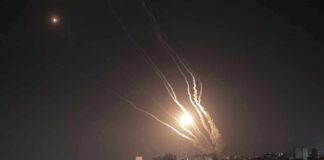
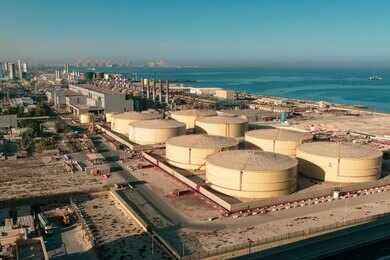
President Trump announced on March 2, 2026, that military strikes against Iranian military, naval, and energy infrastructure may continue for weeks, demanding Tehran “stand down” as U.S. forces systematically degrade Iran’s capabilities. The operation marks a decisive shift from containment to confrontation, targeting the regime’s ability to threaten American interests and allies. Qatar’s LNG operations and a major Saudi refinery have suspended activities due to debris and shrapnel risks from ongoing strikes. The U.K. has warned shipping of elevated electronic interference in the region, further complicating transit decisions for energy transporters serving global markets.
Energy Markets React With Historic Volatility
Brent crude oil surged to approximately $83 per barrel on March 2, marking the largest price movement in four years as markets absorbed the implications of reduced Hormuz flows. Analysts at S&P Global note that a one-week traffic reduction would be historic, while prolonged disruption exceeding seven days would represent an epochal shift requiring price rationing. Commodity markets rallied sharply while Treasury prices sank as investors repositioned for potential inflation acceleration. Morgan Stanley analysts project U.S. equity markets can withstand the disruption unless oil prices remain elevated for extended periods, though recession risks mount with each passing day of reduced tanker traffic.
America’s Energy Shield Faces Durability Test
The United States produces more oil than any nation on Earth, with substantial reserves accumulated during recent periods of soft global demand, positioning the country to weather short-term supply disruptions better than during previous Middle Eastern conflicts. Energy analysts emphasize this production advantage provides meaningful insulation from immediate price shocks that would devastate less energy-secure nations. However, experts warn that American consumers would still face gasoline price increases if the Hormuz standstill extends beyond days into weeks. The lack of viable alternatives for high-volume oil transit around the strait amplifies vulnerability; no pipeline or shipping route can replace the chokepoint’s capacity in the timeframe required.
Iran’s capability to sustain a blockade remains questionable despite its strategic position. Clearview Energy analysts note that Iran’s diminished naval strength, degraded by ongoing U.S.-Israel strikes, limits Tehran’s options to mines or harassment rather than effective closure. Iran’s own economic fragility compounds this limitation—the regime depends heavily on oil export revenues it would forfeit in a prolonged shutdown. Historical precedent from the 1980s Tanker War demonstrates that even sustained attacks failed to fully close the strait, though current circumstances involve more direct infrastructure targeting than past conflicts. The critical question remains duration: analysts at Pitchbook stress that while America’s oil glut provides a cushion for brief disruptions, weeks-long closures would trigger rationing and severe economic consequences that no stockpile can indefinitely offset.
Constitutional and Economic Security at Stake
This crisis exposes the fundamental tension between America’s hard-won energy independence and the Biden-era underinvestment in refining capacity and strategic reserves that Trump inherited. Patriots understand that true energy security requires not just production but infrastructure resilience against foreign threats—precisely what conservative energy policies prioritize over green agenda distractions. Bloomberg analysts suggest Iran lacks intent for complete supply curtailment, but threats alone have achieved effective disruption, demonstrating how adversaries exploit infrastructure vulnerabilities. If oil reaches triple digits due to prolonged conflict, the inflation and economic drag would punish American families despite domestic production strength, vindicating Trump’s warning that strength through deterrence prevents such scenarios better than reactive military operations, however necessary they become when adversaries cross red lines.
Sources:
Strait of Hormuz ship traffic slows to a crawl amid U.S.-Israel attacks on Iran – CBS News