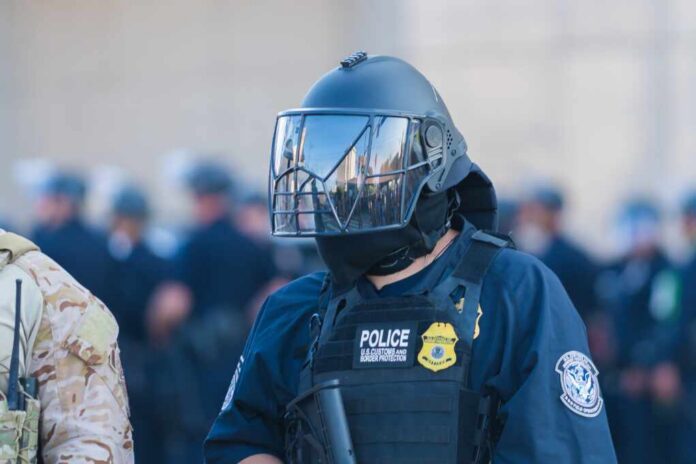
An ICE immigration stop in a quiet St. Paul neighborhood turned into a “crazy fast” chase and multi-vehicle crash—then a protest—underscoring how quickly Biden-era border failures can land in America’s local intersections.
Story Snapshot
- ICE agents attempted a targeted vehicle stop of Alexander Romero-Avila, a Honduran national suspected of being in the U.S. illegally, on Feb. 11, 2026, in St. Paul, Minnesota.
- Romero-Avila fled in a Prius at high speed, culminating in a crash at Western and Selby in Cathedral Hill during the morning rush.
- Authorities reported non-life-threatening injuries to the suspect, damage to bystander vehicles, and no reported injuries to the public or ICE agents.
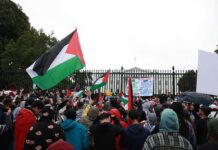
- A crowd quickly formed and protested as agents worked the scene, highlighting ongoing tensions around “Operation Metro Surge.”
Targeted ICE Stop Becomes a Hazardous Urban Pursuit
ICE agents attempted a targeted stop of Alexander Romero-Avila in St. Paul on the morning of Feb. 11, 2026, and the driver took off instead of complying. Witnesses described the car moving “crazy fast” as it traveled southbound on Western Avenue. The pursuit ended around the Western and Selby intersection in Cathedral Hill with a multi-vehicle crash involving the Prius, other vehicles, and at least one federal vehicle.
Medics transported Romero-Avila to a hospital with injuries described as non-life-threatening. Reports also describe the suspect briefly trying to run after climbing out of the vehicle, only to be caught and placed into a federal vehicle. St. Paul police were called after a large crowd began gathering at the crash scene. By late morning, the roadway was largely cleared and traffic conditions had normalized.
What Officials Said—and What Remains Unclear
DHS officials defended the enforcement action by focusing on the driver’s alleged reckless behavior during the escape attempt, including running red lights. St. Paul police statements focused on scene safety, the crash, and crowd control, while deferring to federal authorities on the underlying immigration enforcement operation. As of late Feb. 11, court records reportedly showed no charges filed yet, leaving open questions about the exact legal path forward.
Some details in the reporting were also inconsistent, including the hospital name being listed as “Regents” in one account versus “Regions” in another—an error that may reflect a typo rather than a substantive dispute. The more important point for the public is what is consistent across accounts: the pursuit occurred in a densely populated neighborhood with schools, cafes, and morning traffic, raising the risk to bystanders who had no role in the incident.
Community Reaction: Protesters, “Peaceful Observers,” and Crowds at the Scene
Witnesses and local critics quickly framed the crash as proof that federal immigration operations were too aggressive for a residential urban setting. Reports described a crowd that grew to roughly 100 or more people, with shouting directed at agents and “peaceful observers” watching closely. Activists demanded an end to “Operation Metro Surge,” arguing that the operation’s tactics can endanger the very communities where it is carried out, especially at busy times of day.
The Conservative Lens: Enforcement Is Necessary, But Public-Safety Rules Still Apply
From a law-and-order perspective, the core fact pattern is straightforward: ICE attempted a stop and the suspect chose to flee, triggering danger that spilled onto ordinary citizens through damaged vehicles and a chaotic intersection. At the same time, any high-speed pursuit in a neighborhood setting—especially around school drop-off hours—creates a legitimate public-safety concern that should be addressed with clear pursuit standards and coordination with local law enforcement where possible.
Broader context matters, too. Reports indicate Romero-Avila entered and was released in 2022, during the Biden administration’s period of looser border enforcement. For many Americans, this is the “downstream” consequence of years of policy choices that increased unlawful entry and strained the system: federal agents are left trying to locate individuals inside the country rather than stopping the problem at the border. That reality fuels today’s friction between federal action and local backlash.
Similar Incidents in Texas and California Show a Pattern of Escalation
Coverage of other recent ICE operations points to a wider trend of vehicle stops turning into pursuits, foot chases, or confrontations—sometimes with local police drawn in after the fact. Reports cited an Austin incident earlier in February where an arrest followed a chase and crash, and Southern California incidents where local departments later addressed community concerns about ICE involvement. Those episodes don’t prove wrongdoing, but they reinforce why transparent policies and inter-agency communication matter.
Suspect Fleeing ICE Attempts High-Speed Getaway, but Things Go Very Badly for Himhttps://t.co/ggLyiPOESX
— RedState Updates (@RedStateUpdates) February 11, 2026
For the Trump administration, the policy challenge is balancing two realities voters can see in the same morning: the need to enforce immigration law and remove illegal entrants, and the need to protect innocent Americans from collateral danger when suspects decide to run. The reporting from St. Paul provides no evidence of injuries to the public, but it does show property damage, a packed crowd, and a neighborhood shaken by a choice that should never have been made—fleeing from lawful enforcement in the first place.
Sources:
‘Crazy fast’ ICE chase in St. Paul ends with crash, fleeing driver hurt
Protest Breaks Out In St. Paul After Vehicle Pursued By Feds Crashes
ICE arrest in Austin raises questions after video shows chaotic scene near North Loop
St. Paul Minnesota
Fullerton Police Department Addresses Community Concerns Over ICE Involvement During Recent Incident
Police in North O.C. provided assistance as ICE agents pursued an armed suspect