Meteorological agencies warn a potentially record-breaking “super El Niño” could disrupt global weather patterns by summer 2026, threatening American farmers, energy supplies, and food prices while raising questions about whether climate forecasters are overstating natural cycles to advance warming agendas.
Story Snapshot
- NOAA and European forecasters predict strong El Niño onset between June-August 2026, potentially exceeding the devastating 2015-2016 event
- Expected impacts include flooding across the Americas, droughts in agricultural regions, and intensified hurricanes that could drive food inflation
- Climate scientist James Hansen challenges media “super” hype, arguing focus should remain on long-term warming trends rather than cyclical events
- Predicted droughts threaten hydroelectric power and crop yields in Peru, Ecuador, and Colombia, with ripple effects on U.S. food imports
Forecasting Models Signal Extreme Pacific Warming
The National Oceanic and Atmospheric Administration and Europe’s ECMWF modeling center issued forecasts in April 2026 projecting a high probability of El Niño development by late summer, with sea surface temperatures potentially exceeding 2°C above historical averages in the tropical Pacific. This threshold qualifies the event as “super” in informal meteorological parlance, though NOAA has not adopted the term officially. The ECMWF predicts peak intensity in early 2027, following neutral conditions that shifted to warming signals in late 2025 after the conclusion of a La Niña cool phase.
Economic Disruption Looms for Agriculture and Energy
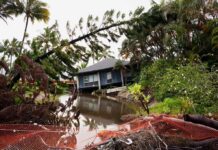
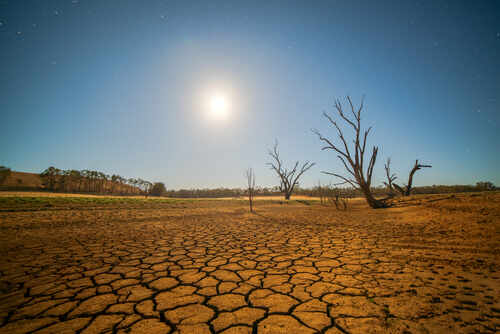
A super-strength El Niño threatens to hammer American consumers already frustrated by years of inflation tied to government spending and energy policies. Forecasters warn of droughts across Peru, Ecuador, and Colombia that would devastate river levels and reservoir storage, crippling hydroelectric power generation and agricultural output in regions that supply U.S. markets. Simultaneously, flooding is expected along the U.S. West Coast and across parts of the Americas, risking infrastructure damage and crop losses. The World Bank has flagged food price inflation as a likely consequence, with vulnerable populations facing shortages and governments under pressure to fund disaster responses amid tight budgets.
Historical Precedents Raise Alarms
The last comparable event, the 2015-2016 super El Niño, triggered record global temperatures in 2016, massive coral bleaching, Indonesian wildfires, and severe droughts in Peru, alongside devastating storms on the U.S. West Coast. Previous super events in 1982-1983 and 1997-1998 caused widespread floods and droughts worldwide. Current forecasts suggest 2026 could surpass these precedents due to a warmer baseline ocean temperature, now elevated by 0.5-1°C from accelerated heat uptake linked to global warming. This raises questions about whether natural climate cycles are being exploited to justify interventionist climate policies that burden American energy independence and economic freedom.
Scientist Challenges Media Alarmism
Columbia University climate scientist James Hansen, a respected voice in atmospheric research, published analysis in March 2026 cautioning against overhyping the “super” designation. Hansen argues that while ECMWF models reliably predict a strong El Niño, the focus should remain on anthropogenic warming trends rather than cyclical ENSO variability. He contends media outlets have amplified alarmist narratives, with some Spanish-language sources claiming the event could be “the most devastating in 140 years,” a characterization Hansen views as speculative. His critique underscores concerns among many Americans that elite scientists and bureaucrats manipulate climate data to expand government control over industry and daily life, regardless of whether natural phenomena or human activity drives warming.
Is a super El Niño imminent, and what could the impacts be? https://t.co/uoY3aK2MIJ in @newscientist pic.twitter.com/B0x6lRhu8M
— HealthIT Policy (@HITpol) April 14, 2026
The World Meteorological Organization has coordinated international monitoring, warning that vulnerable ecosystems face severe stress from the predicted event. Governments in Latin America are preparing resilience plans with funding from international bodies, while U.S. agencies track potential impacts on domestic agriculture, energy grids, and coastal infrastructure. The forecasts remain probabilistic, with exact peak intensity uncertain, leaving Americans to wonder whether taxpayer dollars will fund another round of climate emergency spending justified by models that may overstate risks to advance bureaucratic agendas disconnected from working families’ real concerns about affordability and security.
Sources:
Por qué el Súper Niño de 2026 podría ser el más devastador – El Productor
Alerta por el Súper Niño: el fenómeno que convertirá a España en un horno este verano – Cadena SER
Super El Nino? Super Warming is the Super Story – James Hansen Substack
Super El Niño Analysis – Columbia University