Arizona Democrats are calling a memorial “too political” after signing off on plenty of political specialty plates—until the cause is conservative.
Quick Take
- Arizona Gov. Katie Hobbs vetoed SB1439, blocking a specialty license plate meant to honor slain Turning Point USA founder Charlie Kirk.
- The bill would have created a “FOR CHARLIE” plate and directed $17 of a $25 fee to a nonprofit aligned with TPUSA’s mission.
- Republicans argue the veto is selective and partisan because Arizona already offers more than 100 specialty plates, including values-based plates.
- Hobbs said the proposal would politicize a nonpartisan government function and “falls short” of uniting people after political violence.
Hobbs’ veto stops a plate the Legislature already approved
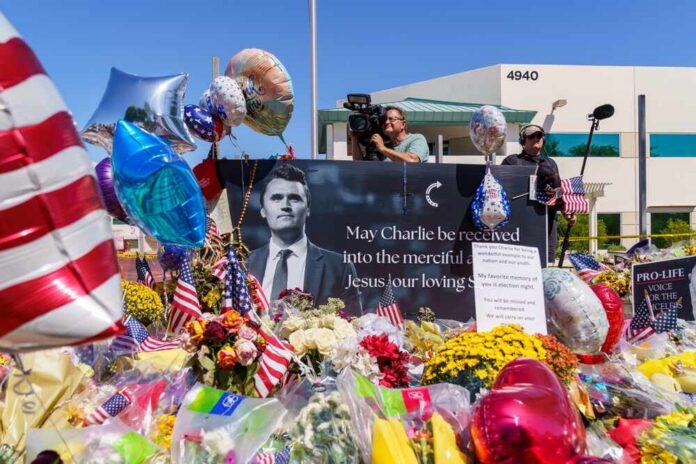
Arizona Gov. Katie Hobbs vetoed Senate Bill 1439 on March 6, 2026, rejecting a GOP-backed plan to create a specialty license plate memorializing Charlie Kirk, the assassinated founder of Turning Point USA. The Arizona Legislature had passed the measure earlier in 2026, with the Senate voting 16-2 and the House voting 31-23. Under the bill, the Arizona Department of Transportation would have issued the plate once statutory requirements were met.
The proposed design included Kirk’s image, the TPUSA logo, and the words “FOR CHARLIE.” The plate fee structure would have sent $17 of the $25 charge to a dedicated fund tied to a nonprofit that matched TPUSA’s purpose. Supporters framed the plate as a way to honor an Arizona resident whose death became a national flashpoint in debates over political violence and free speech.
What Hobbs said: tragedy acknowledged, memorial rejected as political
Hobbs’ veto message acknowledged the killing as tragic while arguing the bill “falls short” of bringing people together. Her core rationale was that a state-issued license plate is a government function that should not be turned into a political statement. The governor’s office published the veto as part of a broader legislative action update, but the public explanation centered on keeping government-administered plates from becoming an instrument for partisan messaging.
That framing matters because it sets a bright-line standard: if plates are “nonpartisan,” then the state would be expected to apply that standard evenly across ideologically charged messages. The sources available do not show Hobbs announcing a broader review of existing plates or a plan to narrow plate offerings to purely civic or apolitical themes. With limited information on next steps, the veto currently stands as a one-bill decision rather than a sweeping policy shift.
Why Republicans say the veto looks selective in a state full of cause plates
Republicans and TPUSA-aligned figures blasted the veto as partisan, pointing to Arizona’s long list of specialty plates as evidence that the state already permits plates associated with values, advocacy, and ideology. Reporting notes Arizona has offered specialty plates since 1989 and now has more than 109 active nonprofit plates. Examples cited include “Choose Life” and “In God We Trust,” showing that politically sensitive or worldview-based messages have previously cleared the legislative process.
Sen. Jake Hoffman, the bill’s sponsor, argued the governor’s decision was indecent and motivated by politics. TPUSA COO Tyler Bowyer amplified the backlash online with a provocative post. Those reactions underscore how fast modern statehouse disputes become national culture battles—especially when the subject is a well-known conservative activist killed in a high-profile attack.
The real policy question: who gets access to government-branded speech?
Specialty plates sit in a tricky space: they are state-issued, but they also let citizens display messages and fund causes through optional fees. SB1439 would have used that model to support a nonprofit aligned with TPUSA’s mission, tying a government-administered program to a specific political movement. Hobbs objected to that linkage, but critics counter that existing plate options already benefit organizations with clear ideological or religious identities, making “nonpartisan” sound like a moving target.
For conservatives, the concern is less about one piece of metal and more about viewpoint neutrality. If a state allows “values” plates for some constituencies but blocks a conservative memorial tied to campus activism and voter outreach, the practical effect is unequal access to a government channel. The sources do not include court filings or a constitutional challenge, and there is no reported attempt to override the veto as of March 8, 2026, leaving the dispute in the political arena.
Unless lawmakers mount an override effort or introduce a revised bill that changes the fund structure or design, the “FOR CHARLIE” plate remains unauthorized. The veto also leaves unanswered how Arizona will handle future proposals that honor controversial or recently slain public figures. With political violence still a live national issue, the state’s next decision will signal whether “unity” becomes a consistent standard—or a selective tool used when one side wants to silence the other.
Sources:
Hobbs vetoes bill to create a Charlie Kirk license plate
Governor Katie Hobbs Legislative Action Update