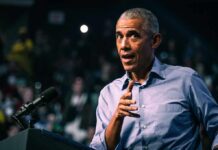
Gavin Newsom is now selling voters a personal “struggle” story—right as national Democrats look for their next standard-bearer.
Story Snapshot
- Newsom’s new memoir, Young Man in a Hurry: A Memoir of Discovery, hit shelves Feb. 24, 2026, reframing his childhood as a clash between elite access and family trauma.
- Newsom describes growing up adjacent to immense privilege through his father’s ties to the Getty world, while his mother carried hidden abuse and heartbreak.
- Reporting says the book began as a policy-focused project but shifted into a deeply personal narrative after new family details surfaced during the writing process.
- Commentary around the release suggests the memoir reads like a campaign-style introduction, with obvious implications for future national ambitions.
A memoir release that doubles as political repositioning
California Gov. Gavin Newsom’s memoir arrives at a time when Democrats are rebuilding after losing the White House—and when ambitious figures are eager to reintroduce themselves to the country. The book, published by Penguin Press on Feb. 24, 2026, presents Newsom as someone formed by insecurity and instability, not simply by elite connections. The narrative stakes out a central claim: hardship existed alongside privilege, and both shaped his political resilience.
Newsom’s own account, paired with outside coverage, emphasizes that the memoir did not start out this way. Reporting indicates he initially set out to write a policy-oriented book about governing during major crises. Over several years, the project shifted after he uncovered new information through archival material and family conversations, including details connected to his parents’ past. That pivot matters because it changes the product from “here are my ideas” into “here is why you should trust me.”
Two worlds: Getty proximity on one side, silence and trauma on the other
Accounts of Newsom’s childhood repeatedly point to a stark split: his father’s orbit included elite relationships and proximity to enormous wealth, while his mother’s world was defined by struggle, self-reliance, and a past she rarely discussed. The Los Angeles setting and San Francisco’s rich-poor divide provide a backdrop for that personal contrast. Newsom describes recognizing an invisible “line” between those worlds—close enough to see privilege clearly, but not fully inside it.
The background details are not just atmospheric; they are central to how Newsom explains his drive and his defensive public persona. Reporting describes longstanding insecurities tied to dyslexia and identity, and it highlights how he learned to perform confidence even when he felt it was missing. The memoir also revisits the humiliation Newsom felt during the 2021 recall campaign, an episode framed as reinforcing his internal doubts. Those themes are presented as emotional fuel for political survival.
Family history: famous California ties and a darker private legacy
The memoir’s most arresting elements involve family history that Newsom says he only fully confronted while writing. On his father’s side, coverage recounts notable California connections, including a role in the 1973 Getty kidnapping episode and later work involving major financial stewardship. On his mother’s side, reporting describes a traumatic lineage linked to a WWII prisoner-of-war grandfather whose postwar life included alcoholism, violence, and ultimately suicide. The book treats these facts as formative.
What’s verifiable—and what remains interpretation
Multiple outlets broadly align on the big factual contours: the book’s Feb. 24, 2026 publication; the “two worlds” theme; and the memoir’s emphasis on dyslexia, parental divorce, and newly surfaced family trauma. Where the debate begins is not over whether these events occurred, but over how they function politically. Commentary notes a familiar pattern in modern politics: leaders with real advantages still emphasize adversity, because voters often distrust inherited status and elite networks.
For conservatives who watched California’s leadership embrace aggressive cultural politics, heavy regulation, and big-government approaches for years, the political question is straightforward. A personal story may humanize a public figure, but it does not automatically answer policy concerns about governance outcomes. The available research focuses on the memoir’s narrative arc, not on new legislative proposals or measurable shifts in Newsom’s priorities. Readers are left with a character argument rather than a policy platform.
Why the timing matters for 2026 and beyond
Newsom’s memoir lands in a national environment shaped by Trump’s return to the Oval Office and heightened skepticism toward the Democratic establishment. In that context, a “discovery” memoir can serve as a reintroduction, especially for voters outside California who know the governor more by headlines than biography. At minimum, it suggests Newsom wants to broaden his appeal beyond coastal elites by emphasizing grit and contradiction. Whether that reframing works will depend on how voters weigh narrative against record.
Limited information is available in the provided research about the book’s complete contents beyond excerpts and early coverage. Still, the core takeaway is clear: Newsom is trying to control the story about who he is, why he acts the way he does, and how voters should interpret his past. Conservatives should read this moment as a reminder that biography is often used as a shield in politics—especially when tough questions about results, accountability, and constitutional values are waiting behind it.
Sources:
Gavin Newsom reveals family ‘house of horrors’ he never knew existed while writing memoir
The two separate lives of Gavin Newsom detailed in new memoir
Newsom autobiography is a campaign book, implying not everything was handed to him