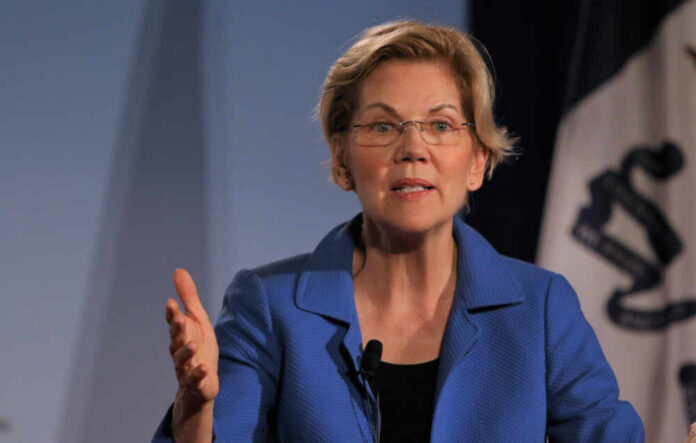
Senator Elizabeth Warren chose Easter Sunday to attack Republican efforts to save Social Security, pushing instead for higher taxes on wealthy Americans that threaten economic freedom.
Story Highlights
- Warren posted a video on April 5, 2026, criticizing Trump administration plans to raise the retirement age from 67.
- She promotes her bill to remove the $175,000 Social Security payroll tax cap, targeting billionaires like Bezos, Gates, and Musk.
- The video, featuring a March 25 Senate hearing clip, gained 350,000 views in one day.
- Republicans focus on fiscal restraint amid Social Security’s solvency crisis driven by demographics.
- This partisan push highlights deep divides, frustrating Americans on both sides who demand real solutions over elite games.
Warren’s Easter Sunday Video Release
On April 5, 2026, Senator Elizabeth Warren (D-MA) uploaded a video to her official YouTube channel from her official YouTube channel. The clip captured her March 25, 2026, exchange at the Senate Special Committee on Aging hearing with Dan Adcock of the National Committee to Preserve Social Security and Medicare. Warren accused Republicans and the Trump administration of planning to raise the full retirement age, claiming it would force Americans to “work until they drop dead.” The post drew 350,000 views within a day, amplifying her message during a family holiday.
Critique of Republican Retirement Age Reforms
Warren argued that increasing the retirement age from 67 would cost retirees $24,000 per year and reduce benefits by 7% for each year delayed. She positioned this as a direct cut to earned benefits for 70 million seniors facing demographic pressures, with fewer workers supporting more retirees. Adcock supported her view, emphasizing preservation of current benefits. This stance rallies Democrats against what they call GOP austerity, even as solvency projections demand action.
Proposal to Tax High Earners Without Limits
Warren’s bill seeks to eliminate the Social Security payroll tax cap at $175,000 annual income, requiring billionaires like Jeff Bezos, Bill Gates, and Elon Musk to pay taxes on all earnings. She promises this would fund $200 monthly benefit increases for seniors and stabilize the trust fund. Set since 1983, the cap exempts ultra-wealthy contributions beyond that threshold. Critics see this as punitive overreach that punishes success and risks driving capital away from America.
Proponents frame it as fairness, noting high earners pay the same as middle-class workers at $175,000. Yet Republicans prioritize limited government, arguing endless tax hikes erode incentives for innovation and growth that benefit all Americans.
Broader Frustrations with Government Overreach
This clash underscores shared citizen anger across political lines: conservatives resent liberal spending sprees fueling inflation, while liberals decry cuts to entitlements. Both see elites in Washington prioritizing power over the American Dream of hard work and self-reliance. Warren’s holiday video rally, amid GOP control of Congress, signals Democrats’ obstruction tactics. Long-term, lifting the cap might add trillions but could slow economic engines in tech and finance sectors.
Social Security’s crisis stems from an aging population, demanding honest reforms like Republican age adjustments over class-warfare taxes. Americans deserve leaders focused on solvency without pitting groups against each other, restoring faith in institutions corrupted by partisan elites.