Gavin Newsom’s most viral claim about “relating” to Black voters is colliding with what the record actually shows: his low-SAT and reading-difficulty comments came from California’s State of the State stage, not a targeted pitch to any racial crowd.
Story Snapshot
- Newsom disclosed a 960 SAT score and said he struggles to read written text while ad-libbing during his final State of the State address in January 2026.
- Available reporting and transcript-based accounts place the remarks in a California policy speech, not in front of a specifically identified Black audience.
- Newsom’s office highlighted statewide test-score gains and new literacy legislation, while critics pointed to cost-of-living pressures and weak college/career readiness numbers.
- California reported improved student test scores in 2024–25, yet only 51.7% of graduates met the state’s college and career readiness standard despite high graduation rates.
What Newsom Said—and Where the Paper Trail Puts It
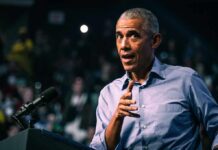
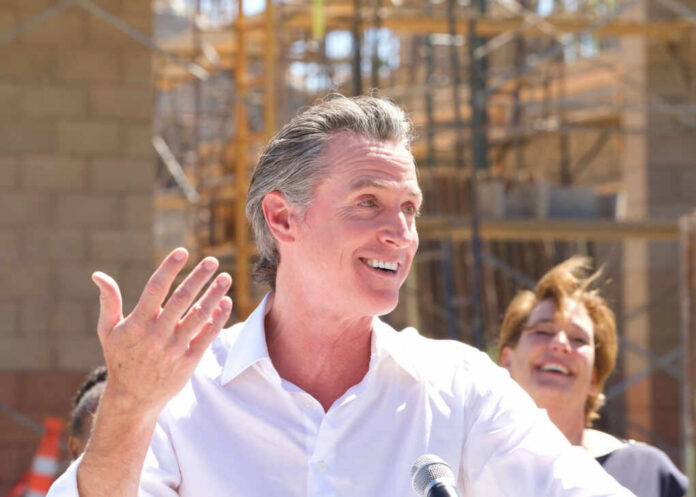
Governor Gavin Newsom’s off-the-cuff remarks centered on two personal disclosures: a 960 SAT score and an “inability to read the written text,” which he described as something he has had to work through. Reporting tied those lines to his final State of the State address in January 2026, when he veered from prepared comments. That matters because the most inflammatory online framing alleges he said it to a “Black crowd,” a detail not supported in the available sources.
The distinction is not a minor “spin” issue; it is the core factual question. The record summarized in the research does not identify a Georgia event, a Black audience composition, or a quote where Newsom explicitly says he is “like them” because of test scores. What the sources do show is a governor using personal academic insecurity inside a speech meant to praise statewide education progress—an unusual contrast that social media later repackaged into a culture-war clip.
California’s Test-Score Gains vs. Real Readiness Gaps
Newsom’s education message rested on reported statewide improvements in 2024–25 test scores, including better results than the prior year and pre-pandemic performance in 2018–19 across subjects and grade levels. The state’s announcement also emphasized notable gains among low-income students and improved performance among Black and Latino students. Those data points were paired with Newsom’s signing of AB 1454, promoted as an effort to expand literacy support by providing training and tools to educators.
Even with those improvements, publicly cited readiness data undercuts the “mission accomplished” vibe. Reporting referenced that about nine in ten California students graduate, but only 51.7% meet the state’s college and career readiness standard. For parents and taxpayers, that split raises a straightforward question: if graduation rates are strong but readiness remains near a coin flip, where exactly is the system failing—standards, instruction, discipline, or accountability? The available research doesn’t settle that debate, but it shows the gap is real.
The Politics Inside a Personal Confession
Newsom’s disclosure about struggling with written text can be read two ways based on the facts provided. Supporters framed it as humanizing and aligned with a literacy push; he referenced confronting an ongoing challenge while touting policy gains. Critics, including Republican voices cited in reporting, rejected his upbeat portrayal of California and instead focused on affordability pressures—cost of living, gas prices, housing, and education outcomes. Those criticisms land in a state where family budgets and basic stability have been recurring flashpoints.
Why Conservatives Should Be Careful With the Viral Narrative
Conservatives have good reasons to distrust elite messaging—especially after years of deflection on inflation, border enforcement, and ideological capture of schools. But credibility still matters, and the research explicitly warns that the “told a Black crowd he’s like them” framing does not align with available source material about where the comment was made. The more reliable criticism, based on what’s documented, is that Newsom used a rosy statewide storyline while readiness metrics and affordability concerns remained unresolved.
What to Watch Next in California’s Education Fight
The policy test is whether literacy investments and coaching translate into durable gains that show up in readiness, not just year-to-year score bumps. AB 1454 and the state’s focus on literacy supports may help, but the public will likely judge results through measurable outcomes: reading proficiency, graduation integrity, and whether students leave school prepared without politicized distractions. With President Trump back in the White House in 2026, California’s leadership will face sharper national scrutiny—and less patience for narratives that don’t match the data.
Sources:
What Happened When Gavin Newsom Sent a Surge of State Troopers to Fight Crime in Oakland
Newsom’s final State of State speech steeped in rosy view of California, his record as governor