

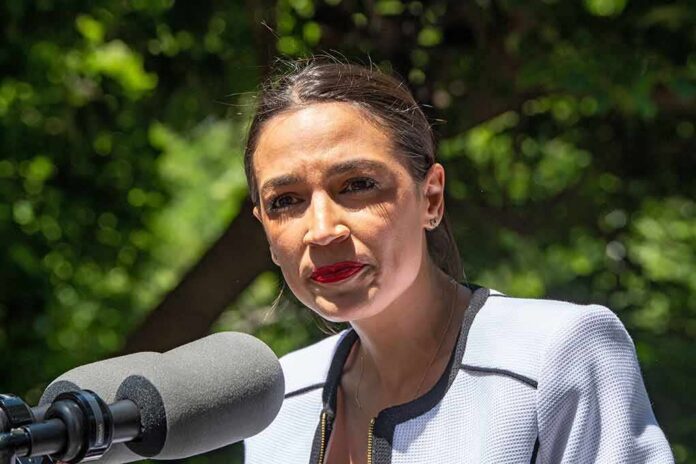
At a private fundraiser, Alexandria Ocasio-Cortez tied a Michigan Senate race to a national power test, then backed it with $1 million.
Story Snapshot
- Ocasio-Cortez said if Abdul El-Sayed can win Michigan, progressives can win anywhere.
- She moved $1 million to a joint fund with his campaign and party committees.
- The race gives a real battleground test of progressive reach beyond core voters.
- Skeptics cite weak national favorability for Ocasio-Cortez outside Democrats.
What AOC Said And Why Michigan Matters
The New York Times reported audio from an October fundraiser where Representative Alexandria Ocasio-Cortez said, “If Abdul can win in Michigan, anybody can win anywhere.” She framed the effort as a “generational project” for progressives. Michigan is a true swing state. Winning there would suggest a left-leaning message can draw enough votes beyond a base. That makes the contest a live test of reach, not just an online debate, for a national audience watching 2028 signals.
On October 16, Ocasio-Cortez transferred $1 million to the Abdul for Michigan Victory Fund, a joint fundraising committee that includes El-Sayed’s campaign, the Democratic Senatorial Campaign Committee, and the Michigan Democratic State Central Committee. That move shows a rare level of personal and financial stake. It also ties national party groups to the outcome. Supporters say it proves she is serious about proving viability in a hard state. Critics warn spending does not equal persuasion.
How The Michigan Race Became A Progressive Proof Point
Reports describe El-Sayed running for the United States Senate against former Republican Representative Mike Rogers, with Ocasio-Cortez stumping in Detroit and the Upper Peninsula. She said she chose to invest after seeing turnout energy at two town halls in the Upper Peninsula, a northern Michigan rally, and events around Detroit. The campaign is cast as a test of “leftist appeal in purple states,” with progressives also trying to connect with disaffected Trump voters.
This test has clear limits. The core claim is conditional and unproven until votes are counted. A Senate race measures one state’s electorate, not a national primary field. A win would not directly show Ocasio-Cortez can build a primary coalition across regions, or that El-Sayed’s voters would back her in 2028. The structure of the joint fund also centers Senate control, which could blur any clean read on her personal brand.
The Counter-Current: Polling And Party Resistance
Veteran strategist James Carville argues Ocasio-Cortez cannot win the 2028 Democratic nomination because her politics sit too far left for primary voters, especially Southern Black voters who he says are decisive. Polling snapshots add headwinds. An Echelon Insights survey put her favorable rating at 67 percent among Democrats but only 33 percent among all voters, with 11 percent naming her their top 2028 choice, behind Kamala Harris and others.
Some Democrats describe her as a lightning rod, and media summaries flagged low national favorability numbers, including a cited CNN/SSRS figure in the mid-twenties and weaker standing with independents. Senator Ted Cruz framed the main primary argument against her as electability in a general election, signaling how Republicans would attack a progressive standard-bearer. These points do not settle Michigan, but they show the cost if she links herself to a loss.
Why This Matters Beyond One Race
Michigan is a stress test of message and machine. Voters across the spectrum see leaders chase headlines while daily costs, border pressures, and crime debates grind on. When a high-profile lawmaker puts $1 million and personal time into a purple state race, it raises a basic question both left and right share: who can actually win and deliver? If the result is close, the fight over what it “proves” could run louder than the margin itself.
What To Watch Next
Watch final turnout patterns in suburban Detroit, mid-size cities, and rural counties. Look for whether late money funded field work or only ads. Track whether El-Sayed gained among independents or held only base voters. After the race, expect fresh polling on Ocasio-Cortez’s standing and whether any Michigan “model” shows up in Wisconsin or Pennsylvania. Until then, one fact stands: she raised the stakes herself, in full public view.
Sources:
ibtimes.com, nytimes.com, detroitnews.com, aljazeera.com, noticias.foxnews.com, yahoo.com, americantribune.com, newsweek.com