President Trump said Russia is “not going to attack a NATO territory,” even as Western intelligence warns Moscow may probe the alliance.
Story Snapshot
- Trump downplayed the risk of any Russian strike on a North Atlantic Treaty Organization member.
- United States intelligence reports outline possible Russian “tests” of NATO, from cyberattacks to small incursions.
- NATO statements label Russia the most direct threat and cite ongoing hybrid activities on allied soil.
- Russia publicly dismissed U.S. media warnings as “scare stories” amid the debate.
What Trump Said And Why It Matters
On August 27, President Trump told reporters that Russian President Vladimir Putin is not going to attack a North Atlantic Treaty Organization country. He also played down reports about a warning trip to Moscow by Central Intelligence Agency Director John Ratcliffe. Trump’s message aimed to calm fears of a sudden crisis. It also fit his past assurances to allies that there would be no attack while he is in office.
Trump’s position matters because words from a sitting president shape deterrence and public trust. Supporters say steady talk reduces panic and avoids giving Moscow an excuse to escalate. Critics argue soft language can confuse allies or undercut clear red lines. In a polarized moment, many Americans see leaders as posturing for headlines rather than solving problems. Clear, consistent policy is what taxpayers expect from a government they feel has drifted from basic duties.
What Intelligence And NATO Are Warning About
Recent United States intelligence assessments say the greater risk is not a full invasion, but a limited move to “test” the alliance. Scenarios include cyberattacks, sabotage, or a small land probe meant to challenge unity and the duty to defend under Article 5. Reports from major outlets describe that risk over the next few years, not as a certainty but as a live concern for planners.
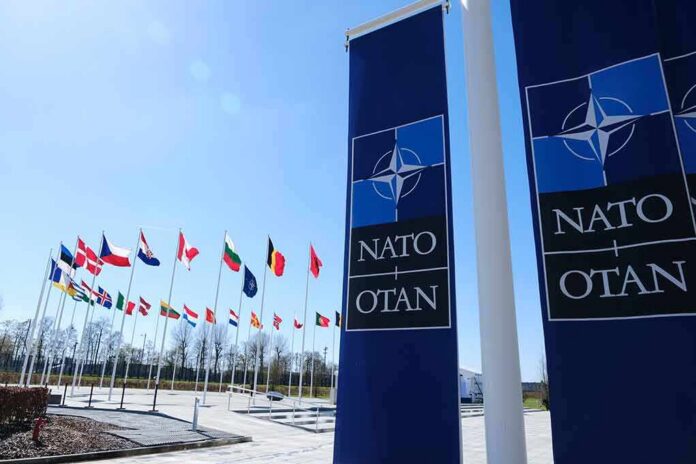
NATO’s own posture documents and statements call Russia the most significant and direct threat to allied security. Allied officials also describe ongoing hybrid activities across the Euro‑Atlantic area, including on allied territory and via proxies. These actions fall below open war but still aim to disrupt energy, industry, and public trust. The alliance says it will keep channels open to prevent escalation while reinforcing deterrence.
Moscow’s Rebuttal And The Messaging Gap
The Kremlin dismissed press reports of a planned strike on a North Atlantic Treaty Organization country as “scare stories.” Russian officials have also said they do not plan to attack North Atlantic Treaty Organization or European Union states. Such denials are standard in gray‑zone competition, where countries seek room to act without triggering a wider fight. The gap between public denials and intelligence warnings keeps allies uneasy.
This messaging clash is not new. Political leaders often try to lower the temperature. Intelligence services are paid to flag low‑probability, high‑impact risks. Both can be true at once. For citizens who worry the “deep state” and political class talk past each other, the answer is measurable actions. Clear budgets, credible forces, and honest timelines matter more than slogans.
What To Watch Next: Signals That Cut Through The Noise
Watch allied defense drills, cyber defense upgrades, and fast repair plans for power, ports, and cables. These steps show whether leaders back words with muscle. Track whether allies fix gaps found in recent exercises. Look for joint responses to sabotage or cyber hits, even small ones. A united and quick reply reduces the odds that Moscow tries a probe. Deterrence works best when promises are matched by real capability.
Also watch for consistent messages from Washington, Brussels, and key capitals. Mixed signals feed doubt on both sides of the aisle. Conservatives want strength without endless wars or blank checks. Liberals want the rule of law, support for allies, and guardrails on executive power. Both want honesty and results. If the federal government speaks clearly, spends wisely, and protects critical systems, it can regain trust across that divide.
Sources:
insiderpaper.com, globalbankingandfinance.com, cbsnews.com, newsukraine.rbc.ua, bbc.com, pravda.com.ua, yahoo.com, straitstimes.com, nato.int