The Trump administration just used visa power as leverage, yanking Brazil’s ambassador’s visa after Brazil tried to stall and strong‑arm the United States over our own diplomats.
Story Snapshot
- Trump officials revoked Brazil’s ambassador’s visa as a direct response to Brazil blocking America’s new envoy and denying visas to U.S. diplomats.
- The move is designed as tough reciprocity, not a formal expulsion, and the visa can be restored if Brazil backs down.
- Brazil’s left‑wing government is crying “blackmail,” but has not answered U.S. claims about its own visa denials.
- The action fits a wider Trump strategy of using visa law to push back on censorship, election games, and anti‑American overreach abroad.
Trump Uses Visa Leverage After Brazil Blocks U.S. Ambassador
Senior officials in President Trump’s State Department revoked the U.S. visa of Brazil’s ambassador in Washington, Maria Luiza Ribeiro Viotti, after weeks of Brazil withholding approval for Trump’s nominee to serve as U.S. ambassador to Brazil, Daniel Perez. Brazil has refused to grant the standard diplomatic sign‑off, known as agrément, that every ambassador needs before taking up the post. The same Brazilian government also denied visas to several American diplomats who planned routine meetings on election integrity and basic freedoms.
State Department briefers called the step a “reciprocal action,” making clear this was payback for Brazil’s choices, not a random move. They stressed this is not the same as declaring Viotti persona non grata, which would mean formal expulsion and a full‑blown diplomatic break. Instead, the United States is using legal visa tools to send a clear message: if Brazil blocks our representatives and tries to muzzle our officials, it will feel real and personal consequences for its own elites.
Temporary Pressure, Not a Full Diplomatic Break
Officials also underlined that the revocation is reversible and targeted, not permanent punishment. The ambassador remains in the United States and can keep her role for now, but she loses the security of re‑entry and travel that a valid visa provides. Her visa will be restored “immediately” if Brazil approves Perez to serve in Brasília, giving Brazil a simple choice between continued pressure and a quick return to normal. That conditional offer shows the move is leverage, not theater.
Media outlets from across the spectrum described the episode as a tit‑for‑tat fight, but the core facts line up with what the State Department said. Brazil stalled on agrément, blocked visits from American officials, and let anti‑U.S. rhetoric grow at home; Trump’s team answered with a direct hit where the Brazilian political class feels it—access to the United States. For readers tired of seeing America pushed around, this is a rare case where Washington is finally using its tools instead of rolling over.
Brazil’s Complaint and the Bigger Trump Strategy
Brazilian commentators have labeled the step “blackmail” and a “diplomatic slap,” claiming Washington is trying to force their hand on internal political matters. But Brazil has not produced clear public records that dispute the U.S. claim about its visa denials or explain why Perez’s agrément is being delayed beyond normal protocol. Instead, the Brazilian side leans on hurt feelings and vague charges, while avoiding the simple question: why should Brazil’s government expect special treatment after it shut the door on U.S. diplomats?
The Trump administration has revoked the U.S. visa of Brazil's ambassador, Maria Luiza Ribeiro Viotti, escalating diplomatic tensions between Washington and Brasília, CNN reports.
A senior State Department official said the move was a reciprocal measure in response to Brazil's pic.twitter.com/opFKMlWgri
— Voice of Freedom 2.0 🇿🇦 🇵🇸 (@capemalay3) August 5, 2026
This is not the first time Trump’s administration has used visas to push back on Brazil’s political overreach. In 2025, the State Department announced visa restrictions on Brazilian Supreme Federal Court Justice Alexandre de Moraes and his allies for running a censorship drive that targeted supporters of Jair Bolsonaro and even reached into the United States. That order cited section 212(a)(3)(C) of U.S. immigration law, which lets the Secretary of State block entry when a foreign figure’s actions seriously harm American foreign policy. Put together, these moves show a pattern: under President Trump, visas are no longer free perks for foreign elites who attack free speech and play games with our elections.
What This Means for American Readers
For many Americans, especially conservatives, this story hits a nerve because it flips the usual script. For years, globalist leaders and activist judges abroad have pushed censorship, criminalized right‑of‑center voices, and then walked into the United States as if nothing happened. Now, a foreign government that tried to shame our officials and stall our ambassador nomination is seeing a real cost. Instead of letting another left‑wing government lock out U.S. diplomats and then lecture us on “democracy,” Trump’s team is drawing a line.
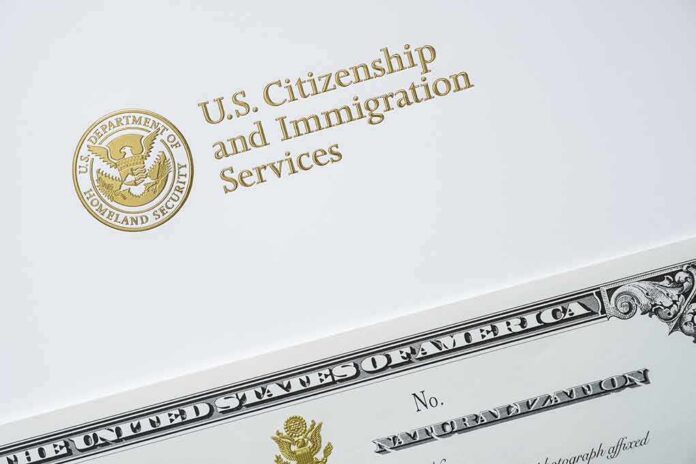
This is also a reminder of how much quiet power sits inside visa policy. A visa may look like paperwork, but for foreign officials, it is the key to influence, travel, and access to American institutions. When our government is willing to use that power in defense of election integrity, free speech, and honest diplomacy, it protects our Constitution and our standing abroad without firing a shot. Readers who value strong borders, respect for U.S. law, and firm answers to foreign overreach will see this episode as one more sign that Washington, at least under Trump, is beginning to put America first again instead of bending to global pressure.
Sources:
nypost.com, reuters.com, washingtonpost.com, bloomberg.com, x.com, state.gov