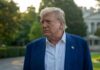
President Trump went on national TV Thursday night to release what he called proof of “shocking vulnerabilities” in U.S. voting systems — but the declassified documents his team released do not show that any election result was ever changed.
Story Snapshot
- Trump gave a primetime speech July 16, 2026, and released newly declassified intelligence on U.S. election security.
- The documents describe real cyber vulnerabilities in voting systems, but do not show any election outcome was altered.
- Trump accused China of carrying out “the largest compromise of election data in history,” a claim that contradicts a 2021 U.S. intelligence finding.
- The speech comes months before November midterm elections, raising questions about timing and intent.
What Trump Said — and What the Documents Actually Show
Speaking from the White House East Room on July 16, Trump announced “the immediate declassification and release of critical intelligence revealing shocking vulnerabilities in our election infrastructure.” His administration posted the documents at whitehouse.gov. Trump said the evidence shows U.S. voting systems are dangerously exposed to foreign hacking at levels “never thought possible.” He also called for Congress to pass what he is calling the SAVE America Act before the November midterms.
The documents themselves tell a narrower story. Multiple news outlets that reviewed them found the materials largely describe vulnerabilities that election security experts have known about for years — and that local officials have already been working to fix. Crucially, none of the documents show that any voting system was successfully breached in a way that changed an election result. Sources familiar with the drafting process said early versions of the speech focused only on system vulnerabilities, not on claims that any election was actually hacked.
The China Claim Directly Contradicts U.S. Intelligence
Trump’s most striking accusation was that China carried out what he called “the largest compromise of election data in history,” gaining access to voter registration data on roughly 220 million Americans. He also accused U.S. intelligence officials of covering up what they knew. That claim runs directly against the intelligence community’s own 2021 assessment, which concluded with high confidence that China did not try to change the outcome of the 2020 election. The Office of the Director of National Intelligence released that finding publicly in March 2021.
Russia and Iran did try to influence the 2020 election through disinformation and other tactics, according to that same 2021 report. But the intelligence community found no sign that any foreign actor successfully altered votes or changed the count. Democrats on the House Intelligence Committee sent a letter ahead of the speech warning against using declassified intelligence to push claims the intelligence community’s own record does not support.
Why Timing and Trust Both Matter Here
Trump’s speech arrived just months before a challenging midterm election for Republicans. That timing has drawn scrutiny from analysts across the political spectrum. Homeland Security Secretary Markwayne Mullin was scheduled to hold a briefing the day after the speech to discuss cyber vulnerabilities in electronic voting systems. Whether that briefing produces new, concrete evidence — or repeats the same broad claims — will matter a great deal to voters trying to decide what to believe.
In a primetime address to the nation on Thursday night, President Donald Trump announced the "immediate" declassification and release of intelligence revealing "vulnerabilities in our election infrastructure." He claimed that the evidence shows the U.S. pic.twitter.com/vcT5tr9lDL
— The Q Eye (@TheQEyelrq) July 17, 2026
Here is the tension every American should sit with: real vulnerabilities in election systems do exist, and foreign adversaries do probe them. Those are legitimate concerns worth fixing. But there is a difference between “our systems have weaknesses” and “elections were stolen.” The first demands action. The second, without hard proof, erodes the very trust that makes democracy work. When powerful leaders blur that line — especially right before an election — it is worth asking who benefits from the confusion, and whether the goal is fixing the problem or winning the next vote.
Sources:
npr.org, youtube.com, kfgo.com, irishtimes.com, dni.gov, nytimes.com, bloomberg.com, reuters.com