Japan’s new prime minister used a White House dinner to revive Shinzo Abe’s pro-America alliance playbook—right as Washington presses Tokyo to help secure the world’s most critical oil chokepoint.
Story Snapshot
- Prime Minister Sanae Takaichi met President Trump at the White House on March 19, 2026, for an Oval Office session and an evening State Dining Room dinner.
- The Strait of Hormuz dominated talks as the U.S. seeks allied support amid an ongoing U.S.-Iran conflict, while Japan cited legal limits on military involvement.
- Takaichi publicly praised Trump’s peacemaking image, called the two leaders “best buddies,” and declared “Japan is back.”
- Trump and Takaichi also highlighted a major $40 billion nuclear reactor agreement involving GE Vernova and Hitachi, framed as a U.S. energy and jobs win.
White House Dinner Signals an Abe-Style Reset in U.S.-Japan Ties
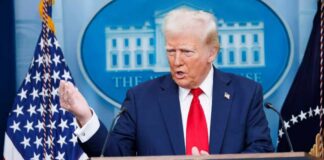
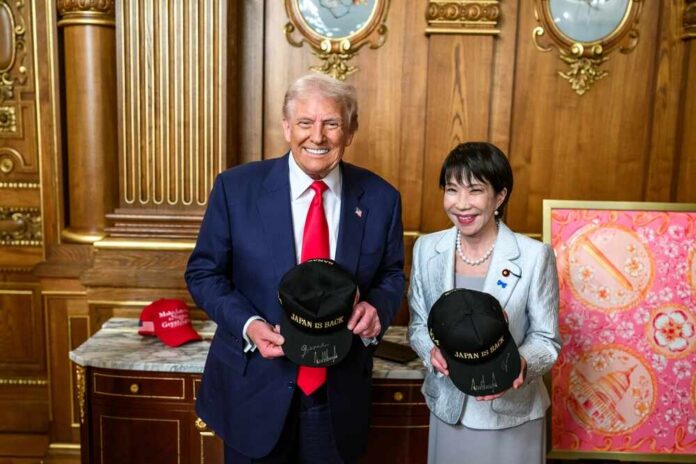
President Donald Trump hosted Japanese Prime Minister Sanae Takaichi at the White House on March 19, 2026, pairing an Oval Office meeting with an evening dinner in the State Dining Room. Coverage described an intentionally warm display: Trump praised Takaichi as a “popular” and “powerful” leader, while Takaichi emphasized personal rapport and alliance continuity tied to former Prime Minister Shinzo Abe. The public messaging underscored that Tokyo wants the relationship to look steady, durable, and strategically aligned.
Takaichi’s Abe references matter because Abe built a model of conservative, interest-based cooperation with Washington—defense realism, energy security, and economic negotiation without ideological lectures. That stands out after years when U.S. allies often complained about American political instability while U.S. voters complained about globalist “blank checks.” This meeting largely returned to basics: alliances exist to protect national interests. The optics of dinner, compliments, and English-language lines were part of the diplomacy.
Hormuz Pressure Test: Alliance Expectations Meet Japan’s Legal Constraints
The sharpest issue was the Strait of Hormuz, a narrow chokepoint vital to global energy flows, where the U.S. is seeking added allied support during the current U.S.-Iran conflict. Reports said Trump has complained about slow allied responses, including from Japan, and he used the meeting to press for more help. Takaichi acknowledged the “utmost importance” of Hormuz security while explaining that Japan’s domestic legal framework limits what its military can do.
That legal reality is not a minor footnote. Japan’s postwar constitutional structure constrains offensive military action and shapes what Tokyo can contribute to U.S.-led operations. The public portion of the meeting reportedly included an awkward moment when Trump made a Pearl Harbor joke, and accounts said Takaichi looked visibly uncomfortable. The friction highlights a recurring alliance dilemma: Washington wants measurable contributions, while Tokyo must navigate domestic law and public opinion that restrict direct combat roles.
Energy and Industry Win: $40 Billion Nuclear Deal Anchors the Visit
Beyond the Middle East security dispute, the visit produced a concrete economic headline: a $40 billion nuclear reactor agreement involving GE Vernova and Japan’s Hitachi. Reporting tied the project to new reactors planned for the U.S. Southeast, including Tennessee and Alabama, with the deal framed as a boost to power supply stability. In a period when Americans have endured inflation and high energy costs, the political appeal is obvious: tangible infrastructure and domestic capacity rather than abstract climate slogans.
The direction is clear—Washington and Tokyo are linking security cooperation to industrial cooperation. That connection fits a conservative policy preference for strengthening the real economy: reliable baseload power, manufacturing capability, and strategic supply chains. It also ties into Indo-Pacific security conversations, because a stronger allied industrial base helps sustain deterrence without relying on fragile international assumptions or fashionable “stakeholder” rhetoric that never seems to protect working families at home.
Indo-Pacific Stakes Loom Behind the Smiles—Especially China and Taiwan
Coverage indicated the leaders also discussed broader Indo-Pacific security, with context pointing to heightened tensions involving China and Taiwan. Takaichi is described as pro-Taiwan, a posture that can strain Japan-China relations at a time when the U.S. remains heavily dependent on Taiwan-linked chip supply chains. With Trump also preparing for a China trip, the timing suggests the White House wanted to lock in allied alignment before higher-stakes negotiations elsewhere.
Japan’s Takaichi honors Shinzo Abe at White House dinner with Trump https://t.co/CSBOvAnbLV
— The Algiers Herald (@AlgiersHerald) March 20, 2026
The takeaway for American readers is straightforward: alliances work best when they are candid about limits and focused on measurable results. The Trump-Takaichi meeting delivered results on energy and signaled continuity on strategic alignment, but it also exposed the unresolved question of burden-sharing in crisis zones like Hormuz. The public record does not explain how the closed-door portion resolved those differences. What it does show is that pressure, negotiation, and deal-making—not ideology—are driving this relationship.
Sources:
Japan’s Prime Minister Takaichi Meets with Trump as He Seeks Help Securing the Strait of Hormuz
Japan’s Prime Minister Takaichi Meets with Trump as He Seeks Help Securing the Strait of Hormuz
Japan Takaichi Trump Strait of Hormuz
Japan’s Takaichi honors Shinzo Abe at White House dinner with Trump