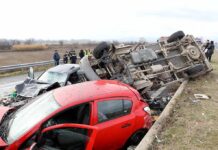
A single refusal to take a test after a violent rollover crash has left Americans with more questions than answers about what really happened to Tiger Woods on a quiet Florida road.
Quick Take
- Tiger Woods was arrested Friday, March 27, 2026, after a rollover crash near his Jupiter Island, Florida home, facing misdemeanor DUI with property damage and refusal to submit to a lawful test.
- Investigators said Woods showed signs of impairment during field tests, but a breath test did not indicate alcohol, raising the likelihood of medication or another substance.
- Woods refused a urinalysis, a decision that limits what authorities can prove about the source of impairment and will shape how the case proceeds.
- Florida law required an eight-hour hold; Woods was later released on bail, and his mugshot was released several hours after the arrest.
Crash Details and What Investigators Say Happened
Tiger Woods, 50, was arrested Friday afternoon after his Land Rover SUV crashed on South Beach Road on Jupiter Island, a residential area posted at 30 mph. According to law enforcement accounts, Woods attempted to pass a truck and clipped its trailer, sending his vehicle flipping and sliding. Woods climbed out through the passenger-side window and was not reported injured. The truck driver also was not injured, and damage was reported.
Martin County Sheriff John Budensiek described Woods as “cooperative but careful” during the roadside response. Investigators administered field sobriety exercises and reported signs consistent with impairment, including lethargy, while also accounting for Woods’ history of serious injuries and surgeries. Authorities indicated the impairment did not appear alcohol-related based on breath testing, and no drugs were reported found in the vehicle. That combination—clear concern from field observations but no alcohol reading—sets up the core question.
Refusal to Test: A Legal Flashpoint With Real Consequences
Authorities said Woods refused to submit to a lawful test, including a urinalysis, after the crash. That refusal matters because it limits the objective evidence available to confirm what substance, if any, contributed to impairment. Florida’s implied-consent framework and DUI enforcement practices often turn on chemical testing to clarify whether alcohol, prescription medication, or illicit drugs are involved. Without that result, prosecutors and defense attorneys typically fight harder over the reliability of field observations.
From a civil-liberties perspective, Americans should be clear-eyed about the competing principles at play. Law enforcement has a legitimate public-safety interest in keeping impaired drivers off the road, especially when a crash involves a rollover and property damage. At the same time, citizens—famous or unknown—do not lose the right to protect themselves legally when facing criminal exposure. The sheriff’s remarks framed the refusal as consistent with a person not wanting to incriminate himself, but the refusal also keeps the public in the dark.
Timeline: Arrest, Mandatory Hold, Release, and Mugshot
The crash occurred around 2:00 p.m. Eastern on Friday, March 27. Woods was taken into custody at the scene after the roadside investigation and transported to the Martin County Jail, arriving around 3:00 p.m. Reports stated he was held for roughly eight hours as required by Florida law in the circumstances described, then released on bail later that evening. Woods’ mugshot was released several hours after the arrest, quickly circulating nationwide.
Why This Case Lands Differently Than 2017—and Why It Matters Now
Woods’ 2026 arrest echoes his 2017 incident in the same general area, when he was found asleep in a running vehicle and later attributed the episode to a mix of pain medications. The new case differs in key ways described by officials: active driving, an attempted pass, a collision with a trailer, and a rollover. Reports also emphasize that breath testing did not indicate alcohol, keeping the focus on possible medication or another non-alcohol cause.
For fans and for the broader public, the immediate impact is practical: a pending misdemeanor case, a reputational hit, and uncertainty about what happens next in Woods’ recovery and competition schedule. The longer-term takeaway is bigger than one athlete. If impairment can be credibly suspected without alcohol on the breath test, the country is again confronting how prescription-drug impairment is handled on the road—how it’s proven, how rights are protected, and how public safety is enforced when the evidence is incomplete.
Sources:
Tiger Woods arrested at crash scene on suspicion of DUI, sheriff says
Tiger Woods mug shot released after DUI arrest after car crash: Breaking news update