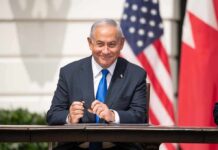
A political dynasty returns to power in Bangladesh after a massive uprising toppled a 15-year authoritarian regime, marking the first male prime minister in 36 years and ending decades of female-dominated politics.
Story Highlights
- Tarique Rahman sworn in as Bangladesh’s Prime Minister on February 17, 2026, after his BNP-led alliance won 212 seats in parliament
- First male PM in 36 years ends the “battle of begums” era dominated by Sheikh Hasina and Khaleda Zia
- July 2024 uprising killed approximately 1,400 people, forcing Hasina to flee after 15 years of authoritarian rule
- BNP coalition’s landslide victory follows 18 months of interim government and represents democratic restoration
Historic Political Transition After Deadly Uprising
Tarique Rahman took the oath of office as Bangladesh’s Prime Minister on February 17, 2026, following his Bangladesh Nationalist Party’s commanding victory in the February 12 elections. The BNP-led alliance secured 212 seats in the 300-member parliament, with Rahman’s party alone capturing at least 151 seats. President Mohammed Shahabuddin administered the oath to Rahman and approximately 36 cabinet members at South Plaza, Jatiya Sangsad Bhaban in Dhaka. The ceremony concluded an 18-month transition period under interim Prime Minister Muhammad Yunus, who assumed power after violent protests toppled the previous regime.
The political transformation follows one of Bangladesh’s deadliest uprisings in July 2024, when approximately 1,400 people, mostly young protesters, died in clashes that forced longtime Prime Minister Sheikh Hasina to flee to India on August 5. The mass protests ended Hasina’s 15-year grip on power and the Awami League’s dominance since 2008. An interim government led by Nobel laureate Muhammad Yunus took control on August 8, 2024, and organized the February elections that delivered the BNP’s overwhelming mandate. This democratic reset represents what many see as a restoration of multi-party governance after years of disputed elections boycotted by opposition parties.
Political Dynasty Returns From Exile
Rahman, born November 20, 1965, is the son of former President Ziaur Rahman and former Prime Minister Khaleda Zia, both BNP founders. He returned to Bangladesh in December 2025 after 17 years of exile in the United Kingdom, positioning himself to lead the party his family established. His ascension to prime minister consolidates the Zia family’s political legacy and ends a remarkable period of female-led governance. Bangladesh had been ruled exclusively by women since 1991, with power alternating between Khaleda Zia and Sheikh Hasina in what became known as the “battle of begums.” This dynastic rivalry defined Bangladeshi politics for decades.
The new government faces immediate challenges in managing its coalition partnership with Jamaat-e-Islami, which secured 68 seats in the alliance. Tensions emerged when the BNP rejected taking a separate oath for the Constitutional Reform Council tied to the July National Charter referendum, while Jamaat participated. The BNP’s decision signals its intent to assert dominance in the coalition despite Jamaat’s significant representation. Rahman’s government must balance implementing promised constitutional reforms while maintaining coalition unity and addressing the expectations of uprising survivors who demanded political change. The coalition’s five-year term provides time to reshape Bangladesh’s governance structure.
Regional Implications and India’s Calculated Engagement
India’s participation in Rahman’s swearing-in ceremony through Lok Sabha Speaker Om Birla’s attendance demonstrates calculated diplomatic engagement despite sheltering exiled former Prime Minister Hasina. Indian Prime Minister Narendra Modi congratulated Rahman and reaffirmed bilateral ties between the neighboring nations. This diplomatic outreach is significant given historical tensions between India and BNP governments, contrasted with India’s close relationship with Hasina’s Awami League. India’s pragmatic approach reflects recognition that stable relations with Bangladesh’s democratically elected government serve regional interests better than clinging to past alliances. Economic cooperation and security concerns along their shared border necessitate working relationships regardless of which party governs.
The democratic transition offers lessons about the limits of authoritarian governance and the power of popular movements demanding accountability. While the uprising’s death toll was tragic, the subsequent peaceful transfer of power through legitimate elections demonstrates that constitutional processes can prevail when given opportunity. The new government’s commitment to the July National Charter reforms and interim leader Yunus’s public emphasis on safeguarding “democratic space” suggest institutional changes may prevent future authoritarian overreach. Whether Rahman’s government delivers on reform promises or falls into familiar patterns of dynastic politics remains to be seen, but the electoral mandate clearly rejects the authoritarian approach that sparked the 2024 uprising.
Sources:
Tarique Rahman sworn in as Bangladesh Prime Minister – Times of India
Tarique Rahman swearing-in ceremony: Modi invited – Onmanorama
Bangladesh PM Tarique Rahman, BNP Government Swearing-In – NDTV