Washington is racing to keep a shaky Iran ceasefire from unraveling because the shooting in Lebanon never stopped.
Quick Take
- The U.S. plans to host Lebanon–Israel ceasefire talks in Washington, D.C., led at the ambassador level by Ambassador Michel Issa.
- Israel says the U.S.-Iran ceasefire deal does not cover Lebanon, even as Iran and Pakistan claim Lebanon is included.
- Hezbollah fired rockets after the Iran truce announcement, and Israel responded with a large wave of strikes in Lebanon that killed hundreds, according to varying reports.
- Prime Minister Benjamin Netanyahu says any track with Lebanon must center on disarming Hezbollah, complicating the near-term prospects for a clean ceasefire.
U.S. Hosts D.C. Talks as Lebanon Becomes the Pressure Point
U.S. officials say Washington will convene urgent talks next week in Washington, D.C., bringing together the U.S., Lebanese, and Israeli ambassadors for initial ceasefire discussions. The State Department-confirmed effort is designed to open a direct channel at a moment when fighting between Israel and Hezbollah is threatening to spill into broader regional diplomacy. The U.S. envoy role, led by Ambassador Michel Issa, signals active American management rather than a hands-off approach.
Israel’s government has indicated it is willing to engage quickly, but the purpose is not limited to stopping immediate fire. Prime Minister Benjamin Netanyahu has publicly framed the track around disarming Hezbollah and reshaping security conditions along the border. That focus matters because a ceasefire that merely pauses strikes without addressing Hezbollah’s armed presence is unlikely to satisfy Israel’s stated security goals, and it raises the bar for what Lebanon can realistically deliver at the table.
The Core Dispute: Does the Iran Ceasefire Cover Lebanon or Not?
The diplomacy is unfolding in the shadow of a separate U.S.-Israel-Iran ceasefire announced on a Thursday just before April 9, 2026, partly brokered by Pakistan. Iran and Pakistani officials have suggested the arrangement was intended to include Lebanon, but Israeli leaders have said it does not. U.S. messaging aligns with Israel’s position, creating a hard line between the Iran track and the Lebanon track even as the violence overlaps.
This contradiction is not a small technicality; it shapes incentives on the ground. If Tehran and its allies believe Lebanon is part of the broader truce, continued Israeli strikes can be framed as a violation, while Israel argues it is operating outside the Iran deal’s scope. That ambiguity gives Hezbollah and Iran room to test boundaries while each side claims legal or diplomatic cover. The result is a brittle ceasefire architecture that depends on constant clarification—and enforcement power.
Strikes and Rockets Undercut Claims of “Ceasefire” on the Lebanon Front
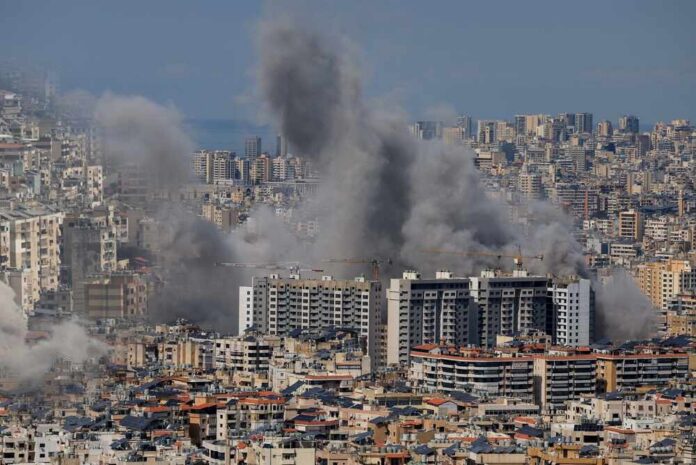
Hezbollah launching rockets into Israel after the Iran ceasefire announcement, cast as solidarity with Iran. Israel then carried out more than 100 strikes in Lebanon in a short period, with reported death tolls ranging roughly from 203 to 250 or more. The variation underscores the fog of war, but the direction is clear: there is no verified, durable ceasefire in Lebanon, even if a separate U.S.-Iran truce is holding.
Lebanon’s internal politics further complicate enforcement. Lebanese officials have emphasized that the state—not non-government actors—must lead negotiations, a position that implicitly clashes with Hezbollah’s status as an armed political force inside the country’s system. Any U.S.-led effort that assumes Lebanon can “deliver” Hezbollah disarmament quickly is likely to collide with those realities. That’s a key reason some analysts view ambassador-level talks as preliminary rather than decisive.
What Success Would Require—and Why Skeptics See Limits
One expert, Aaron David Miller of the Carnegie Endowment, argues that ambassador-led sessions are not “serious negotiating” in the sense of producing binding outcomes. That critique is less about personalities than authority: ambassadors can explore terms, but major tradeoffs typically require direct decisions by top leaders. Miller’s view suggests that meaningful movement may depend on direct coordination between President Trump’s administration and Netanyahu’s government.
U.S. to lead ceasefire talks between Lebanon and Israel in D.C. as Lebanon emerges as potential spoiler to Iran deal. https://t.co/c1uPqWqy8Z
— CBS News (@CBSNews) April 9, 2026
The broader stakes reach beyond the border. A breakdown could intensify regional instability and keep energy markets jittery, given Iran’s influence near the Strait of Hormuz and the way Middle East conflict quickly feeds global price risk. For Americans frustrated by years of foreign-policy drift, the immediate lesson is practical: ceasefires that leave proxy forces armed and active tend to be temporary, and taxpayers often end up underwriting the cleanup when diplomacy is built on contested definitions.
Sources:
Israel to begin ceasefire talks with Lebanon
White House statement on agreement extension between Lebanon and Israel