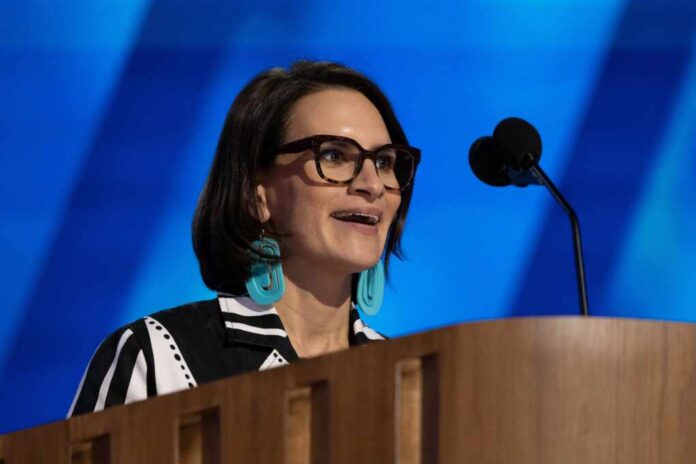
A viral mockery about Minnesota Lt. Gov. Peggy Flanagan’s “tribe name” is colliding with a basic problem: the core claim isn’t supported by the research provided.
Quick Take
- The provided research says search results do not show Flanagan sharing a “tribe name” with a derogatory meaning tied to the viral framing.
- Available reporting in the research centers on her activism against the “Redskins” name and her identity as a citizen of the White Earth Nation.
- Social posts circulate the “SNORT” headline, but the research packet itself flags the underlying premise as unverified by its search results.
- Until a direct original clip, post, or dated statement is produced, responsible coverage should treat the “tribe name” narrative as unconfirmed.
What the Research Actually Confirms About Flanagan
The research summary states plainly that the available search results do not contain a story, statement, or event where Lt. Gov. Peggy Flanagan “shared a ‘tribe name’” with a meaning that is “not exactly complimentary.” Instead, the topics that appear in the provided material relate to her activism against the Washington Redskins team name, her political profile as a Minnesota lieutenant governor, and other public-facing controversies.
That distinction matters because viral headlines can move faster than verified facts. The research packet itself frames the supposed “tribe name” story as a mismatch with what the search results show, and it recommends seeking a specific original source, approximate date, and context before treating the claim as established. Without that, readers are left with commentary about a claim rather than evidence of the claim.
Where the Viral “Tribe Name” Narrative Appears Versus Where Proof Is Missing
The social media research includes multiple X/Twitter posts amplifying a “SNORT” headline and linking to “Twitchy” framing, along with a Facebook post entry and other platform links. Those items demonstrate that the narrative is being shared and debated online, but the research summary also cautions that the underlying premise is not corroborated by the search results it reviewed. In other words, distribution is not documentation.
For conservative readers who are rightly tired of narrative-driven media, this is a familiar pattern—except it can cut both ways. When a political figure is mocked, the temptation is to run with the punchline. But if the foundational fact cannot be located in credible reporting or an original, verifiable statement, then the story becomes a game of telephone. That’s not accountability; it’s just noise.
What the Provided Articles Focus On: Mascots, Identity, and Public Backlash
Based on the citations supplied, coverage around Flanagan in the provided research includes her criticism of the “Redskins” name as racist, political profile coverage about her role and ambitions, and a report describing backlash after she wore a hijab in solidarity with Minnesota’s Somali community. Another cited piece covers Native leaders reacting to immigration enforcement policy changes. None of those topics, as summarized in the research, document the specific “tribe name” claim.
The research summary also notes that Flanagan is a citizen of the White Earth Nation and has been an advocate for Indigenous representation and dignity, particularly in opposition to dehumanizing sports mascots. Readers can agree or disagree with her positions, but the key point for this particular controversy is narrower: the provided research does not show her making the “tribe name” statement that the viral headline implies.
Why This Verification Standard Matters to Conservatives
Conservatives have spent years watching institutions play word games, launder narratives through friendly outlets, and treat social media momentum as “truth.” A disciplined standard—show the original statement, provide the date, confirm context—protects readers from manipulated outrage cycles. It also keeps criticism focused on what can be proven, which is essential when constitutional questions, parental rights, immigration enforcement, and government overreach are all on the line in real policy fights.
In Ojibwe, my name means ‘speaks in a loud and clear voice woman.’
Today, I’m officially launching my campaign for the U.S. Senate to go to D.C. and speak in a loud and clear voice for ALL of Minnesota.
— Peggy Flanagan (@peggyflanagan) February 20, 2025
If someone has the direct post, clip, transcript, or official record showing Flanagan’s “Ojibwe name,” its translation, and the context in which it was shared, that would allow a fair analysis of what was said and what it meant. Until then, the most accurate takeaway from the provided research is simple: the viral “SNORT” framing may be popular online, but the packet’s own review says it did not find confirming evidence for the specific claim as stated.
Sources:
https://www.cbsnews.com/minnesota/news/it-is-completely-outrageous-lt-gov-peggy-flanagan-says-redskins-team-name-is-racist/
https://www.thenation.com/article/politics/peggy-flanagan-minnesota-lieutenant-governor/
https://nativenewsonline.net/currents/minnesota-lt-gov-flanagan-draws-right-wing-backlash-after-wearing-hijab-in-solidarity-with-somali-community
https://ictnews.org/news/good-riddance-native-leaders-relieved-but-skeptical-about-plans-to-end-immigration-operation-in-minnesota/