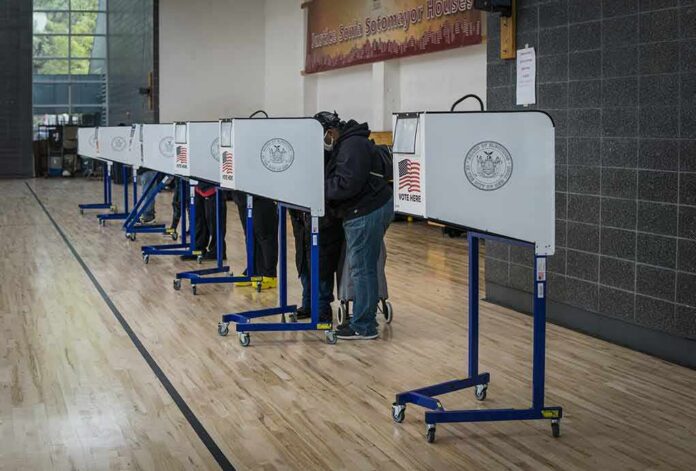
The Justice Department says it will stage its largest modern election-monitoring push to watch polling places for compliance with federal law, even as critics warn the scale could chill voters and strain trust.
Story Highlights
- Justice Department press releases describe monitors as observers ensuring compliance with federal voting-rights laws.
- Officials invite jurisdiction-specific requests and say staff will field voting-rights complaints through Election Day.
- News outlets report a plan for about 1,000 monitors, a number not found in the cited press releases.
- Wyoming’s governor criticized primary monitors as disruptive, fueling concern over federal overreach.
What DOJ Says the Monitors Will Do
Justice Department statements frame the monitors as neutral observers. The Civil Rights Division says personnel will be available to take questions and complaints related to federal voting-rights laws. The agency links the effort to transparency, ballot security, and compliance with federal law. During primary elections, the department deployed monitors across several states and polling locations under this mission. These releases emphasize that monitors observe and follow up later, rather than intervene at polling places.
Justice Department guidance also invites community requests. Officials ask anyone seeking monitoring in a given place to email the Voting Section. The Civil Rights Division then decides whether monitoring is warranted. This case-by-case approach signals a gatekeeping step rather than a blanket national order. The department positions the program as long-standing voting-rights enforcement that scales up when public concerns, access issues, or complaints rise near elections.
How Big Is This Effort, and Where?
Coverage by major outlets reports a target of about 1,000 monitors for the fall elections. That number appears in press reporting and quoted remarks, not in the Justice Department press releases included here. The department’s recent releases do document repeated primary deployments across states, but they do not list a full general-election map or total headcount. That gap leaves open questions about which jurisdictions will be covered and how the department chose them.
Specific jurisdiction lists matter for trust. A public roster, with clear reasons for each site, can help voters and local officials see neutral criteria at work. Without it, people may assume politics drove the choices. That risk grows with a big headline figure and a charged national climate. Clear protocols, training rules, and data on past outcomes would also help show that the program protects rights without disrupting voting or local control.
Supporters Cite Access and Law; Critics Warn of Intimidation
Supporters point to federal voting-rights laws and to a need to protect access, including for people with disabilities. They argue monitors can deter violations, document problems, and route issues to investigators after polls close. They also note the department fields public complaints before and during Election Day, which can help resolve confusion and track patterns in real time. In this view, monitors backstop local officials rather than replace them.
Critics from both parties question the footprint and tactics. Wyoming’s Republican governor called primary monitors “aggressive” and “disruptive.” A county clerk said their questions showed disregard for state election administration. Democratic lawmakers urged the department to avoid any action that pressures election workers or discourages turnout. Civil-rights groups stress monitors must not interfere with voters or poll workers and must stay within federal law and state rules at polling places.
Why This Matters for Voters on the Left and Right
Americans across the spectrum worry that powerful insiders bend rules while everyday people pay the price. A massive federal presence at the polls can look like help to some and like muscle to others. Trust turns on facts we can verify. Clear federal-state coordination, written rules of engagement, and public results after Election Day would address shared concerns. Posting where monitors go, why they go, and what they find can reduce suspicion and support fair elections for all.
What to Watch Next
Watch for the department to publish a jurisdiction list with objective reasons for each site. Look for training materials or protocols that limit monitor interactions with voters and poll workers. After the election, ask for counts of public complaints, any confirmed violations, and referrals for enforcement. Those steps would show whether a larger program improves access and compliance, or whether it mainly adds tension at local polling places without clear gains.
Sources:
feedpress.me, justice.gov, washingtonexaminer.com, bloomberg.com