
USDA says it hit 170 New York City stores in a single anti-fraud sweep, raising big questions about how far food stamp cheating goes—and how clean the cleanup is.
Story Snapshot
- USDA announced “Operation SNAP Back,” targeting 170 retailers across all five boroughs.
- Allegations center on SNAP trafficking and selling ineligible items like alcohol and non-food goods.
- USDA policy allows permanent disqualification of retailers after positive investigations.
- Public details lack store names and evidence files, leaving case-by-case proof unseen so far.
What USDA Says Happened In New York City
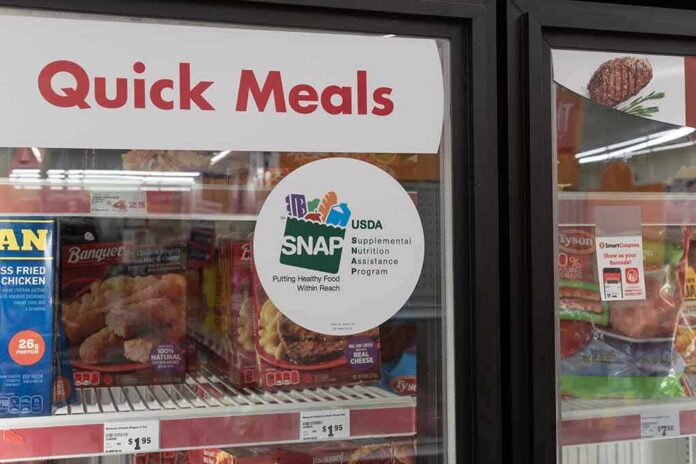
On September 18, 2026, the United States Department of Agriculture announced “Operation SNAP Back,” a crackdown on Supplemental Nutrition Assistance Program fraud in New York City’s five boroughs. The department said it took action against 170 retailers. It framed the conduct as two core violations: trafficking SNAP benefits for cash and using SNAP to buy ineligible items. The agency said investigators started in New York City and ran hundreds of undercover checks to build the cases.
USDA-linked reporting said these were sweeping steps after undercover work. The push follows years of concern about point-of-sale abuse, including skimmers found on card readers citywide. New York officials removed dozens of skimming devices in earlier inspections, which showed how Electronic Benefit Transfer fraud can spread through retail networks. That backdrop makes store-based enforcement sound plausible, even when the public still cannot see each store’s file yet.
What The Rules Allow And How Penalties Work
USDA’s Food and Nutrition Service uses an administrative process to police retailers. After a positive investigation, the agency can permanently disqualify a store from SNAP. That penalty is tied to trafficking or other serious violations proven to the agency’s standard. The official retailer guidance explains that administrative action follows “concluding positive investigations,” so violators can no longer accept benefits. This is separate from any criminal charges that prosecutors may later bring.
Federal criminal cases have also targeted SNAP trafficking in New York. Past prosecutions charged store operators who swapped benefits for cash or used unauthorized terminals. In 2025, prosecutors charged six people, including a United States Department of Agriculture employee, in a scheme tied to over $66 million in unauthorized transactions. Earlier cases in the Southern District of New York charged store owners for cash-for-benefits exchanges, showing the conduct can rise to indictments.
What We Still Do Not Know About The 170 Cases
USDA and related posts did not list the 170 retailers by name. They did not publish store addresses, dates, or transaction data. The public record does not show the undercover logs, receipt trails, or card histories for each case. That makes it hard to judge how many actions were permanent bans, temporary suspensions, or initial notices. It also means the share tied to trafficking versus improper items is unclear from what is public today.
USDA Launches 'Operation SNAP Back,' Takes Action Against 170 NYC Retailers Over Food Stamp Fraud https://t.co/MRPpGgnGYX
— Brian Craig 🇺🇸 (@BrianCraigShow) September 19, 2026
Retailers often deny the charges in formal appeals. In recent New York cases, store owners said they did not traffic benefits and pointed to clean past records. The United States Department of Agriculture still upheld permanent disqualifications in those decisions. Those files show how contested these rulings can be, and they highlight why transparency on the new wave of cases matters to both taxpayers and small shops trying to follow the rules.
Why This Matters For Taxpayers, Shoppers, And Small Stores
Taxpayers want fraud stopped because every dollar stolen weakens trust and raises costs. Families who rely on benefits want safe cards and honest stores. Small retailers want clear lines, fast due process, and no guilt by association. Studies suggest a small share of total benefits get trafficked, yet a larger share of stores could be involved, making targeted crackdowns logical. But when the government moves first and explains later, many see a system that serves itself, not the public.
What To Watch Next
Watch for case files, not just headlines. Store-level notices, evidence summaries, and appeal outcomes would show how strong these 170 actions are. Look for referrals to the Department of Justice and any indictments that follow. Track how many disqualifications hold up, get reduced, or are reversed on appeal. Also watch the separate retailer stocking rules, which can blur with fraud actions and create confusion about why a store was targeted in the first place.
Sources:
townhall.com, theepochtimes.com, reuters.com, fna.usda.gov, x.com, benefits.com, portal.311.nyc.gov, groceryroutes.com, nyc.gov, usatoday.com, dam-fns.usda.gov