As Washington and Tehran trade threats that “violence will be met with violence,” the war over the Strait of Hormuz is starting to look less like self‑defense and more like a dangerous, elite‑driven cycle that ordinary Americans and Gulf workers will pay for.
Story Snapshot
- U.S. forces struck Iranian military sites after a drone hit the Panama‑flagged tanker M/T Kiku during a fragile ceasefire.[5]
- Iran answered with missile and drone attacks on U.S. bases, claiming it was responding to earlier American strikes and “managing” the ceasefire.[12][14]
- Both sides say they are acting in self‑defense, but outside reports show a repeating pattern of tit‑for‑tat attacks in the Strait of Hormuz.[18][24]
- Hard‑line talk like “violence will be met with violence” plays well with political elites, while raising the risk of wider war, higher energy prices, and more global instability.[4][22]
Fresh U.S. Strikes After Another Tanker Is Hit
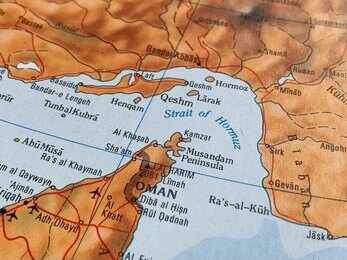
U.S. Central Command says American forces launched new air strikes on Iranian military infrastructure after a one‑way attack drone hit the Panama‑flagged tanker M/T Kiku near the Strait of Hormuz.[5] The military labeled the attack a clear breach of the June 17 interim ceasefire, arguing that Iran had been “given a chance” to honor the deal but chose not to.[2] Targets reportedly included surveillance systems, communication hubs, air defense sites, drone storage, and minelaying capabilities along Iran’s coast.[5]
These strikes follow earlier U.S. attacks on Iranian sites that were also justified as self‑defense after a drone hit another ship, the Ever Lovely, in the same region.[10][12] The pattern is now familiar: Iran uses drones around the strait, the United States responds from the air, and officials in Washington frame every move as needed to protect “freedom of navigation” for global oil flows.[19][21][24] Meanwhile, commercial vessels largely keep moving through Hormuz, but under growing risk and military escort.[5][22]
Iran’s “Ceasefire Management” And Retaliation Claims
Iranian officials reject the claim that they broke the ceasefire, instead describing their actions as “ceasefire management” and a response to U.S. aggression.[1][11] State media citing the Islamic Revolutionary Guard Corps say Iran launched retaliatory missile and drone attacks on up to eight U.S. military bases across the Gulf, including the Fifth Fleet in Bahrain and an airbase in Kuwait, in answer to earlier American strikes on coastal outposts.[12][14][16] From Tehran’s view, U.S. warplanes hit Iranian soil first, and Iran is the side trying to defend its territory and control over the strait.[11][24]
Regional reports add more layers of confusion and danger. Bahrain has accused Iran of drone attacks that violated its sovereignty, and British maritime authorities recorded another strike on a commercial vessel off Oman around the same time.[10][12][15] Each new incident lets both sides claim they are merely responding. Each also gives their leaders an excuse to dig in, talk tough, and tell citizens they are standing up to foreign enemies, even as the shooting continues.[18][22]
A Fragile Ceasefire And A Repeating Escalation Pattern
The latest clash sits on top of months of war that began with a massive joint U.S.–Israeli campaign, Operation Epic Fury, which killed Iran’s supreme leader and hit hundreds of military targets.[4][15] Since then, Iran has used drones and missiles to pressure neighbors’ energy hubs and U.S. bases, hoping to force talks, while American forces have struck Iranian ports, radar, and mine‑laying vessels near Hormuz.[3][19][20][24] Analysts say the strait has become the main stage where both governments “show resolve” and inflict economic pain on each other and the world.[20][24]
Independent reporting describes a pattern that has repeated at least several times since 2019: both sides claim self‑defense, both fire weapons, and outside observers cannot clearly prove who shot first.[18][24] A recent “14‑point” memo on safe passage through the strait gave roughly thirty days of breathing room, but that deal, like the current ceasefire, has been stretched and bent by new incidents and political pressure at home.[18][22] The result is a truce that exists mostly on paper, while real ships, workers, and soldiers face constant danger.
Rhetoric Of “Violence For Violence” And The Cost To Ordinary People
President Trump has warned that if Iran keeps pushing, “the Islamic Republic of Iran will no longer exist,” tying military strikes to an open talk of regime change.[4][1] Vice President J.D. Vance’s line that “violence will be met with violence,” taken with this record, signals a government ready to double down when attacked instead of cool things down. That message may sound strong to some voters, but it also makes neutral countries and markets fear a slide into wider war in the Gulf.[3][22]
For Americans across the political spectrum, this cycle feeds an old worry: leaders talk about defending freedom and security, yet the main effects are rising energy prices, more deficit‑financed combat, and greater risk to troops and civilians.[19][20][22][24] Conservatives see more global entanglement and spending, liberals see more displacement and civilian harm, and both see elites trading blows while everyday families brace for higher costs and fresh chaos. In the Strait of Hormuz, as in too many places, the people who did not choose the fight are the ones most likely to be hurt by it.
Sources:
[1] Web – “Violence will be met with violence.”
[2] YouTube – US conducts strikes on Iran after attack on Panama-flaggd tanker …
[3] Web – U.S. Strikes Iran Again After Iranian Drone Attack on Panama …
[4] Web – Tanker Struck by Drone off Oman and the US Again … – Facebook
[5] Web – Live updates: Iran launches more drone attacks, threatens ‘complete …
[10] Web – US Strikes Multiple Targets in Iran Following Drone Attack on Tanker …
[11] Web – U.S. strikes multiple targets in Iran in response to tanker attack – …
[12] Web – Mideast Live Updates: U.S. Strikes Iran Again, Testing Truce – ny …
[14] Web – Iran Update, February 24, 2026 | ISW
[15] Web – Iranian state media, citing the Islamic Revolutionary Guard Corps …
[16] Web – 2026 Iran war | Deal, Explained, United States, Israel, Strait of …
[18] Web – Iran’s Islamic Revolutionary Guard Corps threatened to target US …
[19] YouTube – Major escalation in Strait of Hormuz as U.S. and Iran trade attacks
[20] Web – Iran war day 88: US attacks near Strait of Hormuz; talks under way in …
[21] YouTube – US-Israel war on Iran raises fears of Strait of Hormuz escalation
[22] Web – Iranian attacks on UAE, Trump warns against targeting US ships | CNN
[24] X – Iran-US Clashes in the Strait of Hormuz