Iran’s ballistic missile attack on a critical US-UK military base 4,000 kilometers away has exposed a dangerous deception about Tehran’s true strike capabilities—and Israel now warns that London itself falls within range of Iranian missiles.
Story Snapshot
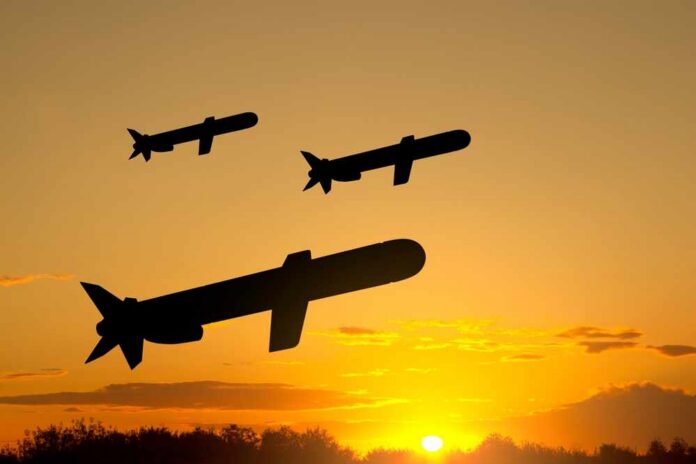
- Iran launched two ballistic missiles at Diego Garcia on March 21, 2026, demonstrating nearly double its previously claimed 2,000 km missile range
- Both missiles failed to hit their target—one malfunctioned mid-flight while US naval defenses engaged the second
- Israeli officials issued stark warnings that Iranian missiles now pose a direct threat to London and European cities
- The attack occurred hours after the UK expanded permissions for US military operations from British bases, triggering immediate Iranian retaliation threats
- Iran’s foreign minister had claimed just weeks earlier that no Iranian missiles exceeded 2,000 km range, exposing deliberate deception about military capabilities
Iran’s Deception on Missile Range Capabilities
Iran’s foreign minister Abbas Araghchi stated just weeks before the Diego Garcia attack that Iran possessed no missiles exceeding 2,000 kilometers in range. The March 21 strike on Diego Garcia—located approximately 4,000 kilometers from Iranian territory—demolished that claim entirely. Defense experts now assess that Iran may have tested an Intermediate-Range Ballistic Missile system, representing technological advancement far beyond what Tehran publicly acknowledged. This pattern mirrors Iran’s historical practice of concealing ballistic missile development behind claims of civilian satellite launch vehicle programs, a strategy designed to evade international scrutiny while building offensive capabilities.
Failed Strike Reveals Extended Threat Reach
Iran launched two ballistic missiles targeting Diego Garcia, a strategically critical US-UK military base in the Indian Ocean that has served as essential infrastructure for American power projection since the Cold War. Neither missile successfully struck the target. One failed mid-flight while the other was engaged by a US SM3 naval interceptor, though the Pentagon declined to comment on whether the interception fully destroyed the missile. Despite the operational failure, Iran’s state-affiliated Mehr news agency characterized the strike as a “significant step” demonstrating that “the range of Iran’s missiles is beyond what the enemy previously imagined.” The psychological impact succeeded even where the physical attack failed.
UK Caught Between Alliance and Direct Threats
The timing of Iran’s missile launch reveals sophisticated Iranian monitoring of Western military decisions. Hours before the attack, the United Kingdom expanded permissions for US military operations from British bases against Iran. Iranian Foreign Minister Araghchi immediately warned UK Foreign Secretary Yvette Cooper that any American use of British bases would constitute “participation in aggression.” Cooper responded by warning Araghchi “against targeting UK bases, territory or interests directly.” This exchange exposes the precarious position facing Britain—supporting American operations while receiving direct threats from an adversary now proven capable of striking targets thousands of kilometers away. The UK must balance alliance commitments with the reality that its cooperation makes British territory and interests legitimate targets in Iranian strategic calculations.
Israeli Warning: London Now Within Range
Israeli officials issued threat assessments indicating that Iran’s missile range now extends to London, representing a fundamental shift in European vulnerability. The distance from Iran to London approximates the range demonstrated in the Diego Garcia attack, making the Israeli warning credible based on the technical capabilities Iran displayed. European nations must now reassess their exposure to Iranian retaliation for supporting US operations in the Middle East. What was previously a regional conflict contained within the Middle East has expanded to potentially threaten European capitals directly. This geographic expansion challenges NATO’s defensive calculations and forces European governments to weigh the costs of alliance participation against direct threats to their civilian populations.
Broader Conflict Context and Escalation Pattern
The Diego Garcia strike represents one component of a broader Iranian campaign that has already seen over 2,000 drones and ballistic missiles fired at the UAE—more than twice the number directed at Israel. Iranian actions have effectively closed the Strait of Hormuz, forcing Saudi Arabia to redirect oil shipments through alternative routes. Despite sustained US-led air operations, Iran retains significant drone and missile capability, maintaining what officials describe as a “steady drum beat” of strikes. Israeli officials characterize their operation as at the “halfway” stage, suggesting sustained conflict intensity with no immediate resolution in sight. Iran’s willingness to target infrastructure far beyond traditional conflict zones demonstrates a strategic shift toward challenging Western military positioning globally rather than confining operations to regional boundaries.
The failed physical attack on Diego Garcia succeeded in its strategic messaging objectives. Iran established psychological deterrence through demonstrated capability regardless of whether missiles struck their target. The attack forces reassessment of base security protocols across the Indian Ocean, potentially affects US operational planning, and may prompt increased air defense deployments at regional installations. More critically, it exposes the expanded geographic scope of a conflict that now threatens European territory directly. Iran’s pattern of rapid escalation in response to perceived Western military expansion—launching missiles within hours of UK’s expanded permissions—indicates a sophisticated command-and-control system capable of rapid response. Patriots watching these developments understand that weak Western responses to Iranian deception and aggression only embolden further attacks, putting American service members and allied populations at increased risk from an adversary willing to lie about its capabilities while testing how far it can push without facing decisive consequences.
Sources:
The Times of Israel Live Blog – March 21, 2026
Iranian attack on the Diego Garcia military base: its location and strategic role – Euronews
Iran unsuccessfully targeted Diego Garcia base, UK official source confirms – Times of Israel