Trump’s talk of wrapping up the Iran war in “two or three weeks” is colliding with a regime-change strategy that has no clear “day after” plan—and it’s igniting a rare split inside MAGA over yet another Middle East fight.
Story Snapshot
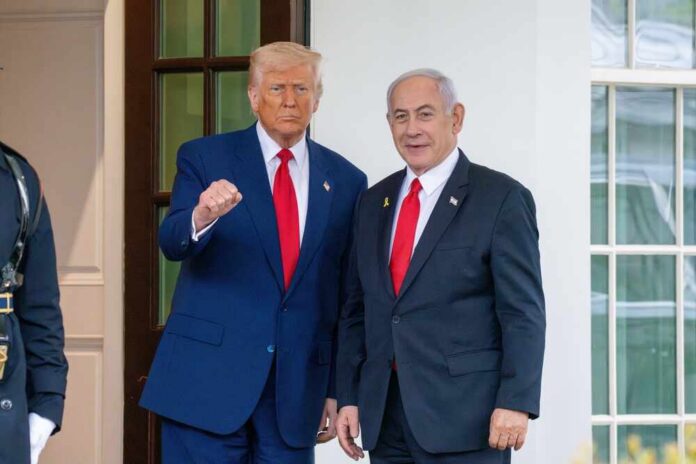
- President Trump and Prime Minister Netanyahu have signaled they intend to deal with a “new regime” in Iran after major U.S.-Israeli strikes, even though Iran’s current government remains in place.
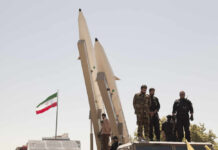
- Operation Epic Fury reportedly targeted Iran’s nuclear program, missile arsenal, proxy networks, and navy, but the conflict’s timeline is now disputed.
- Iran rejected Trump’s rapid endgame and vowed the conflict could continue for at least six months, raising risks to markets and U.S. strategic bandwidth.
- Reporting highlights disagreement over whether diplomacy still had a viable path before military action, with allied officials contradicting Trump envoys’ pessimism.
Regime-change signals meet a stubborn reality on the ground
President Trump and Israeli Prime Minister Benjamin Netanyahu have publicly framed the post-strike objective as working with a “new regime” in Iran, a major shift from a narrow deterrence-and-sanctions approach. The immediate complication is straightforward: multiple reports indicate the current Iranian leadership structure is still standing after the strikes.
In late March 2026, he suggested the war could end in “two or three weeks,” while Netanyahu argued combined operations had “significantly altered the landscape” and pledged continued pressure. Iran’s leadership, however, has rejected a short runway and projected a much longer fight. When Washington signals a quick exit but Tehran promises endurance, the result is predictable: allies and adversaries both start testing U.S. resolve.
How negotiations broke down, and why that dispute matters
Accounts of the last diplomatic stretch describe a wide gap between U.S. and Iranian positions. Trump’s side demanded Iran relinquish enrichment, hand over a large stockpile of highly enriched uranium, accept strict missile limits, and end support for regional allies—terms Tehran did not accept. Iran reportedly offered reduced enrichment and expanded international oversight in exchange for phased sanctions relief. The core problem is that neither side appeared to view the other’s offer as a serious starting point.
A second, more politically sensitive issue is the disagreement over whether an agreement was still possible before the shooting started. Reporting indicates Trump envoys said there was “no chance” of reaching a deal, while Omani and British officials who participated in final rounds believed an agreement had a “good chance.” That is not proof of deception, but it is a flashing warning light for voters: the nation may be paying in blood and treasure partly because advisers and partners did not share the same read of the diplomatic terrain.
Israel’s strategic aim versus America’s open-ended risk
Israel’s case has been presented as direct and existential: removing Iran’s threat may ultimately require regime change, and some Israeli officials have emphasized that point even as fighting continues. U.S.-Israeli military cooperation is described as intense, but not equal; the United States supplies decisive capability, and the American president ultimately controls whether the campaign expands or winds down. That dynamic matters because it puts the constitutional burden of war direction squarely on Washington—where voters foot the bill.
MAGA’s new fracture: alliance loyalty versus “no more forever wars”
Conservative voters who spent years battling domestic left-wing priorities—runaway spending, border failures, and cultural radicalism—are now voicing a different kind of frustration: a sense that Washington keeps finding new ways into open-ended foreign conflicts. The reporting’s “new regime” framing intensifies that worry, because regime change implies political reconstruction, not just military strikes. When “day after” governance is unclear, Americans hear Iraq-style echoes, and skepticism grows even among staunch Trump supporters who expected fewer new wars.
Iran’s stance also raises homeland-adjacent concerns that resonate with constitutional conservatives. Tehran has threatened prolonged conflict and, according to reporting, even floated targeting major U.S. technology firms—an escalation path that could invite domestic pressure for tighter information controls, surveillance, or emergency authorities. None of that is inevitable, but the lesson from the post-9/11 era is real: foreign wars often expand federal power at home. Voters should demand clear objectives, lawful oversight, and a defined off-ramp.
For now, the verified bottom line is uneasy. Operation Epic Fury is described as achieving major degradations of Iranian capabilities, yet Iran’s governing structure remains, and Tehran is signaling stamina instead of collapse. Trump and Netanyahu are already talking about the “new regime” phase, but sources also describe uncertainty about how that successor would emerge or be recognized. Without a transparent plan and measurable endpoints, the administration risks letting a limited campaign drift into a commitment the American public never agreed to sustain.
Sources:
Trump and Netanyahu’s Iran Gambit: The Strategic Calculations Behind Epic Fury
Trump says war with Iran could end in two weeks, maybe three
Trump, Netanyahu, and the Responsibility for the Iran War
A foreign policy adviser to Netanyahu talks about Israel’s stance on war with Iran
As Trump signals retreat from war, Israel may have to keep fighting Iranian threat