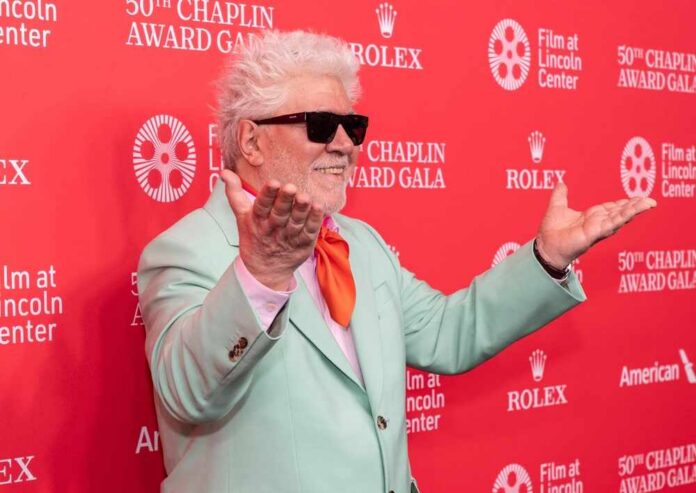
A Cannes celebrity used the festival spotlight to brand President Trump a “monster,” turning a film promo tour into a political hit on American voters.
Story Highlights
- Spanish director Pedro Almodóvar reportedly labeled Donald Trump, Benjamin Netanyahu, and Vladimir Putin “monsters” during Cannes events, but full primary transcripts remain elusive [8][9].
- Past on-record comments show Almodóvar has condemned Trump as a “catastrophe,” supporting a pattern of political broadsides from cultural stages [3].
- Cannes materials confirm Almodóvar’s high-profile role at the festival, ensuring his remarks draw global amplification [5].
- Secondary coverage and translation gaps leave uncertainty about exact wording and context for the “monsters” quote [8][9].
What Almodóvar Allegedly Said, And What We Can Prove
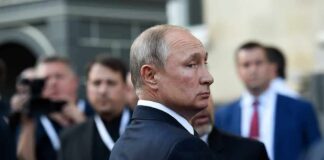
Secondary reports claim Spanish filmmaker Pedro Almodóvar called President Donald Trump, Israeli leader Benjamin Netanyahu, and Russian President Vladimir Putin “monsters” during Cannes proceedings, thrusting partisan rhetoric into a cultural venue [8][9]. Available research confirms the accusation appears across multiple outlets but does not provide a full primary transcript or official festival recording that captures the exact words in context. That lack of source audio or text leaves room for translation drift, paraphrase, or selective clipping by headline writers [8][9].
Festival records verify Almodóvar’s central presence at Cannes, which explains why even brief political remarks gain disproportionate reach through global media channels [5]. Past interviews also document Almodóvar’s willingness to attack Trump directly; he previously said Trump would go down in history as a “catastrophe,” underscoring a consistent posture rather than a one-off Cannes outburst [3]. Those facts strengthen the plausibility that he delivered harsh criticism again, even as the precise wording of “monsters” remains tied to secondary reporting [3][5].
Pattern: Political Activism From The Red Carpet
Coverage from recent years shows Almodóvar using film platforms to press political and climate messages, including a call for stronger environmental action at Venice, reflecting a broader activist persona [2]. When artists leverage high-visibility festivals to opine on global leaders, the message can travel faster than verification mechanisms, especially when language crosses translation boundaries. That dynamic is at play here, where an explosive term risks overshadowing the film itself while leaving documentation gaps for fact-finders to close [2].
Secondary profiles and interviews around Cannes 2026 frame Almodóvar’s new film and public identity together, creating a media environment where political asides are packaged alongside artistic coverage [3][4]. This blending encourages amplification of striking phrases, yet the reliance on secondhand summaries complicates attribution. Without a press conference transcript or official clip, readers are left sorting certainty from assumption, which is not ideal when reputations and geopolitics are involved [3][4].
Why It Matters To American Conservatives
American audiences seeing a European cultural icon disparage a sitting U.S. president during an international festival will recognize a familiar pattern: elite venues pushing ideological narratives while enjoying institutional protection and media megaphones. That double standard often marginalizes conservative voters and the constitutional priorities they care about, from free speech and secure borders to energy affordability and checks on bureaucratic overreach. When celebrity rhetoric substitutes for substantiated evidence, civic debate becomes spectacle rather than scrutiny.
Conservatives should demand two things at once: verification and perspective. Verification means pressing for primary-source proof—official recordings or transcripts—to confirm the exact words, context, and language used. Perspective means not letting a headline define reality. The Trump administration’s policies should be judged on measurable outcomes at home—jobs, prices, border control, and national security—rather than Cannes soundbites. Until documentation is produced, the fairest reading is that a long-time critic repeated familiar themes, with the sharpest phrasing still uncorroborated.
What We Know, What We Do Not, And Next Steps
Known facts include Almodóvar’s prominence at Cannes, a record of past condemnation of Trump, and multiple secondary stories attributing the “monsters” phrasing to him during the festival [3][5][8][9]. Unknowns include the full verbatim quote, the original language, and whether translators or editors compressed his words for impact. The most responsible next step is to secure an official festival recording or transcript to settle the phrasing and context definitively, and to evaluate whether media summaries matched the source [3][5][8][9].
Sources:
[2] Web – Pedro Almodóvar makes passionate climate change cry in Venice
[3] Web – Cannes: Pedro Almodóvar on ‘Bitter Christmas,’ apolitical Oscars …
[4] Web – Cannes 2026: Pedro Almodovar’s ‘Bitter Christmas’ explores writing …
[5] Web – Pedro ALMODÓVAR – Festival de Cannes
[8] Web – At Cannes, director Almodovar calls Trump, Netanyahu ‘monsters’
[9] Web – At Cannes, Pedro Almodovar slams Trump, Netanyahu, Putin