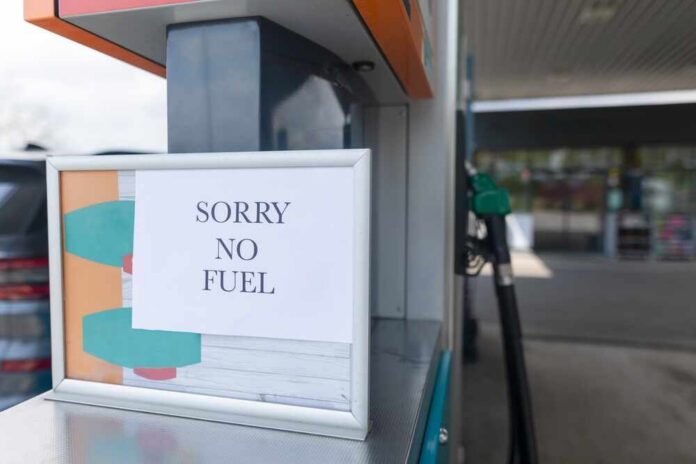
Iran’s blockade of the Strait of Hormuz has left hundreds of Australian gas stations bone dry, exposing decades of energy policy failures that left the nation dangerously dependent on foreign oil while abandoning domestic refining capacity.
Story Snapshot
- At least 107 gas stations in New South Wales ran out of diesel as panic buying collided with critically low fuel reserves of just 26-29 days
- Australia now imports 90% of its oil after shuttering six of eight domestic refineries, leaving the nation vulnerable to Middle East supply shocks
- Government released 20% of national fuel reserves and lowered fuel quality standards for 60 days as prices surged nearly 50 cents per liter
- Experts warn rationing could begin within 30 days if Iran’s blockade continues, threatening economic collapse
Iran’s Hormuz Stranglehold Triggers Australian Fuel Crisis
Iran’s closure of the Strait of Hormuz in late February 2026 choked off 20% of global seaborne oil supplies, sending shockwaves through Australia’s fragile fuel distribution network. The blockade, launched in response to escalating conflict with the United States and Israel, prompted Iranian leader Mojtaba Khamenei to vow the waterway would remain closed. Overnight attacks on three oil tankers attempting passage through the strait pushed global crude prices toward $200 per barrel. Australia’s government declared a national crisis in mid-March as regional gas stations began running dry and panic buying accelerated nationwide. The crisis exposes what critics call catastrophic energy security failures under policies prioritizing climate agendas over domestic energy independence.
Decades of Policy Failures Leave Australia Defensively Vulnerable
Australia once operated eight oil refineries capable of meeting domestic demand, but now relies on just two facilities—Viva Energy in Geelong and Ampol Lytton in Brisbane. The nation imports 90% of its oil from Singapore, South Korea, Malaysia, and Taiwan, making it extraordinarily vulnerable to supply chain disruptions. Fuel reserves plummeted from 310 days in 2002 to just 26 days for diesel, 29 days for petrol, and 32 days for jet fuel by March 2026. Post-2022 Ukraine war efforts to implement Minimum Stock Obligations slowed but failed to reverse the catastrophic decline. This dependence on foreign refineries and maritime shipping routes—now blocked by Iranian forces—represents a fundamental betrayal of national security principles that prioritize self-sufficiency and preparedness.
Government Scrambles as Regional Communities Hit Hardest
Climate and Energy Minister Chris Bowen authorized the release of 762 million liters from national reserves, representing 20% of stockpiles, while lowering fuel quality standards to allow high-sulfur imports that add 100 million liters monthly for 60 days. Despite these emergency measures, at least 107 stations across New South Wales ran completely out of diesel by early March, with hundreds more across regional Australia experiencing shortages. Bowen urged citizens not to hoard fuel but acknowledged imports remain under severe pressure if the conflict continues. Opposition Leader Angus Taylor blamed Labor’s mismanagement for driving inflation, while Barnaby Joyce accused the government of sacrificing energy security to climate policies. Rural communities and independent distributors bear the brunt of shortages as urban centers maintain supplies through priority allocation.
Experts Warn of Rationing and Economic Collapse
Former BP Australasia president Greg Bourne warned that fuel rationing could become necessary within 30 days if Iran’s blockade persists, noting Australia has limited physical response options. Dr. Lurion De Mello of Macquarie University detailed the mathematics of the crisis: with reserves measured in weeks rather than months, any prolonged disruption threatens total depletion. The International Energy Agency labeled the situation a “major threat” to the global economy, emphasizing no nation enjoys immunity from Hormuz supply shocks. Fuel prices in major cities jumped nearly 50 cents per liter by mid-March, compounding existing cost-of-living pressures. Aviation, agriculture, and transport sectors face potential paralysis if diesel and jet fuel shortages worsen, threatening food security and economic activity across the nation.
Hundreds Of Gas Stations Run Dry In Australia As Hormuz Shock Exposes Energy Security Failures https://t.co/Jubg3mXxsH
— zerohedge (@zerohedge) March 24, 2026
This crisis vindicates warnings from conservatives who argued energy independence must trump globalist climate agendas and foreign dependence. Australia’s abandonment of domestic refining capacity in favor of importing from unstable regions now threatens the nation’s sovereignty and prosperity. The government’s emergency measures—releasing reserves and lowering fuel standards—amount to desperate bandages on self-inflicted wounds. Americans watching this unfold should recognize the same patterns: leaders who prioritize international climate agreements over national energy security leave their citizens vulnerable to foreign manipulation and economic warfare. The Hormuz shock proves that energy independence is not optional but essential to national survival, a lesson Trump supporters understand as fuel costs surge at home amid the Iranian conflict.
Sources:
Australia fuel shortage 2026 – SBS News
Fuel stations run out of diesel across Australia’s NSW – Argus Media
Could Australia run out of petrol – Macquarie University
Global economy under major threat from Strait of Hormuz crisis IEA chief – LCA News