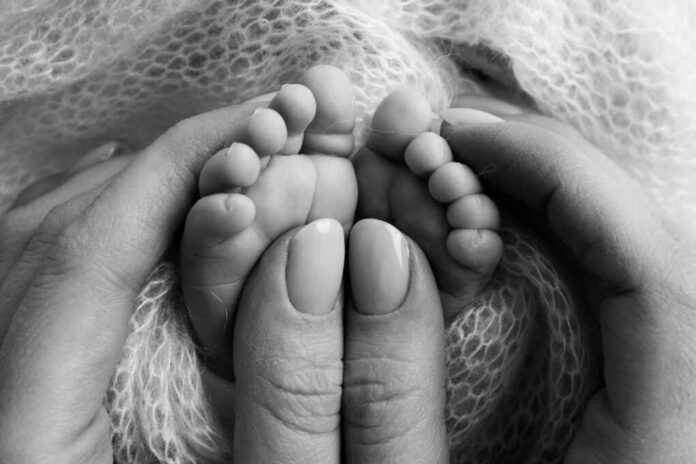
Canada’s assisted-suicide regime is now being pushed toward its most alarming frontier yet: allowing doctors to end the lives of severely ill newborns who can’t consent.
Quick Take
- Quebec’s College of Physicians has urged lawmakers to explore extending Medical Assistance in Dying (MAID) to severely ill newborns.
- Canada’s MAID program has expanded quickly since 2016, rising to more than 5% of all deaths by 2024, according to reported figures.
- Critics warn that moving from consenting adults to infants raises unavoidable ethical questions about consent, disability, and state-sanctioned death.
- Conservative MPs and Canadian Catholic bishops are pressing Parliament to tighten safeguards, including limiting unsolicited MAID discussions.
Quebec doctors ask Parliament to consider MAID for newborns
Quebec’s College of Physicians (CMQ), a major professional regulator in the province, has presented a proposal to expand MAID eligibility to severely ill newborns. The framework described in the report would allow parents to request euthanasia for infants experiencing extreme pain with no prospect of survival due to serious congenital conditions or multiple disabling syndromes. Dr. Louis Roy, speaking for the CMQ to Canada’s Special Joint Committee on MAID, argued the option should be considered for “severe deformations” and very grave syndromes.
As of February 2026, the newborn proposal has not been adopted into law and remains under consideration. Reporting also notes a point of ambiguity: a CMQ spokesperson has characterized the discussion as an “avenue to be explored,” even as the parliamentary testimony is cited as evidence the idea was formally presented. That uncertainty matters because it affects how quickly the policy might move from testimony into binding standards, but the fact remains that the request has entered Canada’s legislative debate.
How Canada’s MAID rules expanded from terminal illness to broader categories
Canada legalized MAID in 2016 with guardrails focused on competent adults facing terminal illness, but eligibility widened substantially in later years. Parliament removed the requirement that a person’s natural death be “reasonably foreseeable” in 2021, creating a pathway for assisted death even when death is not imminent. By 2023, a parliamentary committee recommended further expansion discussions, including access for “mature minors” under certain conditions, signaling that the boundaries were still moving.
Reported national totals show how central MAID has become in Canada’s healthcare landscape. In 2023, 15,343 Canadians died through MAID, described as 4.7% of all deaths; by 2024, the count reportedly rose to 16,499, exceeding 5%. Since 2016, reported cumulative MAID deaths exceed 76,000. Those figures do not by themselves prove coercion, but they demonstrate scale. When an assisted-death program becomes routine, lawmakers face growing pressure to define where it stops.
Consent is the line MAID was built around—and infants can’t cross it
Current MAID recipients must provide consent, which is why moving the policy to newborns is qualitatively different. Infants cannot request death, cannot weigh alternatives, and cannot confirm their own suffering in a legally meaningful way. That shifts the decision to parents and physicians, with the state providing legal permission. For Americans who prioritize individual rights and the dignity of the vulnerable, that change isn’t a technical tweak; it is a fundamental rewrite of the moral and legal logic behind assisted death.
The international precedent frequently raised in coverage is the Netherlands, which permits euthanasia for babies under one year old under strict conditions, including parental consent, when suffering is deemed unbearable. Reporting notes that the Netherlands is the only other country with such a policy. Comparisons to historical atrocities have surfaced in public debate, which reflects how emotionally charged the issue is. Still, the core policy question is concrete: whether a modern democracy should authorize physicians to end a patient’s life absent consent.
Coroner findings and “social need” cases intensify concern about safeguards
Separate from the newborn proposal, reporting about Ontario’s chief coroner describes cases in which people pursued MAID tied to unmet social needs such as poverty, inadequate housing, or isolation rather than medical suffering alone. One example described a woman with chemical sensitivity who sought MAID largely because she could not find suitable accommodation; another described an unemployed, socially isolated man whose travel to a euthanasia appointment was facilitated by a health professional. These cases are cited to argue safeguards can erode when systems fail people.
That context matters because it frames what critics see as a “substitution risk”: when governments and institutions struggle to provide support, assisted death can appear as an easier option to administer. Nothing in the cited reports proves that policymakers intend cost-cutting through euthanasia. However, the coroner-documented examples strengthen the argument that social failures can influence end-of-life choices. Once that pressure exists for adults, skeptics ask what pressures could emerge around parents facing overwhelming medical and financial burdens.
Political pushback targets coercion and unsolicited MAID conversations
Canada’s debate has also produced a legislative response. Conservative MP Garnett Genuis tabled Bill C-260, aimed at preventing people in positions of authority from initiating MAID conversations with individuals who have not requested it. The bill is framed as a safeguard against coercion and against subtle steering by institutions. Separately, Canadian Catholic bishops have joined members of Parliament pushing to restrict the MAID framework, reflecting a wider coalition that sees the expansion as a threat to human dignity and to the protection owed to the weak.
For American readers watching from 2026, Canada’s trajectory is a cautionary case study: MAID expanded rapidly from terminal adults to broader eligibility, with a mental-health-only pathway targeted for 2027, and now a professional body is urging debate over newborn eligibility. The facts available do not show the newborn policy has become law, and Parliament previously did not include infant euthanasia in a final committee report. But the push itself shows how quickly “exceptions” can become the next baseline.
Sources:
Canada Considers Euthanasia for Severely Ill Newborns as Assisted Suicide Cases Rise
Doctors in Canada propose euthanasia for babies with disabilities
Canada creeps ever closer to baby M.A.I.D.
Canadian Catholic bishops join members of Parliament in push to restrict medical aid in dying
MAID (Medical Aid in Dying) Debate
AMAD Committee Meeting 25 Evidence
Euthanasia becomes more mainstream in Canada, United States next?