Political violence in Minnesota and street unrest in Los Angeles collided on the same weekend, exposing how fast America’s domestic stability can fray when law enforcement, protests, and partisan narratives all escalate at once.
Story Snapshot
- CBS’s “Face the Nation” led with a manhunt after the shooting of two Minnesota lawmakers, one of whom was killed, as authorities sought a suspect accused of posing as a police officer.
- Nationwide “No Kings” demonstrations drew massive turnout across all 50 states and D.C., targeting President Trump’s policies and rhetoric.
- Los Angeles remained a focal point for unrest tied to deportation enforcement, as Washington weighed how to restore order without rewarding riots.
- Sen. Tom Cotton defended a strong federal posture, while Democrats like Sen. Alex Padilla criticized enforcement actions, underscoring the ongoing immigration and public-order split.
- Foreign-policy unity briefly surfaced as Sens. Lindsey Graham and Richard Blumenthal discussed Russia sanctions, contrasting with the bitter domestic divide.
Minnesota manhunt spotlights a dangerous trend: targeted political violence
Law enforcement officials were still hunting for Vance Luther Boelter after the shooting of two Minnesota lawmakers, with one lawmaker killed, according to the June 15, 2025 broadcast. CBS reported that the suspect allegedly posed as a police officer, and the search included a public reward offer from the FBI. The episode emphasized that the investigation was unfolding in real time, a reminder that political disputes can spill into deadly criminal acts.
CBS reporting also described a manifesto allegedly connected to the suspect that targeted more than 50 figures, including abortion-related targets and other lawmakers, based on the program’s summary of the case. That detail, while still part of an active investigation at the time, sharpened the constitutional stakes: public officials cannot do their jobs if intimidation becomes normalized. The broadcast’s framing kept the focus on facts available that morning, not speculation about wider networks.
“No Kings” protests go national as anti-Trump messaging intensifies
On the same weekend as the Minnesota attack, “No Kings” protests spread nationwide, with organizers claiming roughly five million participants across all 50 states and Washington, D.C. The program tied the demonstrations to opposition against President Trump’s policies and a broader argument about executive power and symbolism. The scale mattered because it demonstrated organization and reach, not merely isolated demonstrations, and it suggested that political opposition was prepared to keep pressure high in the streets.
The episode placed those protests alongside an Army march down Constitution Avenue, an optics-heavy backdrop that critics portrayed as politicized. CBS also referenced Trump’s pre-recorded remarks praising “warriors” who would “seize the crown of victory,” language that opponents used to reinforce their “No Kings” theme. The available material does not establish any direct operational link between the protests and specific incidents of violence, but it does show the country in a highly charged posture.
Los Angeles unrest and deportation enforcement collide over federal authority
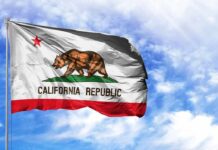
Los Angeles was presented as an epicenter of unrest connected to stepped-up deportation enforcement, raising practical questions about public safety and federal authority. The broadcast discussed whether deportation mandates might be softened, while also noting that federalized National Guard forces and Marines were deployed in California amid rioting. From a limited-government perspective, the core issue is not theatrics but whether the state can maintain order without allowing mob pressure to override lawful enforcement.
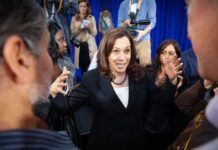
Sen. Tom Cotton argued for an “overwhelming show of force” to deter what he described as left-wing street militias, while Sen. Alex Padilla addressed the protests and referenced his own recent detention by the Department of Homeland Security. Those competing accounts highlight the same underlying policy divide: whether immigration enforcement is treated as a routine rule-of-law function or framed as an abuse of power. The CBS material documents the dispute but does not provide independent adjudication of each claim.
Foreign policy briefly turns bipartisan as domestic division dominates
While domestic disorder led the headlines, the episode also covered major foreign-policy flashpoints, including Iran-Israel strikes entering a third day and continued Russian bombardment of Ukraine. A notable segment featured Sens. Lindsey Graham and Richard Blumenthal promoting Russia sanctions, a rare bipartisan alignment during a period of intense polarization. The contrast was striking: lawmakers can still find agreement abroad, yet struggle to sustain consensus at home on borders, riots, and basic civic trust.
New Post: 6/15: Face the Nation https://t.co/BBWBJ0kCOk #latestnews
— News 4 Social – Talk About Latest Trend (@newsforsocial) February 5, 2026
The broadcast’s overall picture was a country managing multiple simultaneous stress tests: a politically charged criminal manhunt, large-scale protests, and immigration-related unrest, all while global conflicts continued to demand attention. The research provided is limited to CBS-affiliated materials and does not include law-enforcement affidavits, court filings, or independent audits of protest-related violence. Even so, the documented facts point to a sober takeaway for constitutional voters: order and equal justice must be defended consistently, regardless of who is protesting.
Sources:
Face the Nation (KPIX) – June 15, 2025
Face the Nation full transcript, 06/15/2025
Face the Nation (CBS.com) – Episode video
Face the Nation (CBS.com) – Segment video
Open: This is Face the Nation with Margaret Brennan, June 15, 2025
Face the Nation (Paramount+) – Episode video
Alex Padilla (California) Face the Nation transcript, 06/15/2025