The Supreme Court prepares to hear arguments on April 1, 2026, in a case that could fundamentally redefine who qualifies for American citizenship at birth, threatening constitutional protections that have stood for over a century.
Story Snapshot
- Supreme Court oral arguments scheduled for April 1, 2026, in Trump v. Barbara challenge President Trump’s executive order denying automatic citizenship to U.S.-born children of undocumented or temporary immigrants
- Lower courts uniformly blocked the order as contradicting the 14th Amendment and 125 years of precedent established in United States v. Wong Kim Ark
- The case affects approximately 300,000 children born annually in the U.S. to non-citizen parents and could create a legal limbo status reminiscent of pre-Civil War citizenship denials
- Civil rights groups warn the executive order represents unconstitutional overreach that undermines core constitutional protections without congressional action or amendment
Executive Order Challenges Constitutional Precedent
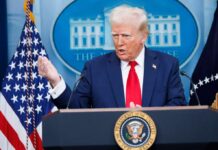
President Trump issued an executive order on February 20, 2025, reinterpreting the 14th Amendment’s Citizenship Clause to exclude children born in the United States to parents lacking “domicile” or full allegiance. The order targets children of undocumented immigrants and temporary visa holders, arguing they fall outside the phrase “subject to the jurisdiction thereof.” U.S. District Judge Joseph Laplante issued a preliminary injunction on July 10, 2025, blocking enforcement. The administration petitioned the Supreme Court in September 2025, with certiorari granted December 5, 2025.
Historical Foundation Under Scrutiny
The 14th Amendment’s Citizenship Clause, ratified in 1868, established that “all persons born or naturalized in the United States, and subject to the jurisdiction thereof, are citizens.” This language overturned Dred Scott v. Sandford, which denied citizenship to African Americans. The Supreme Court affirmed birthright citizenship in United States v. Wong Kim Ark in 1898, ruling 6-2 that children born to domiciled immigrant parents qualify as citizens. Justice Horace Gray emphasized the clause applies to “all children here born of resident aliens,” establishing precedent that has remained undisturbed for 125 years.
Administration Arguments vs. Constitutional Text
Solicitor General Sauer argues the executive order properly interprets “subject to the jurisdiction thereof” by excluding children whose parents lack permanent domicile or allegiance to the United States. The administration cites Elk v. Wilkins, an 1884 case excluding Native Americans on reservations, as supporting precedent for jurisdictional limits. Critics counter that this interpretation ignores the plain text of the 14th Amendment and conflicts with statutory law under 8 U.S.C. §1401(a). The constitutional debate hinges on whether executive action can redefine citizenship criteria established by constitutional amendment and affirmed by Congress.
Civil rights organizations including the ACLU, Legal Defense Fund, and Asian Law Caucus filed coalition briefs urging the Court to reject the order. Ashley Burrell of the Legal Defense Fund characterized it as a “racialized redefinition” of citizenship. Aarti Kohli of the Asian Law Caucus warned the order creates barriers to basic rights for children born on American soil. These groups argue the executive branch cannot unilaterally overturn constitutional protections that required amendment to establish. The case parallels territorial citizenship debates where residents of American Samoa hold “national” rather than citizen status, creating a precarious legal position.
Potential Consequences for Citizenship Rights
If the Supreme Court upholds the executive order, approximately 300,000 children born annually in the United States to non-citizen parents could lose automatic citizenship. These children would face obstacles obtaining passports, accessing government benefits, and exercising rights tied to citizenship status. States with high immigrant populations would confront administrative challenges determining which births qualify for citizenship documentation. The decision could create a two-tiered system where U.S.-born children face different citizenship criteria based on parental immigration status, echoing the discrimination the 14th Amendment was designed to eliminate.
The long-term implications extend beyond immediate administrative impacts. Overturning Wong Kim Ark would invite questions about whether Congress or future presidents could further restrict birthright citizenship through legislation or executive action. Constitutional scholars note this could require congressional intervention or even a constitutional amendment to restore previous protections. The case also raises concerns about executive overreach, as presidents would gain authority to redefine fundamental constitutional provisions without the amendment process. No decision is expected before July 2026, leaving affected families in uncertainty about their children’s legal status and future rights in America.
Sources:
Supreme Court Weighs Birthright Citizenship Debate – National Today
The Key Arguments in the Birthright Citizenship Case – SCOTUSblog
When the Supreme Court Let a President Get Away with Redefining Birthright Citizenship – SCOTUSblog
Supreme Court to Finally Hear Merits Arguments on Birthright Citizenship – Constitution Center
Birthright Citizenship: The Exceptions Provide the Rule – SCOTUSblog
Protecting Birthright Citizenship – ASAP Together