Washington’s threat-soaked political climate has pushed the U.S. Capitol Police to seek a first-ever $1 billion budget—raising hard questions about how a constitutional republic stays secure without normalizing endless spending.
Story Snapshot
- Capitol Police Chief Michael Sullivan asked Congress for a record $1.023 billion for FY2027 after threats against lawmakers surged and staffing shortages spread across units.
- The agency says it investigated nearly 15,000 threats in 2025—up 58%—and 2026 is on pace to exceed that level.
- The request includes $734 million for salaries and benefits, $273 million for general expenses, and about $15.7 million for multi-year security and IT enhancements.
- House appropriators, led in the hearing by Rep. David Valadao (R-CA), called Capitol Police funding a top FY2027 priority, but no final approval has occurred.
A $1.023 Billion Request Lands on Capitol Hill
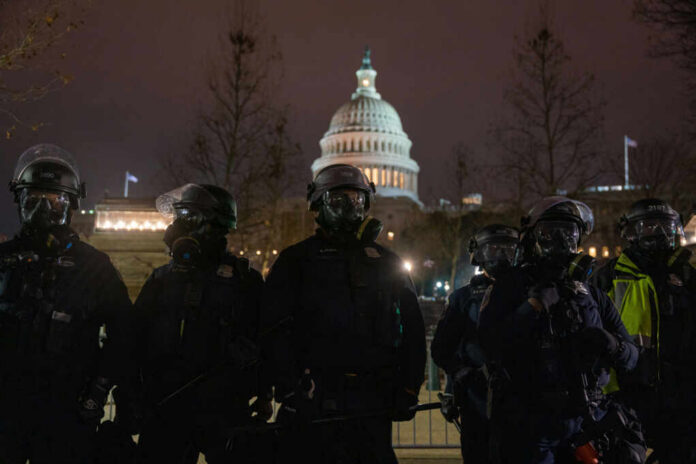
U.S. Capitol Police Chief Michael Sullivan testified March 17, 2026, before the House Appropriations Committee’s Legislative Branch Subcommittee to request $1.023 billion for fiscal year 2027. The total would be the first time the agency’s budget crosses the $1 billion threshold. Sullivan tied the request to rising threats, an expanded protective mission, and staffing gaps that drive overtime and retention pressures across multiple divisions.
Budget math matters because reports describe different percentage increases depending on what baseline is used. The FY2026 appropriation is widely reported at $852 million, with the proposed FY2027 total framed as roughly a $170 million-plus jump. Coverage also notes the budget was around $500 million roughly five years ago, illustrating how quickly post-2021 security demands have changed the agency’s size and footprint.
Threat Numbers Are Driving the Argument for More Manpower
Capitol Police officials cite a steep rise in threats directed at lawmakers and the institution itself. The agency investigated nearly 15,000 threats in 2025, a 58% increase from 2024, and 2026 is expected to exceed that pace. Sullivan emphasized the threats are “not just numbers,” arguing the volume forces more protective work, more investigations, and more strain on officers already stretched by constant operations.
The cited threat spike sits alongside a broader wave of political violence. Outlets referenced deadly attacks on Minnesota lawmakers, a firebombing at Pennsylvania Gov. Josh Shapiro’s home, and the assassination of conservative activist Charlie Kirk. Those events are presented as part of the security context lawmakers and police are responding to, even though Congress has not yet voted on Sullivan’s FY2027 request.
What the Money Is For: Pay, Operations, and Security Upgrades
Sullivan’s proposed spending breakdown points to an agency trying to keep people and keep up. The request includes $734 million for salaries and benefits, $273 million for general expenses, and roughly $15.7 million for multi-year security and IT modernization. Reports also describe costly operational demands tied to security procedures and physical protection. The central justification remains staffing: more bodies to reduce overtime, improve coverage, and meet expanding duties.
Capitol Police also describe a wider operational posture than in prior eras, including mutual aid agreements across every state to enable rapid support and coordination. At the same time, appropriations for the legislative branch occur amid broader fiscal pressure points in Washington, with other large federal funding debates competing for attention. That budget reality is why this request will be scrutinized not just for necessity, but for whether it becomes a permanent ratchet upward.
Constitutional Stakes: Security Without a Permanent Emergency Mindset
Congress has a constitutional duty to function safely, and law enforcement has a duty to stop credible threats before they turn into funerals. The data cited by Capitol Police—thousands of threats and a sharp year-over-year rise—makes the security rationale hard to dismiss on its face. What remains unresolved is how lawmakers will ensure oversight so emergency-driven spending does not become automatic, especially when Americans remain wary of institutional overreach.
U.S. Capitol Police request first-ever $1 billion budget, citing increasing threats on lawmakers https://t.co/uvDOm5VEcH
— The Washington Times (@WashTimes) March 18, 2026
Appropriators have signaled support in principle, with subcommittee leadership calling Capitol Police funding a top priority for FY2027. Still, the request is not a blank check, and it is not yet approved. The more Congress leans on “mission expansion” as the explanation for bigger budgets, the more it will need to explain to taxpayers what measurable outcomes they will get: reduced overtime, improved staffing levels, faster threat response, and smarter security that protects liberty while defending the seat of self-government.
Sources:
Capitol Police to ask for over $1 billion budget
Capitol Police chief asks for record-breaking budget, citing 58% increase in threats to Congress
Capitol Police chief seeks record-breaking budget increase amid threats to Congress
US Capitol Police chief says threats to lawmakers keep rising
Valadao Remarks at Budget Hearing for United States Capitol Police