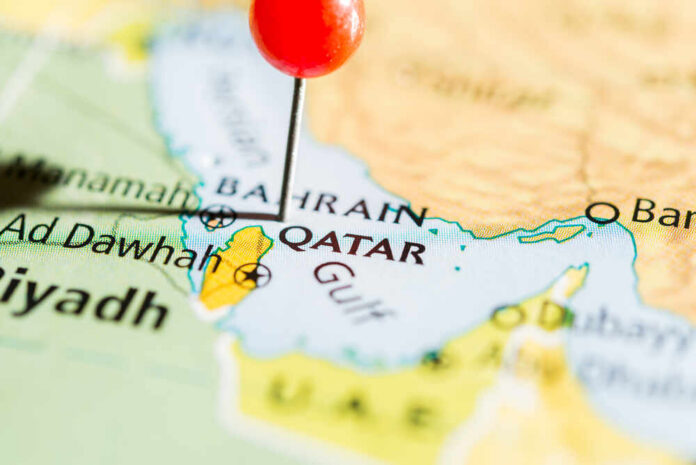
As war rattles the Gulf, Qatar’s own finance chief is warning the world that the real economic pain is just ahead, not behind us.
Story Snapshot
- Qatar’s finance minister says the Iran war’s “full-fledged” economic impact will hit globally within months, calling today’s turmoil only the “tip of the iceberg.”
- He warns the crisis could shift from high prices to outright shortages of energy, fertilizer, and other essentials if key sea lanes stay threatened.
- Qatar, one of the world’s richest energy exporters, is tightening budgets and preparing to delay projects to weather the storm.
- For American families, the warning underscores why secure U.S. energy production and strong borders matter more than ever.
Qatar’s Stark Warning: The Real Shock Has Not Hit Yet
Qatar’s Minister of Finance Ali Ahmed Al-Kuwari used a high-profile International Monetary Fund forum in Washington to deliver a blunt message: the world has not yet felt the true economic impact of the Iran war. He said what markets are seeing now is only the “tip of the iceberg,” warning that “a full-fledged impact is coming, and it is not far away.” He added that within “one month, two months’ time” a “huge economic impact globally” could emerge if conditions do not stabilize.[2][4]
According to reporting on the remarks, Al-Kuwari is not just talking about higher fuel bills. He warned that the crisis could move from an issue of price to a problem of physical “energy availability, not just prices,” if shipping routes and production infrastructure remain under threat.[2][4] That matters because disruptions in Gulf exports ripple into electricity costs, industrial output, and transportation worldwide, not just in the countries directly involved in the conflict.[1][2]
From Fuel To Food: How Gulf Disruption Spills Into Daily Life
Reports on the minister’s comments say he linked the war not only to oil and gas markets but also to potential shortages of fertilizer and helium, warning that if trade routes remain constrained, farmers could miss planting seasons and a “food crisis” could follow.[1][2] When natural gas and fertilizer are short, global agriculture suffers, from Midwestern corn fields to breadbaskets in Europe and beyond. That chain reaction hits working families hardest through higher grocery bills and fewer choices.
Another Qatari official, the country’s energy minister Saad al-Kaabi, has been quoted warning that if Gulf energy exporters are forced to shut production, the consequences could “bring down the economies of the world,” with crude prices potentially spiking toward one-hundred-fifty dollars per barrel.[3] Those are projections, not guarantees, but when senior energy producers sound alarms like this, it signals how fragile global supply lines have become after years of Western dependence on volatile regions and climate-driven restrictions on domestic production.[3]
Qatar’s “Strong Position” Shows How Serious The Threat Is
At the same time he was warning of global fallout, Al-Kuwari stressed that Qatar enters this crisis from a “position of strength,” backed by strong reserves, ongoing reforms, and what he called credible macroeconomic management.[2][4][5] He said the government can tighten the budget, borrow if necessary, delay investment projects, and even go many months without drawing on its sovereign wealth fund. That confidence underscores that the warning is not a plea for help but a signal that even wealthy exporters are bracing for turbulence.
The United States Department of State’s investment climate overview notes that Qatar’s projected growth has been driven by plans to expand liquefied natural gas output, reinforcing how central its energy sector is to both its own future and global supply.[5] If conflict or chokepoint disruption forces such plans to slow, the ripple effects will be felt far beyond Doha. Yet, so far, the available reporting focuses on risks and forecasts rather than hard data showing that catastrophic shortages have already materialized, meaning the minister’s warning is best understood as forward-looking.[1][2][4][5]
What This Means For American Families And U.S. Policy
The Iran war reminder from Qatar should hit close to home for American readers who remember how quickly energy prices spiked under earlier left-wing administrations. Foreign ministers now warn that a distant conflict and a threatened sea lane can drive fuel, fertilizer, and food costs back up for U.S. families. The lesson is simple: relying on unstable regions for critical energy supplies is a vulnerability, and globalist fantasies about shutting down domestic production leave citizens exposed when crises erupt abroad.[1][2][4]
Minister of Finance Meets Partner and Chairman of KKR Global Institute#QNA #Qatarhttps://t.co/qcv5qvaRKQ pic.twitter.com/gK1Xnfj1Zt
— Qatar News Agency (@QNAEnglish) May 11, 2026
For conservatives, the path forward remains clear. First, the United States must restore and defend robust domestic energy production, from drilling to pipelines, so our economy is less hostage to foreign wars. Second, Washington should resist panicked “solutions” like broad energy subsidies that some international officials warn only mask problems while fueling more debt and inflation.[4] Finally, Americans should continue demanding policies that protect national sovereignty, secure supply chains, and put our families’ stability ahead of elite climate theatrics and weak-border globalism.
Sources:
[1] Web – Qatar warns wider economic fallout from Iran war still ahead if …
[2] Web – Qatar warns ‘full-fledged’ Iran war impact about to hit global economy
[3] YouTube – Iran war could “bring down the economies of the world …
[4] Web – Iran war’s full economic impact nearing, Qatar finance minister says
[5] YouTube – Qatari spokesman warns of “catastrophic results” for region as Iran …