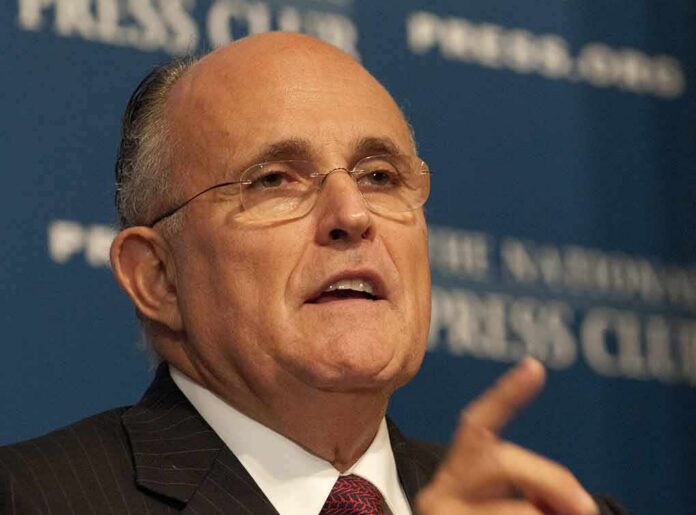
Rudy Giuliani claimed on live television that Islam “has elements of mass homicide,” turning a campaign-season fight into a test of America’s promise of religious freedom and equal dignity.
Story Snapshot
- Giuliani said Islam is not a religion of peace and tied it to mass killing.
- The remarks targeted Michigan candidate Abdul El-Sayed during a heated interview.
- Past leaders, including President George W. Bush, publicly said “Islam is peace”.
- El-Sayed says his faith guides him to treat all people with dignity and respect.
What Giuliani Said And Why It Landed Hard
Rudy Giuliani said on Newsmax that Islam is not a religion of peace and claimed it contains “elements of mass homicide.” He pointed to history to argue the faith is tied to violence. He made the comments while attacking Michigan Senate candidate Abdul El-Sayed, who is Muslim. The exchange came during a tense media cycle with sharp rhetoric about religion and politics. The remarks drew attention because they generalized a faith of more than one billion people.
Abdul El-Sayed has framed his Muslim faith as a call to serve others. He has said his beliefs push him to be a better person and to treat everyone with dignity and respect. Supporters point to that message to counter broad claims that tie Islam to violence. For many voters, the split highlights a core question in American life: can candidates be judged by their own words and deeds rather than stereotypes about their faith?
America’s Post‑9/11 Line: Blame Terrorists, Not A Religion
After the September 11 attacks, President George W. Bush visited a mosque and said, “Islam is peace.” He told the country that terrorists do not represent the faith. That line shaped public guidance to separate a violent group from a broad religion. Many civic leaders still use that frame today when tempers rise. They argue it protects both security and liberty by targeting criminals while guarding freedom of worship for all.
Giuliani himself once praised Islam as “a great religion that is premised on peace,” according to contemporaneous reporting from the same post‑9/11 period. That past stance contrasts with his recent broad attacks on the faith. The shift underscores how political talk can harden in election years. It also shows how leaders can send mixed signals that confuse the public and strain trust in institutions charged with upholding equal protection under the law.
Why This Moment Resonates Across The Political Spectrum
Conservatives worry that media and elites dodge honest talk about extremism. They want clear language that names threats and keeps families safe. Liberals worry that government power can trample civil rights when leaders smear whole groups. They fear discrimination and second‑class status. Both sides see a common failure: leaders stoke fear, then avoid real fixes like smart policing, targeted counterterror work, and strong community ties that stop violence without profiling neighbors.
Voters also see a pattern where loud claims grab airtime while basic duties go unmet. Schools struggle, costs rise, and crime policy swings between harsh and lax. Many feel the government talks tough but delivers little. Broad attacks on a faith can distract from precise steps that work: better threat vetting, better data sharing among agencies, and steady outreach with faith leaders to defuse risk. Those actions respect the Constitution and keep people safer.
Free Speech, Fair Play, And The Line Between Them
The First Amendment protects hard speech, including speech that many find offensive. But public officials and national figures also carry a duty to speak with care. They set norms. When they target a whole religion, they raise the risk of bias crimes, workplace bias, and civic mistrust. That risk grows in tense times. Clear lines help: blame criminals for crimes; defend the right of peaceful people to worship and run for office without a stain of collective guilt.
Elections test whether we still hold to those lines. Giuliani’s remarks land in a season of sharp talk about immigration, security, and identity. The test for voters is simple and hard: demand facts over fear, standards over slogans, and policies that punish wrongdoing without punishing belief. That mix is not soft. It is how a free society stays both safe and fair—by aiming carefully at the guilty and guarding the innocent with equal resolve.
Sources:
mediaite.com, youtube.com, newsmax.com