Trump’s Beijing arrival signals a rare, high-stakes moment where U.S. security, trade leverage, and China’s spying risk collide in one meeting.
Quick Take
- President Donald Trump landed in Beijing around 7:51 a.m. ET for a multi-day state visit and summit with Xi Jinping.
- Talks are expected to center on trade disputes, Taiwan tensions tied to U.S. arms sales, and the ongoing Iran war’s global spillover.
- U.S. officials are operating under a reported “digital lockdown” to reduce espionage and data-transfer risks while in China.
- Nvidia CEO Jensen Huang traveled on Air Force One, underscoring how deeply U.S.-China competition now runs through advanced technology.
Trump Touches Down as Washington Tests Strength Against Beijing
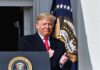
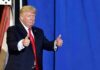
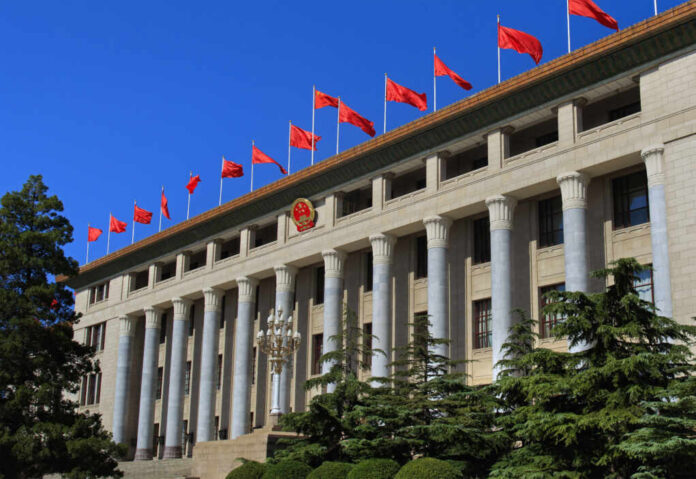
President Donald Trump arrived in Beijing on May 13 after Air Force One landed at Beijing Capital International Airport at roughly 7:51 a.m. ET, beginning a multi-day state visit and summit with Chinese leader Xi Jinping. The trip revives the highest level of U.S.-China engagement in years, but under far tougher conditions: the two countries are simultaneously competing on trade, technology, and military deterrence. Early footage showed Trump greeting officials and departing by motorcade as ceremonies began.
Beijing’s reception has been framed by Chinese state media as a formal “state visit,” signaling an effort to project stability and respect even as disputes intensify. On the U.S. side, the White House is approaching the visit as a pressure test—whether America can defend its interests without drifting into either naive “reset” politics or open-ended escalation. With Republicans controlling Congress, Trump also has more room to pursue hard-nosed bargaining without immediate legislative paralysis.
Trade, Taiwan, and Iran: Three Crises Pushed Onto One Agenda
The summit agenda combines three major friction points that rarely move in the same direction at once. Trade disputes and stalled negotiations remain central as both economies wrestle with supply chains, market access, and tariff pressure. Taiwan is another flashpoint, especially after recent U.S. arms approvals that triggered Chinese military signaling. A third factor is the Iran war, where U.S. actions and China’s diplomatic posture add another layer of strategic bargaining beyond Asia.
That combination matters for Americans because it ties kitchen-table economics to national security choices. A trade thaw could lower costs and reduce uncertainty for exporters and manufacturers, while a breakdown could reinforce decoupling and higher prices on key goods. Taiwan is less visible to daily life until it isn’t: the island sits at the center of global semiconductor supply chains and major shipping routes. Meanwhile, the Iran conflict pressures energy markets and complicates U.S. alliances.
“Digital Lockdown” Shows How Normal Diplomacy Now Includes Cyber Defense
U.S. officials traveling with Trump are reportedly operating under a “digital lockdown” designed to limit Chinese intelligence collection and technology transfer risks. In practical terms, that reflects how modern state visits now require defensive measures once associated mainly with battlefield planning. For voters who already suspect government systems are porous and captured by entrenched interests, these precautions are also an admission: the U.S. can’t assume foreign capitals will respect diplomatic norms in cyberspace.
The security angle also cuts across partisan frustrations. Conservatives often argue that globalism encouraged reckless openness with strategic rivals, while many liberals worry that corporate interests distort foreign policy. A locked-down delegation implicitly acknowledges both anxieties: the U.S. wants engagement but must treat the environment as hostile for data and sensitive communications.
Why Jensen Huang’s Presence Matters More Than a Photo Opportunity
Nvidia CEO Jensen Huang’s presence on Air Force One drew attention because it places technology and AI supply chains near the center of U.S. diplomacy. Reports indicated Trump confirmed Huang’s attendance after rumors suggested otherwise, highlighting how closely markets and politics now track executive access. Nvidia’s China exposure, export rules, and the broader chip contest make CEOs part of the strategic landscape, not just private-sector observers. The visit signals that trade talks increasingly overlap with tech controls.
President Trump Arrives In Beijing For Summit | TOP UPDATES#Trump #XiJinping #Beijing #China #USChina #BreakingNews pic.twitter.com/K54nLOQFbl
— NewsMobile (@NewsMobileIndia) May 13, 2026
For the public, that raises a legitimate governance question: who sets national priorities when security policy, industrial policy, and corporate incentives all intersect at the negotiating table? The current reporting supports the conclusion that U.S. officials see tech as a primary battleground, but it does not reveal the specific concessions or commitments either side is prepared to make.