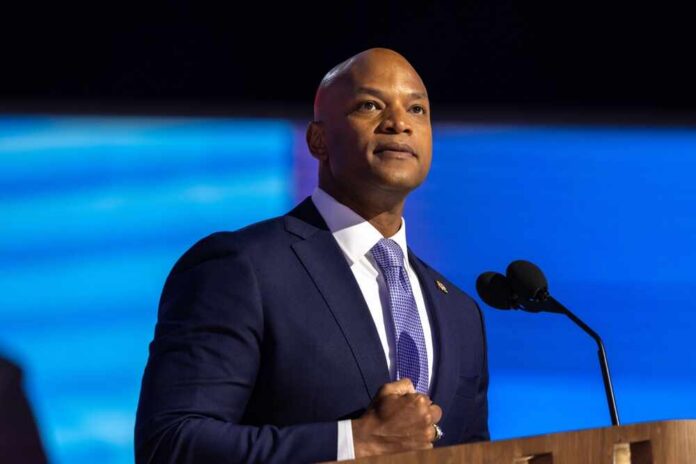
One casual answer from Maryland’s governor just reignited the national fight over whether adults are handing kids life-altering decisions they’re not ready to make.
Quick Take
- Maryland Gov. Wes Moore said on the PBD Podcast he would not stop a hypothetical 14-year-old son from “transitioning,” while stressing he would stay involved as a parent.
- Moore also drew a clear line against puberty blockers for minors, saying it’s not a decision kids can make alone.
- The controversy grew from viral clips and conservative coverage, but the scenario was hypothetical and not about Moore’s actual children.
- The episode highlights a broader distrust of institutions as politics, media, and activist pressure collide over parental rights and children’s welfare.
What Gov. Wes Moore Actually Said—And What He Didn’t
Maryland Gov. Wes Moore, a Democrat, addressed a hypothetical question about youth gender transition during a May 2026 interview on the PBD Podcast hosted by Patrick Bet-David. Moore said he would not stop a 14-year-old son from transitioning if it was “a journey that he wants to go down,” framing his response around love, family involvement, and making sure a child feels “safe in his own skin.” The remarks were not about a real situation in his family.
The viral framing online often used terms like “sex change,” but the publicly described exchange focused on “transition” in general terms, not a specific medical procedure. That distinction matters because “transition” can mean social changes, counseling, or medical interventions—each with very different stakes. Moore did not announce any policy shift for Maryland and did not claim his son was transitioning.
A Notable Red Line: Moore Rejected Puberty Blockers for Minors
Moore’s answer included a point many headlines downplayed: he said he opposed puberty blockers for minors, describing that as a decision kids cannot make on their own. He also criticized how the subject has become politicized, suggesting the national conversation pressures families into taking sides instead of slowing down and keeping parents meaningfully engaged. That split—supporting a child’s “journey” while opposing blockers—places him outside the most activist wing of his party.
For conservative voters focused on child protection and parental authority, Moore’s refusal to endorse blockers may sound like overdue caution, but his broader stance still raises a hard question: what does “not stopping” a 14-year-old practically mean? Without clarity, the public fills in the blanks, and the debate turns into a proxy war over institutions many Americans no longer trust—schools, medical systems, media, and government agencies—each accused of pushing ideology rather than prioritizing children.
Why This Clip Blew Up: A Culture-War Debate With Election-Year Incentives
The comments spread rapidly because short clips fit the current political incentives: activists and outlets can isolate a few lines and turn them into a loyalty test. Conservative coverage highlighted Moore’s permissiveness, while sympathetic listeners emphasized compassion and family autonomy. The PBD Podcast’s audience also makes these moments travel; pointed questions are part of the format, and viral snippets reward the most divisive interpretations—especially when they can be tied to a broader “woke” critique.
What the Episode Reveals About Government, “Experts,” and the Parental-Rights Backlash
This story lands in a moment when many Americans—left and right—believe powerful institutions protect themselves first. Conservatives often see gender ideology in schools and medicine as proof that elites are rewriting social norms without consent. Many liberals, meanwhile, worry government will police personal decisions and label dissent as bigotry. Moore tried to split the difference by centering “love” and rejecting blockers, but the controversy shows how little trust remains in gatekeepers to define what’s “settled.”
As of the reporting, the immediate impact is mostly political and cultural rather than legislative: no new Maryland policy was announced and no legal action was tied to the interview. Still, the clip is likely to remain campaign fuel because it compresses several hot-button themes—parental rights, childhood innocence, medical authority, and media manipulation—into one exchange that can be easily weaponized by both sides.
Sources:
Wes Moore says he wouldn’t stop underage son from transitioning
Gov. Moore on if his son wanted to transition to a girl: “I’m not going to condemn him”