Louisiana voters are being told to show up and cast ballots in U.S. House primaries—even though the votes for those races won’t count—after a late Supreme Court redistricting ruling threw the state’s election calendar into chaos.
Quick Take
- Reporting that framed the episode as “LA City Hall” turmoil appears to hinge on an “LA” abbreviation mix-up; the verified disruption centers on Louisiana.
- Louisiana canceled U.S. House primaries after ballots were already printed and early voting had begun, leaving House contests on ballots but voiding those votes.
- The dispute stems from Voting Rights Act litigation over whether Louisiana must have a second Black-majority congressional district.
- The breakdown highlights how court-timed election changes can undermine public confidence, regardless of which party benefits.
“LA bosses” confusion: the headline obscures a Louisiana election crisis
Grabien’s viral framing about “Panicking LA bosses” suggests Los Angeles officials are reacting to a Supreme Court voting decision, but the underlying event described across the research points to Louisiana, not California. That ambiguity matters because it distorts accountability and inflames partisan narratives. The confirmed controversy involves Louisiana’s congressional map and an abrupt interruption of U.S. House primaries—an administrative mess that landed on voters rather than on political insiders.
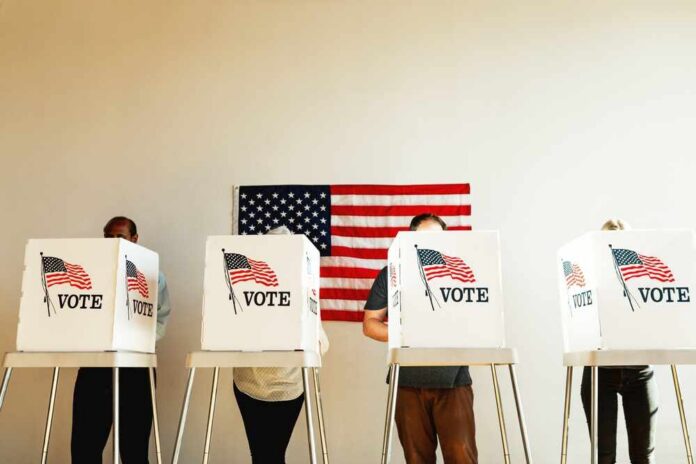
Louisiana’s disruption is unusually concrete: voters saw U.S. House races printed on ballots during early voting, yet state officials indicated those votes would not be counted because the primary had been canceled. Reports describe voters expressing uncertainty about whether they were voting at all and officials urging people not to let confusion deter participation in other contests. That is the kind of process failure—ballots saying one thing, officials saying another—that fuels broad distrust in elections.
How a Voting Rights Act redistricting fight reached the ballot box
The fight traces back to Louisiana’s post-2020 redistricting. Lawsuits argued the map diluted Black voting strength under Section 2 of the Voting Rights Act, as Louisiana drew six majority-white districts even though Black residents make up roughly a third of the state. Federal courts ordered changes, the state appealed, and the Supreme Court’s posture in similar cases—such as Allen v. Milligan—kept the legal pressure on states defending contested maps.
The Supreme Court ultimately left Louisiana facing a court-driven redo after the 2024 cycle, forcing action during the 2026 election calendar. That sequencing is central to the fallout. Courts can resolve constitutional and statutory questions, but when final decisions arrive close to election administration deadlines, the practical result can be confusion, emergency sessions, and litigation from candidates and voters who suddenly find their campaigns—and their ballots—upended.
Why Gov. Jeff Landry canceled the primaries—and why it still backfired
Gov. Jeff Landry, a Republican, canceled the U.S. House primaries as the state tried to comply with the redistricting outcome while ballots were already locked in. Reports attribute the cancellation to the timing problem: it was too late to remove contests from printed ballots, and early voting had begun. The state’s new closed primary system added another layer of complexity, requiring voters to navigate party rules while major federal races were simultaneously thrown into limbo.
From a limited-government perspective, the episode is a cautionary tale about what happens when major rules are settled through late-stage legal intervention rather than predictable legislative timelines. Even voters who support the underlying Voting Rights Act goals can reasonably question a system that asks them to spend time voting on races that will be discarded. At minimum, the case underscores the need for earlier resolution windows so voters aren’t used as shock absorbers for institutional conflict.
National stakes: representation, House margins, and a shared crisis of confidence
Louisiana’s congressional delegation has favored Republicans and a second Black-majority district could change the partisan math by making at least one seat more competitive for Democrats. That political backdrop is why both sides view the dispute as consequential. Still, the immediate damage is civic: when people can’t tell whether an election is real, the legitimacy of outcomes suffers, and that vacuum is quickly filled by partisan suspicion about courts, state leaders, and “the system.”
Panicking LA bosses scramble after bombshell Supreme Court voting ruling https://t.co/nvT5C9E1Tw pic.twitter.com/801TJgHOge
— New York Post (@nypost) May 5, 2026
For conservatives frustrated with bureaucratic overreach and for liberals worried about access and fairness, the common thread is the same: institutions that seem unable to run clean, comprehensible elections. The research does not provide a precise Supreme Court decision date, and some headlines appear sensationalized, but the practical reality is clear—last-minute shifts in election rules create a credibility crisis that Washington and state capitals alike have failed to prevent.
Sources:
Panicking LA Bosses Scramble After Bombshell Supreme Court Voting Ruling
Louisiana congressional election canceled: lawsuits, confusion