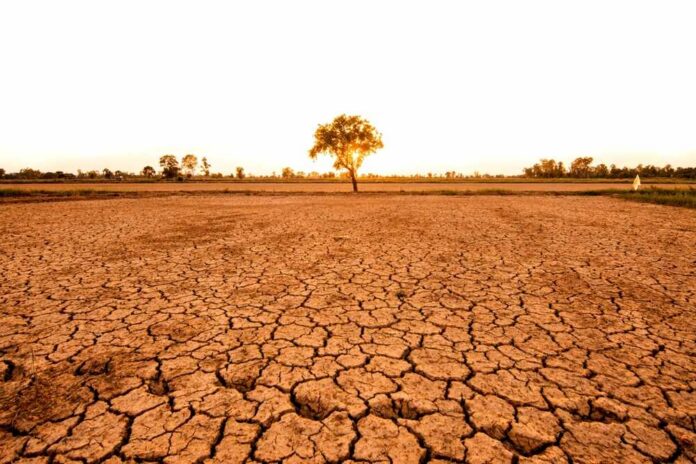
Meteorologists warn a potentially catastrophic El Niño event, described as the strongest in 140 years, is barreling across the Pacific Ocean with unprecedented speed, threatening to unleash extreme weather patterns that could devastate American agriculture and flood drought-stricken regions already reeling from years of mismanagement.
Story Snapshot
- Rare tropical cyclone clusters on both sides of the equator are driving warm water eastward at record speeds, with NOAA forecasting a 62% chance of El Niño formation by summer 2026
- Atmospheric scientists warn this could be the strongest El Niño in 140 years, with up to 80% odds of a powerful event and a one-in-four chance of a “super” El Niño exceeding 2°C warming
- High Plains farmers face extreme weather variability rather than steady drought relief, while 150 million Americans brace for a 10-day “storm train” targeting the West Coast
- The rapid transition from La Niña to El Niño represents the fastest Pacific warming on record, raising concerns about billions in potential agricultural losses and infrastructure damage
Unprecedented Pacific Warming Signals Major Climate Shift
The tropical Pacific Ocean has reached El Niño temperature thresholds following the fastest La Niña-to-El Niño transition ever documented by climate scientists. Westerly wind bursts generated by unusual clusters of tropical cyclones on both sides of the equator are propelling warm surface water eastward with extraordinary force. University at Albany atmospheric scientist Paul Roundy characterizes the developing system as having “real potential” to become the strongest El Niño event in 140 years. The National Oceanic and Atmospheric Administration issued an outlook on April 9, 2026, projecting a 62% probability of El Niño conditions persisting from June through August, with meteorologists tracking the phenomenon’s rapid intensification throughout early May.
Agricultural Sector Braces for Weather Extremes Over Steady Relief
High Plains farmers and ranchers who endured years of drought under the recent multi-year La Niña phase now face a different challenge as El Niño develops. Brian Bledsoe, a Castle Rock, Colorado-based meteorologist who advises agricultural producers, cautions that the emerging pattern will “facilitate extremes” rather than deliver the consistent moisture desperately needed across drought-stricken regions. On May 1, 2026, Bledsoe warned clients that the jet stream split associated with El Niño raises the risk of severe weather events while providing unpredictable precipitation patterns. This uncertainty undermines planning for producers who depend on reliable forecasts to manage planting schedules and resource allocation, exposing how vulnerable American agriculture remains to weather volatility that government agencies struggle to predict accurately.
Storm Train Threatens West Coast Infrastructure and Economies
Forecasters project a 10-day atmospheric river “storm train” will target the Western United States, potentially affecting 150 million Americans with flooding rains and heavy mountain snowfall. The jet stream’s southward shift will funnel moisture from the Pacific directly into California and surrounding states, echoing the devastating 2015-2016 El Niño that caused over $20 billion in damages across the United States. Emergency management officials in California are mobilizing resources as climate models suggest the current event could exceed that benchmark. The economic implications extend beyond immediate flood damage, threatening transportation networks, utility infrastructure, and agricultural operations across multiple states while straining disaster response budgets already stretched thin by previous climate-related emergencies and federal spending priorities that critics argue favor bureaucratic expansion over practical resilience investments.
Expert Warnings Highlight Government Forecast Limitations
While NOAA’s Climate Prediction Center maintains a 62% confidence level for El Niño formation, private meteorologists and academic researchers express concern about the uncertainty surrounding the event’s ultimate intensity. Climate models show significant divergence, with super El Niño probabilities ranging from 22% to 25% depending on the methodology used. This forecasting ambiguity complicates preparedness efforts for communities, businesses, and agricultural operations that require concrete information to make costly protective investments. The debate between optimistic projections of drought relief and more cautionary assessments of extreme weather variability reveals the limitations of current climate prediction capabilities, raising questions about whether taxpayer-funded federal agencies are providing the actionable intelligence Americans need to protect their livelihoods and property from increasingly unpredictable weather patterns driven by natural climate cycles.
The developing El Niño’s global reach extends beyond U.S. borders, with jet stream alterations expected to trigger drought conditions in Australia and flooding across parts of Asia, demonstrating how interconnected weather systems expose the vulnerability of food production worldwide. Historical precedents including the 1997-1998 super El Niño and the catastrophic 1877-1878 event that caused widespread famine underscore the potential for significant humanitarian and economic consequences. As the 2026 event unfolds, the gap between sophisticated satellite monitoring capabilities and the practical ability to mitigate impacts reveals an uncomfortable truth: despite massive investments in climate science, government institutions remain largely reactive rather than proactive in protecting citizens from nature’s most powerful forces, leaving individuals and communities to bear the brunt of weather extremes that increasingly define modern American life.
Sources:
Meteorologists Sound Alarm On ‘Worst El Nino In 140 Years’ – Patch.com
Meteorologist warns El Niño may bring extremes to High Plains – HPJ.com
Meteorologists are beginning to talk about a possible super El Niño – Ecoticias