One Truth Social post from President Trump just threw a major U.S.-U.K. security deal into turmoil—because a 99-year lease isn’t the same thing as control.
Quick Take
- Prime Minister Keir Starmer’s government agreed to hand sovereignty of the Chagos Islands to Mauritius while leasing back the Diego Garcia base for 99 years.
- President Trump publicly attacked the arrangement as “great stupidity,” and the White House treated the post as official policy guidance.
- Reports indicate the U.K. has effectively slowed or “deep frozen” the handover process amid U.S. pressure, though full legal status remains unclear.
- The dispute underscores how strategic assets can become bargaining chips when alliances, courts, and domestic politics collide.
Why Diego Garcia Became a Flashpoint for U.S. Interests
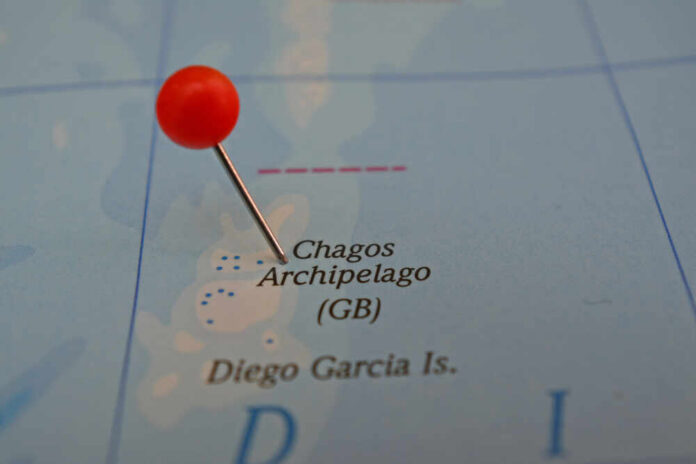
Diego Garcia is not a symbolic outpost; it is a core platform for U.S. and allied military reach across the Indian Ocean. The U.K. has administered the Chagos Archipelago as the British Indian Ocean Territory since 1965, and the joint base has operated for decades. Reporting ties Trump’s objections to immediate security concerns, including deterrence against Iran, and to his broader view that long-term leases leave America exposed if politics shift later.
The base’s history complicates the politics. The U.K. forcibly removed roughly 1,500 Chagossians in the 1960s and 1970s to enable the installation, a decision that still drives legal and moral claims today. A 2019 advisory opinion from the International Court of Justice urged the U.K. to end its control of the islands, increasing pressure on London to find a structure that protects the base while reducing legal vulnerability over sovereignty.
The Deal Structure: Sovereignty Transfer, Lease-Back, and a Big Price Tag
The U.K.-Mauritius arrangement reached in 2024 aimed to transfer sovereignty to Mauritius while securing a long lease for Diego Garcia—commonly described as 99 years, with some reporting rounding it to 100. An estimated annual cost of about $136 million to the U.K. for the lease. In theory, that trade-off tries to preserve operations “for generations” while defusing international legal challenges that could threaten basing rights.
Washington’s posture has been mixed. In May 2025, Trump expressed support for the agreement during a White House meeting with Starmer, and Secretary of State Marco Rubio later endorsed the deal after a review, describing it in strong security terms. That matters because U.S. approval is central to the arrangement’s legitimacy in practice. When America signals uncertainty, the entire structure starts to look less like a settled alliance decision and more like a temporary political truce.
Trump’s Public Reversal and Starmer’s Political Bind
Trump’s latest intervention is not just disagreement; it is a direct warning that a lease is “no good” if it risks U.S. operational freedom later. Reports describe multiple shifts in his public messaging—support, then condemnation, then praise again, then renewed condemnation—culminating in a Truth Social post calling the deal a “big mistake” and “great stupidity.” The White House confirming the post as policy raises the stakes for London, because ambiguity becomes actionable pressure.
Starmer’s bind is straightforward: keep moving and risk alienating the one ally that makes Diego Garcia strategically meaningful, or slow down and face domestic criticism for indecision and weakness. Some reporting frames the U.K. as effectively pausing the handover or putting it into a “deep freeze,” but uncertainty about whether any formal pause has been issued. The U.K. government’s public line remains that it will not compromise national security and that the deal secures the base long-term.
What This Says About Government Credibility and the “Lease vs. Control” Problem
The deeper issue is trust. Conservatives tend to focus on sovereignty, enforceable commitments, and clear chains of authority—especially for critical defense infrastructure. A 99-year lease may look strong on paper, but it still depends on future governments, future courts, and future geopolitical incentives. Liberals often emphasize resolving colonial-era injustices and complying with international legal norms, but those priorities can collide with national security realities when adversaries exploit uncertainty and bureaucracy slows decisive action.
‘U-Turn’ Starmer Pauses Plans To Hand Over Chagos Islands and the Diego Garcia Airbase Back to Mauritius After Trump Called It ‘An Act of Great Stupidity’ https://t.co/ZBnIsAnrMg #gatewaypundit via @gatewaypundit
— tim fucile (@TimFucile) April 12, 2026
The conflict also feeds a broader frustration shared by many voters: major decisions get made through elite negotiations, legal maneuvering, and political messaging, while ordinary citizens are left with the costs and consequences. The fears of compensation liabilities running into billions if the arrangement collapses, alongside ongoing disputes about Chagossian rights and resettlement. With U.S. policy now signaling skepticism of the lease model, the next steps will test whether allied governments can produce a stable outcome—or merely another temporary patch.
Sources:
Trump slates Starmer over Chagos Islands lease deal – in third U-turn
Trump U-turns on U.K.’s Chagos Islands deal, claims it’s “great stupidity”