America’s leaders just flew into a Swiss resort to cut a nuclear deal with Iran that could calm a war—or lock in yet another fragile promise the “experts” fail to enforce.
Story Snapshot
- U.S. Vice President JD Vance and top Iranian officials are now meeting in Switzerland to turn a short peace framework into a detailed nuclear deal.
- The talks follow a brief delay tied to fighting in Lebanon, showing how easily war on the ground can disrupt high-level diplomacy.
- The 60-day window could ease energy prices and keep the Strait of Hormuz open, but Iran’s leaders are still vowing to keep enriching uranium.
- The process highlights a deeper frustration: life-or-death decisions about war, oil, and inflation are being made far from ordinary Americans, by the same global elites many no longer trust.
Vance and Iran’s negotiators finally get to the table
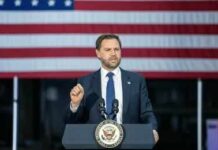
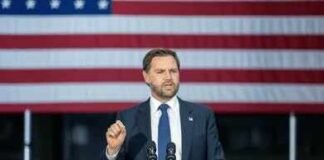
U.S. Vice President JD Vance and senior Iranian officials have now arrived in Obbuergen, Switzerland, to start formal talks on Iran’s nuclear program.[8] These meetings aim to turn last week’s framework into a detailed plan that could end the war in Iran and keep oil flowing through the Strait of Hormuz.[6] Negotiators from both sides face a 60-day sprint to work out technical terms that could affect everything from gas prices in Ohio to market shocks in Europe.[6]
The Swiss talks almost did not happen on time. Just days earlier, the White House said Vance was delaying his trip because of “difficult logistics” and rising violence in Lebanon, as Iran hesitated to send its team.[3] That delay raised doubts about the deal’s strength and showed how quickly regional conflict can throw off planning in Washington.[3] Now, both sides are under pressure to use this short window before fresh fighting or politics at home blow it up.
What the interim deal promises—and what it leaves out
The current agreement is a framework, not a full peace treaty. President Donald Trump signed it last week in France, putting in place an immediate ceasefire and a 60-day period for deeper talks on sanctions and nuclear limits.[3] The deal says Iran’s stockpile of highly enriched uranium must at least be diluted under international supervision and that Iran “shall not procure or develop nuclear weapons,” repeating past written promises.[3] A separate letter is supposed to invite the United Nations nuclear agency to restart inspections inside Iran.[3]
This sounds like progress, but many of the hardest questions are being pushed into the future. The text described by officials does not settle how long Iran must limit enrichment or how fast U.S. and international sanctions would be lifted.[6] It sketches plans for a huge reconstruction and sanctions-relief package for Iran’s battered economy, reportedly in the hundreds of billions of dollars, but leaves the exact terms for a later “final deal.”[6] For many Americans who remember past broken promises, that looks less like strength and more like yet another elite handshake with fuzzy fine print.
Energy, the Strait of Hormuz, and your wallet
One reason the White House is pushing this deal is fear of economic shock at home. The memorandum centers on reopening the Strait of Hormuz, the narrow waterway that carries about one-fifth of the world’s oil and gas.[6] The agreement lets commercial ships pass through the strait for 60 days without fees, after the United States lifted its blockade and tankers began moving again.[7] That pause gives global markets breathing room and may ease gas prices and inflation that already squeeze American families.
But the fine print matters. The text does not stop Iran from charging tolls later, and Iran will still be allowed to sell oil and gain access to frozen funds under the framework.[8][6] That means a regime long seen as hostile to the United States could gain cash while keeping parts of its nuclear and missile know-how. For conservatives, that feels like rewarding bad behavior. For many liberals, it feels like another backroom deal that helps foreign powers and oil markets while the gap between rich and poor at home keeps growing.
A “peace” deal that still sits on a powder keg
The setting in Switzerland may look calm, but the security picture is not. These talks restarted only days after heavy Israeli strikes in Lebanon and Iranian-linked responses, which helped trigger the earlier postponement.[3][8] The memorandum promises an end to military operations and respect for each side’s territory, yet regional militias and proxy groups can still act in ways that spoil the process, without their leaders ever sitting at the Swiss table.[19] This is why many analysts call the deal “fragile” and “limited” rather than a true reset.[18]
Iran’s own leaders are also sending mixed messages. While their team shows up in Switzerland, President Masoud Pezeshkian says Iran “will never back down from the right to enrich uranium” and insists the other side must accept that.[5][7] That statement undercuts the idea of a clean path to “zero enrichment,” which some in Washington once demanded. It also feeds a deeper worry on both the right and the left: that powerful governments and global institutions are managing decline, not solving problems, and that ordinary citizens are expected to live with the risk.
Where public anger meets deep-state diplomacy
Many Americans watching all this feel shut out. The interim deal was read to reporters by a senior official rather than released in full, and key side letters and inspection plans are still secret.[6][3] Congress has been briefed behind closed doors, but lawmakers on both sides of the aisle are raising questions about sanctions relief, nuclear timelines, and what happens if Iran cheats.[6][20] That fuels the sense that a small circle of elites in Washington, Europe, and Tehran is gambling with security and energy prices while everyone else waits for the bill.
For conservatives frustrated with globalism and endless wars, the talks look like another case of America carrying the burden for a broken region. For liberals worried about human rights and economic fairness, they look like a rushed fix that may entrench hard-liners and big oil interests. Yet there is also a shared fear: if these fragile Swiss talks fail, the alternative may be more war, higher prices, and even less accountability from the people who steered the country into this crisis in the first place.
Sources:
[3] Web – JD Vance Postpones Switzerland Visit For Iran Talks: White …
[5] Web – JD Vance delays trip to Switzerland to lead new US talks with Iran …
[6] Web – JD Vance delays trip to Switzerland to lead new US talks …
[7] Web – White House postpones sending Vance to Switzerland for …
[8] Web – JD Vance delays Switzerland trip as US-Iran nuclear talks stall
[18] Web – Commentary: The U.S.-Iran peace memorandum is a limited and …
[19] Web – What Iran and US get from deal and why both could struggle to keep it
[20] Web – Trump’s Iran Deal: What We Know So Far