
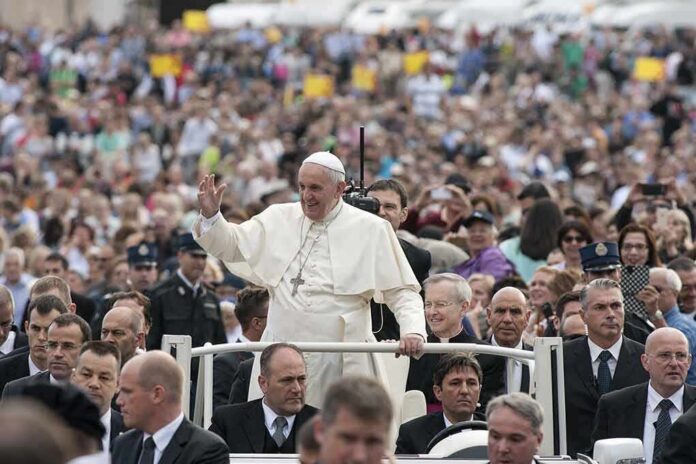
The Vatican released Pope Francis’s private diary, which says he faced a two-year spiritual crisis and described encounters with the devil.
Story Highlights
- The Vatican presented an authorized volume of Pope Francis’s diary covering 1992–2024.
- Entries describe a crisis lasting through 2021–2022 and “assaults by the forces of evil”.
- The diary recounts three encounters with the devil, including one in 2018 while pope.
- A January 24, 2021 entry quotes, “Now I’ve gotten everything I wanted,” attributed to the devil.
Vatican Publishes Authorized Diary With Detailed Timeline
Vatican outlets and major media reported the international release of The Private Diary of Pope Francis, edited by Cardinal Víctor Manuel Fernández, a senior Vatican official close to the late pontiff. The book compiles notes from 1992 to 2024 and presents an authorized account rather than an anonymous leak. The text highlights a two-year spiritual crisis beginning in early 2021, during which Francis also faced illness and what he called “decisive assaults by the forces of evil”.
Associated Press reporting cites a dated entry from January 24, 2021 that records a voice attributed to the devil saying, “Now I’ve gotten everything I wanted”. Vatican News underscores the editor’s role and the work’s aim to reveal Francis’s interior life, including temptations and prayers. These details place the diary within the official Vatican communication stream, which signals institutional support for publishing the material to a wide audience.
Accounts of Three Devil Encounters and a Glimpse of Hell
Reports summarize three encounters with the devil across Francis’s life. Two occurred when Jorge Bergoglio served as archbishop in Buenos Aires, and one happened in 2018 during his papacy. Descriptions include strong language about evil and, in one telling, a glimpse of the “gates of hell”. Coverage varies on whether these were visions, encounters, or intense temptations, but the consistent point is that Francis recorded them and tied them to a period of deep spiritual struggle.
American and European outlets attribute the 2018 experience to his time as pope, suggesting the weight of global scandals and leadership burdens formed part of the context. The diary’s language aligns with long-standing Christian teaching that treats evil as a real force opposed to human dignity and the common good. While the publication shares excerpts rather than a full facsimile, the accounts appear as first-person reflections curated by Fernández for public reading.
Why This Matters Across Faith, Institutions, and Public Life
The release arrives after the Vatican’s 2024 rules on alleged visions and similar claims. Those norms guide church leaders to focus less on declaring events “supernatural” and more on whether they lead people toward sound teaching and moral renewal. Under those rules, officials weigh risks like confusion, profit seeking, or harm, and they may authorize devotion without certifying a supernatural origin. Francis approved these norms during his lifetime, shaping how such writings are now presented.
The diary’s themes also meet broader public worries about failing institutions and moral drift. Many Americans, across left and right, feel powerful systems protect elites and ignore ordinary people. Francis’s words point to the fight against evil within leaders and structures, not just in private life. That message resonates when families face rising costs, culture fights, and mistrust in government and big organizations. The diary frames renewal as a personal and communal battle against corruption and abuse, not a partisan slogan.
Pope Francis’s Private Diary: Visions of the Devil and a Glimpse of Hell
Newly published excerpts from the private diary of the late Pope Francis reveal a pontiff who documented intense spiritual struggles, including multiple claimed encounters with the devil and a vision of the…
— Deimos News (@DeimosNewsUSA) November 24, 2026
The Vatican’s decision to publish an authorized volume, with a clear editor and timeframe, suggests a push for transparency about the late pope’s inner trials. Advocates may see a pastor sharing weakness to strengthen others in hardship. Critics may still want complete source pages and fuller context. The church’s newer norms create room for public reading of such texts while keeping strict judgment about supernatural claims in check.
Sources:
lifesitenews.com, fidelity.com, afp.com, itv.com, the-journal.com