Three million pages of newly released Epstein files are now triggering a NATO ally’s national-security probe over whether a sex-trafficking network doubled as a foreign blackmail machine.
Quick Take
- Poland’s government ordered an urgent review of newly released U.S. Justice Department Epstein documents after “Polish threads” surfaced in the material.
- Prime Minister Donald Tusk framed the review as both a victim-protection effort and a potential national-security issue involving kompromat-style blackmail.
- Media reporting highlighted extensive references to Russia in the document trove, but multiple outlets caution that many mentions may be tangential and not proof of intelligence ties.
- Poland is seeking cooperation and potentially additional access from U.S. authorities as analysts and prosecutors examine what is public versus what remains sealed.
Poland Treats New Epstein File Release as a Security Threat
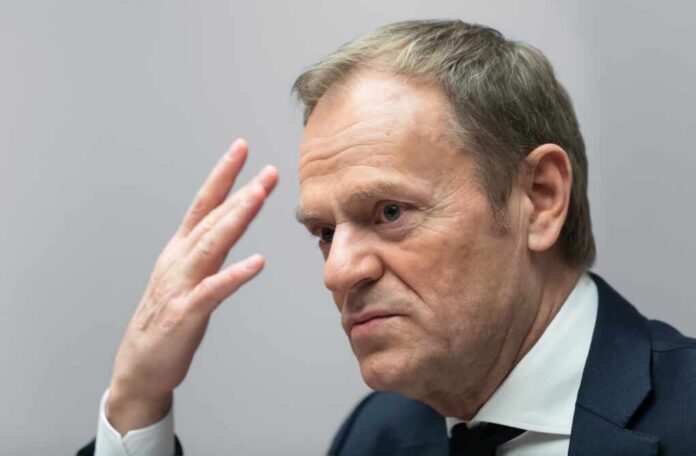
Polish Prime Minister Donald Tusk announced a special analytical task force after the U.S. Department of Justice released roughly three million additional pages tied to Jeffrey Epstein on January 30, 2026. Polish reporting quickly flagged “Polish threads,” including references to “girls” connected to Poland and Kraków. Tusk instructed prosecutors and security services to treat the review as urgent, emphasizing protection for potential Polish victims and accountability for anyone who enabled abuse.
Poland’s move stands out because many countries have treated Epstein document releases as scandal fodder, while Warsaw is handling it like counterintelligence. Tusk’s public remarks framed the story as more than celebrity gossip, arguing the material could point to organized exploitation with implications for state security. His government is also weighing what it can infer from public pages versus what may require formal cooperation from U.S. officials to access sealed or restricted material.
What “Polish Threads” Mean—and What They Don’t Yet Prove
Reports describing “Polish threads” cite items such as emails referencing Poland, mentions of Kraków, and individuals with Polish connections appearing in Epstein-related records. Those details are the stated reason Warsaw set up a dedicated review team rather than leaving the issue to routine law enforcement channels. However, the publicly discussed references have not, by themselves, established that specific Polish nationals were trafficked, recruited, or victimized in each cited instance, and investigators have not released verified findings.
The most responsible reading at this stage is that Poland is responding to potential victimization signals and to the possibility of cross-border facilitation. That is a legitimate law enforcement interest, especially given Epstein’s documented global reach and the long-running pattern of recruitment and exploitation described in earlier proceedings connected to his network. Until the task force produces confirmed leads, the story remains an investigation into references and patterns, not a finished case with adjudicated facts.
The Russia Angle: High Volume Mentions, Low Confirmed Specifics
Tusk and media coverage also drew attention to suspected Russian intelligence “honey trap” tactics—using sexual blackmail to compromise influential figures. Reporting cited large numbers of Russia-related references in the newly released material, including mentions of Vladimir Putin, as part of the rationale for treating the matter as a security concern. At the same time, separate reporting has cautioned that many Russia references may be incidental, such as clippings and tangential material, rather than proof of coordination.
That uncertainty matters, because a free society cannot operate on insinuation alone. Conservatives who watched years of politically convenient narratives pushed without hard evidence will recognize the danger of jumping from “mentions” to “operations.” The key fact is that Poland is investigating suspected links; it has not publicly confirmed a direct operational tie between Epstein’s trafficking and Russian services. If credible evidence exists, it should be presented, tested, and prosecuted through lawful channels.
Why Poland’s Post-Ukraine-War Posture Shapes This Response
Poland’s heightened vigilance is rooted in its role as a frontline NATO state after Russia’s 2022 invasion of Ukraine. Warsaw has repeatedly warned about espionage, sabotage, and hybrid operations in the region, so any hint that a global criminal network could intersect with intelligence-style leverage is going to be treated seriously. Analysts cited in coverage described Poland as particularly alert to kompromat risks that could threaten institutions, decision-makers, and national cohesion.
For American readers, the broader lesson is about how soft power and corruption can be weaponized. Even without confirmed Russia-Epstein coordination, the underlying blackmail model is real: powerful people compromised by criminal behavior become vulnerable to coercion. When governments or media treat this as mere scandal entertainment, they miss the national-security dimension. Poland is signaling it will not. The U.S. can learn from that seriousness while still insisting on due process and verified evidence.
What Happens Next: Requests to the U.S. and a Test of Transparency
The task force is reviewing what is available now and may pursue additional cooperation with U.S. authorities for more complete access, especially if relevant portions remain sealed. Officials have not announced results, names, or confirmed victim counts tied to Poland, and the public should expect careful handling given the sensitivity of trafficking allegations. The outcome could range from clarifying misunderstandings in documents to opening new investigative avenues, depending on what evidence is substantiated.
‘Looks suspicious’: Polish Foreign Minister reveals possible Epstein-Russia connections | The Recordhttps://t.co/kOz9XfxZXO
— ConspiracyDailyUpdat (@conspiracydup) February 5, 2026
Poland’s approach also underscores a basic principle many conservatives have demanded for years: institutions should serve truth and justice, not protect the well-connected. If the new document release exposes real trafficking pathways or facilitators, those facts should be pursued without fear or favoritism. If the Russia angle proves inflated by loose inferences from keyword-heavy files, that should be stated plainly as well. Either way, the public deserves clarity grounded in evidence, not narrative.
Sources:
Warsaw to set up task force to look into Polish threads, Russia links in Epstein files
Poland to look into Epstein files amid possible domestic links: PM
Epstein Poland Donald Tusk investigation “satanic circle” trafficked Polish women, girls