Trump’s team just used Cold War-era emergency powers to force California’s coast back into the oil business—setting up a federal-state collision that will test how far “national security” can be stretched at home.
Story Snapshot
- The Trump administration invoked the Defense Production Act to order Sable Offshore Corp. to restart the Santa Ynez Unit platforms and pipelines off Santa Barbara County.
- The order is tied to soaring gas prices and supply risks during the Iran war, with the administration arguing energy output is now a national security priority.
- California officials, led by Gov. Gavin Newsom, vowed lawsuits and argue the move sidesteps state coastal oversight and ignores the 2015 Refugio spill history.
- The restart is not a done deal: Sable still faces state permitting fights and ongoing litigation that could delay actual barrels reaching markets.
Defense Production Act Used to Override California’s Energy Roadblocks
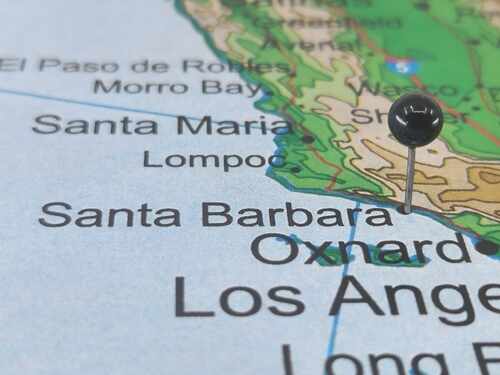
President Trump signed an executive order expanding emergency authority for the Energy Secretary, and Energy Secretary Chris Wright directed Houston-based Sable Offshore Corp. to restore operations at the Santa Ynez Unit—offshore platforms and pipelines shut down after the 2015 Refugio oil spill. The administration is framing the order as a national security measure during the Iran war, arguing fuel supply for the West Coast and military needs cannot be left to state politics.
Federal action is now colliding with California’s regulatory structure. Reports indicate the Justice Department issued a legal opinion backing the Defense Production Act approach, effectively claiming emergency authority can bypass certain state limits. California officials counter that state agencies and coastal regulators still have leverage through permits and enforcement, meaning the federal “order” may accelerate the showdown but not automatically turn valves and pumps back on overnight.
Why Santa Barbara Is the Flashpoint: Refugio, Permits, and Public Trust
Santa Barbara’s offshore history carries scars that still shape public trust. The Santa Ynez Unit’s pipelines were tied to the 2015 Refugio spill, when a rupture released more than 140,000 gallons of crude, damaging shoreline habitat and wildlife and helping trigger a long shutdown. Sable bought the assets in 2024 and pushed to revive them, but the Refugio legacy remains central to court fights and state resistance.
Gov. Gavin Newsom publicly condemned the restart order and said the state will fight it in court, warning about risks to beaches and coastal communities. Environmental groups are also challenging the move, calling it an abuse of federal power to benefit a private company. At the same time, California leaders argue offshore drilling won’t materially reduce prices, describing it as a marginal supply increase compared with broader global dynamics.
Energy Security vs. Endless Conflict: The Political Squeeze on Trump’s Base
Wartime instability around Iran can spike prices and threaten supply, so domestic production has to be treated as critical infrastructure. Wright has emphasized national security and military readiness. For conservatives who watched years of regulations restrict drilling while energy costs rose, that framing resonates—especially as California continues importing oil and fuel while insisting on aggressive climate restrictions at home.
But the politics are not simple in 2026. Many MAGA voters who supported Trump for border enforcement and economic pushback against globalism are now divided on how deep America should be pulled into another Middle East conflict. The offshore restart is being justified by a war-driven energy shock, which means the domestic drilling debate is now entangled with the bigger question: whether Washington can avoid sliding from limited objectives into another open-ended overseas commitment.
What Happens Next: Courts, State Leverage, and Real-World Output
On paper, the federal order aims at “tens of thousands of barrels a day,” but the near-term reality hinges on legal and operational timelines. Sable must navigate California Coastal Commission and State Parks-related approvals and withstand lawsuits that could slow or halt progress. The federal-state dispute is also a proxy fight over where constitutional lines sit when Washington invokes emergency powers to override state rules inside a single state’s backyard.
The same emergency logic that can be used to cut through blue-state obstruction can also be repurposed by future administrations for mandates conservatives hate. The strongest takeaway is that energy independence and constitutional limits are colliding in real time. If the administration can’t deliver cheaper, steadier energy without expanding war or normalizing emergency rule, backlash from its own coalition will likely grow.
Sources:
https://calmatters.org/environment/2026/03/trump-emergency-sable-santa-barbara/