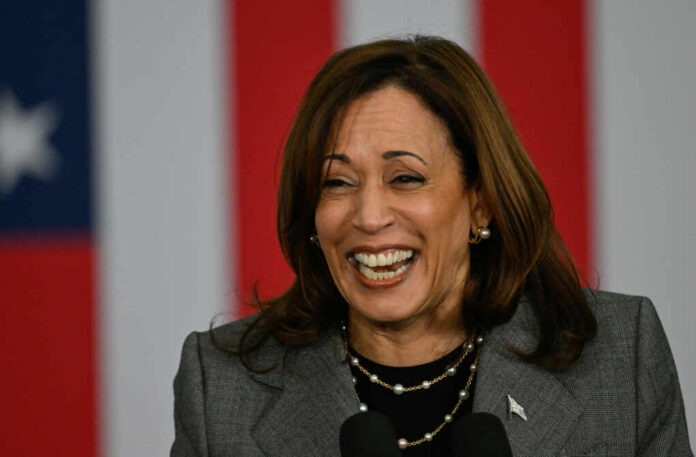
Kamala Harris is urging donors to stop Trump from naming more Supreme Court justices—before any vacancy even exists—marking a new phase of pre-emptive, big-money warfare over the Court.
Story Snapshot
- Harris amplified a fundraising push by Demand Justice aimed at mobilizing millions to oppose potential Trump Supreme Court nominees.
- The group’s plan starts around $3 million and could scale to $15 million or more if vacancies open up.
- The effort is framed as blocking Trump from “hand pick[ing]” one or two new justices, despite no confirmed vacancies at the time of the reports.
- The campaign builds on years of escalating nomination fights, with both parties using outside groups to pressure the process and shape public opinion.
Harris promotes a pre-emptive campaign to block future Trump nominees
Kamala Harris used her social media reach to promote a campaign by Demand Justice, a left-leaning advocacy group described as “dark-money,” urging supporters to contribute toward opposition research and messaging against any future Trump Supreme Court nominees. Her warning was explicit: she said the country “cannot allow” Trump to pick one or two additional justices and argued the Court must be stopped from becoming more “beholden” to him. The public push came even though no new vacancies were confirmed.
Demand Justice’s president, Josh Orton, outlined a budget structure that begins with a multimillion-dollar “initial effort” and expands sharply if retirements occur. Reporting cited the possibility—still speculative—of retirements by Justices Clarence Thomas and Samuel Alito, two of the Court’s older members mentioned in connection with the fundraising plan. In practical terms, the new tactic is not simply reacting to a nominee; it is building a political and media infrastructure to oppose a nomination before the White House has made one.
Why the confirmation fight is escalating in Trump’s second term
The stakes are higher because Trump already reshaped the judiciary during his first term, installing 234 federal judges and three Supreme Court justices—Neil Gorsuch, Brett Kavanaugh, and Amy Coney Barrett—helping lock in a 6–3 conservative majority. That history is central to why Democrats are organizing early, while Republicans see the president’s nomination power as a constitutional tool voters endorsed at the ballot box. This backdrop also reinforces how much Senate control can determine the speed and outcome of confirmations.
That modern escalation did not come from nowhere. The confirmation process intensified during the Garland episode in 2016 and again when Barrett was confirmed in 2020. Under Biden, Justice Stephen Breyer’s retirement led to Justice Ketanji Brown Jackson’s confirmation in 2022, maintaining the overall 6–3 balance. With few vacancies and an existing conservative majority, outside pressure campaigns have become a substitute battleground—attempting to shape outcomes by shaping the politics around them rather than by winning elections or controlling the Senate.
What’s proven, what’s not, and what voters should watch next
The verified facts are straightforward: Harris promoted the fundraising drive; Demand Justice described a multi-stage budget; and the public messaging targets Trump’s potential ability to replace one or two justices. What is not confirmed is whether any justice is retiring or when. That uncertainty matters because the Constitution gives presidents nomination power, and the Senate the power to advise and consent. When campaigns treat hypothetical vacancies like settled facts, they risk further degrading public trust in the Court’s independence.
The constitutional question: outside money vs. Senate “advice and consent”
Conservatives who are exhausted by runaway spending and government overreach may hear “multi-million-dollar campaign” and think of the same activist template used across agencies: organize donors, flood media, and intimidate decision-makers. Legally, the Senate votes; culturally, the megaphones try to decide what choices are acceptable.
For voters watching Trump’s second term, the immediate takeaway is that the Supreme Court is once again being treated as a political prize, not an independent branch. The next concrete milestones are not fundraising totals or viral posts, but actual vacancy announcements and the Senate Judiciary Committee’s steps if a nomination occurs. Until then, both parties’ messaging machines will keep spinning up fear and urgency—because in Washington, judicial power lasts decades, and the campaign season never really ends.
Sources:
Jonathan Turley: Kamala Harris backs radical plan to block Trump SCOTUS picks
How Harris, Trump would put their stamp on the courts