
On Black Friday in Manhattan, activists poured fake blood outside major Fifth Avenue stores and accused brands of aiding “genocide.”
Story Snapshot
- Protesters staged a “BDS Black Friday Crawl,” targeting several Fifth Avenue retailers.
- Chants linked shopping to Gaza bombings and accused brands like Adidas and Sephora.
- Fake blood outside storefronts gave the protest a graphic, visual punch.
- Evidence tying retailers to military actions was not presented in the available clips.
What Happened On Fifth Avenue
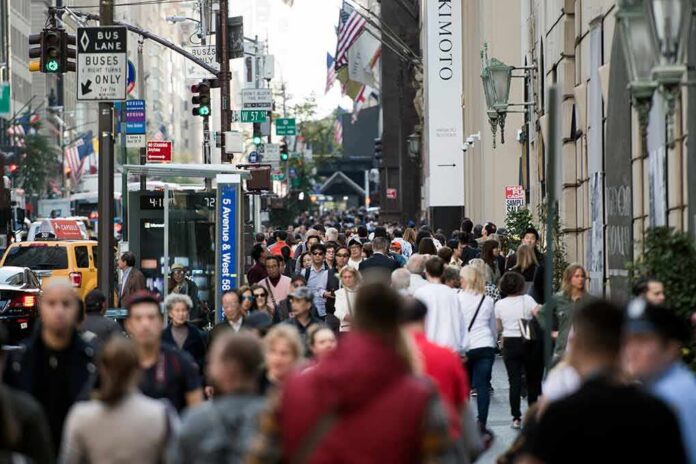
On November 27, activists marched along Fifth Avenue in New York City during peak Black Friday hours. Videos show protesters outside Sephora, Adidas, and Apple. They chanted, “While you are shopping bombs are dropping,” and accused brands of backing “genocide.” Organizers labeled the action a “BDS Black Friday Crawl,” signaling a boycott theme with multiple store targets along the route. Clips captured the use of fake blood splashed near storefronts to dramatize civilian deaths in Gaza.
Outside Adidas and other shops, protesters poured red liquid and shouted company-specific lines. One chant said, “Adidas, you can’t hide. We charge you with genocide.” The scenes aimed to link holiday spending with violence abroad. The message tried to turn a shopping day into a moral choice. A separate clip showed at least one counter-protester near the Apple store, underscoring tensions on the sidewalk as crowds moved between brand flagships and seasonal displays.
Why These Brands Were Targeted
Protesters framed retailers as pressure points that could amplify demands on policy through public image risk. The “crawl” format highlighted a coordinated consumer strategy, not a one-off chant. However, the available footage focused on visuals and slogans, not documents. The posts did not show contracts, donations, or supply links tying purchases at these stores to Israeli military activity. The claims were loud and clear, but the public-facing evidence in clips stayed symbolic, not financial.
Adidas drew special heat this fall after featuring an Israeli amputee veteran in a “Single Shoe” promotion. The company later apologized for offense and described the promotion as a local initiative. Those reports kept Adidas in activist crosshairs ahead of the holiday season. The Black Friday chants built on months of calls to boycott the brand, even as Adidas said the service was global and not designed for Israeli soldiers alone.
How Boycotts Aim To Work
Consumer boycotts try to move companies by raising reputational and market pressure. Research on United States boycotts from 1978 to 2017 found that actual boycott calls can dent shareholder wealth, at least in the short run. That finding tracks market reaction, not proof of policy change. Other studies estimate roughly a quarter of boycotts win some concession. Even when aims fall short, brands often adjust messaging or outreach to calm the storm.
Friday’s “bloody” displays sought to break through holiday noise and grab national attention. The tactic fits a wider trend: use vivid street theater to frame shopping as an ethical stand. For many Americans, this is one more sign that the system feels off. People on the right and the left see powerful players shaping outcomes while everyday families face high costs and rising tensions. Scenes like Fifth Avenue reinforce the sense that public squares now double as proxy battlefields.
Sources:
redstate.com, tjvnews.com, x.com, reutersconnect.com