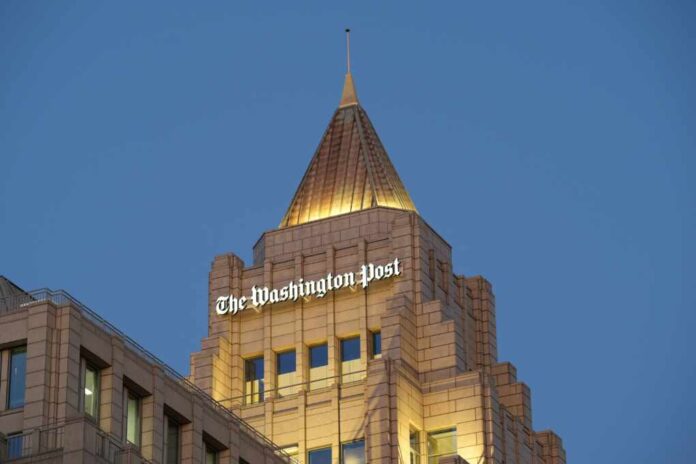
In a bold move reflecting the ongoing battle between press freedom and government oversight, a U.S. judge has temporarily blocked federal prosecutors from reviewing materials seized from a Washington Post reporter.
Story Overview
- Judge William Porter issued a temporary restraining order on January 21, 2026.
- The order prevents federal prosecutors from examining seized materials until a February hearing.
- This case highlights tensions between national security and First Amendment rights.
- The outcome could set a precedent for future government investigations involving the press.
Judicial Intervention Protects Press Freedom
On January 21, 2026, U.S. Magistrate Judge William Porter issued an order that temporarily halts federal prosecutors from examining materials seized from Washington Post reporter Hannah Natanson. This action stems from a Justice Department investigation into alleged leaks of classified national defense information, supposedly connected to a Pentagon contractor case. The order is a crucial step in addressing the constitutional debate on press freedom versus investigative authority, preserving the status quo until a scheduled hearing in early February.
This legal intervention is significant as it underscores the importance of First Amendment protections for journalists. The Washington Post has filed legal arguments claiming First Amendment violations, asserting that the search and seizure of Natanson’s home were unconstitutional. The judge’s decision to issue a temporary restraining order indicates a recognition of these constitutional concerns, ensuring that the materials remain unexamined until a full legal argument is presented.
The search and seizure of @WashingtonPost reporter @Hannah_Natanson’s records is unconstitutional and illegal in its entirety.
The judge was right to block it until a full hearing, at which time he should block it permanently.
Read our statement: https://t.co/uCHV63L90t pic.twitter.com/oNDpq2q937
— Freedom of the Press (@FreedomofPress) January 21, 2026
The Balance Between National Security and Press Freedom
The backdrop of this case involves a sensitive investigation into unauthorized disclosures of classified information. The Justice Department alleges that a Pentagon contractor illegally retained national defense information, which may have been shared with or obtained by Natanson. While the government argues that such investigations are essential for national security, the press contends that protecting journalistic sources and maintaining confidentiality are critical for democracy.
This situation has sparked a broader conversation on how to balance national security interests with constitutional protections, highlighting the delicate power dynamics between law enforcement and the press. The judge’s order temporarily disrupts the government’s efforts, putting the spotlight on the legal justifications for such investigations and the potential implications for press freedom.
Implications for Future Investigations
The outcome of this case could have far-reaching consequences for future government investigations involving media organizations. Should the court ultimately side with the Washington Post, it may establish new precedents that reinforce First Amendment protections and limit government overreach in journalistic matters. Conversely, if the Justice Department’s actions are upheld, it could embolden similar investigations, potentially impacting how journalists operate when reporting on national security issues.
As the February hearing approaches, stakeholders on all sides await a decision that could redefine the boundaries between press freedom and government accountability. The implications of this case will resonate not only with the parties involved but also with media organizations and government agencies across the nation.
Sources:
U.S. Judge Temporarily Blocks Review of Material Seized from Washington Post Reporter
Media industry: FBI can’t examine devices it took from Washington Post reporter now, judge rules