
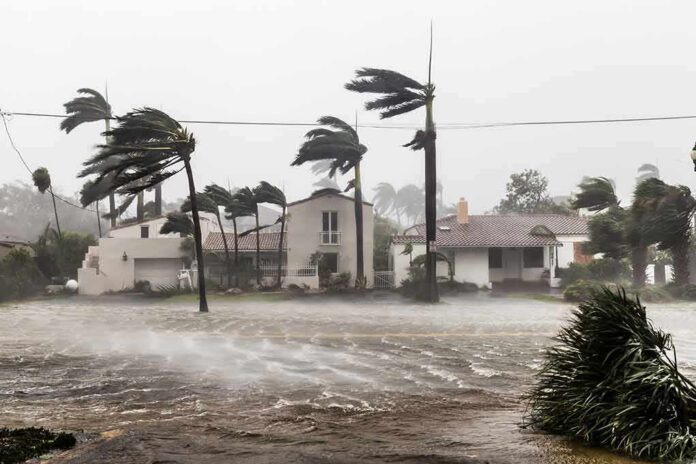
President Trump’s disaster declaration unlocked federal aid for six Florida counties hit by late-October floods, but left other hard-hit areas waiting for answers.
Story Highlights
- President Trump approved a major disaster declaration for Florida’s late-October storms and floods.
- Federal aid became available to individuals in six named counties on November 24.
- FEMA also announced nearly $400 million for 144 Florida recovery projects the day before.
- Official notices outline legal limits and may not match wider political claims.
What The Declaration Does For Florida
On November 24, the Federal Emergency Management Agency said President Trump approved a major disaster declaration for Florida’s severe storms and flooding that began October 31 and continued. The action made federal help available to people in Brevard, Indian River, Martin, Okeechobee, Palm Beach, and St. Lucie counties. The declaration allows programs like temporary housing and repairs, subject to eligibility rules under federal law. FEMA posted a parallel printable notice with the same core details.
FEMA’s public notice explains that federal aid is meant to supplement state, local, and nonprofit efforts, not replace them. It details categories of help for eligible state, local, tribal, and private nonprofit applicants. That framing matters for expectations, since it sets legal guardrails on what money can cover and how it is approved. The notice also anchors the action in the Robert T. Stafford Disaster Relief and Emergency Assistance Act, which governs federal disaster aid.
The Money Picture And Open Questions
On November 23, one day before the declaration, FEMA said it was awarding nearly $400 million to Florida for 144 projects to speed recovery and build resilience. That figure shows a large federal role, but it is a separate allocation. The release does not break down how much, if any, ties to the October 31 flooding or to the six counties named for individual help. It also does not show household-level payments tied to this event.
The November 24 declaration does not list a dollar amount for direct aid to families. It confirms that help is available and names the counties, but it does not include totals for registrations, inspections, approvals, or payouts. It also does not say aid would move faster than normal. Broadcast and social posts used terms like “expedited,” but FEMA’s materials do not set a timetable to compare against past disasters. Readers should track later updates for numbers on approvals and disbursements.
How This Fits Into Florida’s Busy Disaster Season
FEMA recorded separate actions in October tied to Hurricane Isaias, including an October 28 major disaster approval and an October 29 amendment. Those have a different incident period, October 6 through October 12, and have their own scope. Without clear disaster numbers in headlines, people can confuse events and think they are one continuous case. Careful reading of incident dates and counties is key to see which aid stream applies to which damage.
🇺🇸 Trump announced roughly $100 million in FEMA disaster aid for Florida after months of severe weather and flooding.
The funding follows months of heavy rain, severe storms and flooding across the state.
The announcement moves Florida’s disaster response from emergency damage…
— Ahmad Shah Mohibi (@WarGuy_) November 27, 2026
Academic work finds that disaster declarations can intersect with politics over the long run, including choices about where and when to send help. Those studies do not prove that this Florida action was political, but they show why people across the spectrum watch these calls closely. Citizens want fair, fast help after floods and storms. They also want simple explanations for who gets covered, who gets denied, and how soon money reaches families and towns.
What Floridians Can Expect Next
Residents in the six approved counties can apply for help through federal channels listed by the agency. Local governments, tribes, and eligible nonprofits can seek reimbursements for debris removal, emergency work, and repairs under set categories. Other counties may be added later if the state and FEMA document more damage and meet thresholds. Until then, the federal role remains targeted to the six named counties, and aid will follow standard eligibility and review steps.